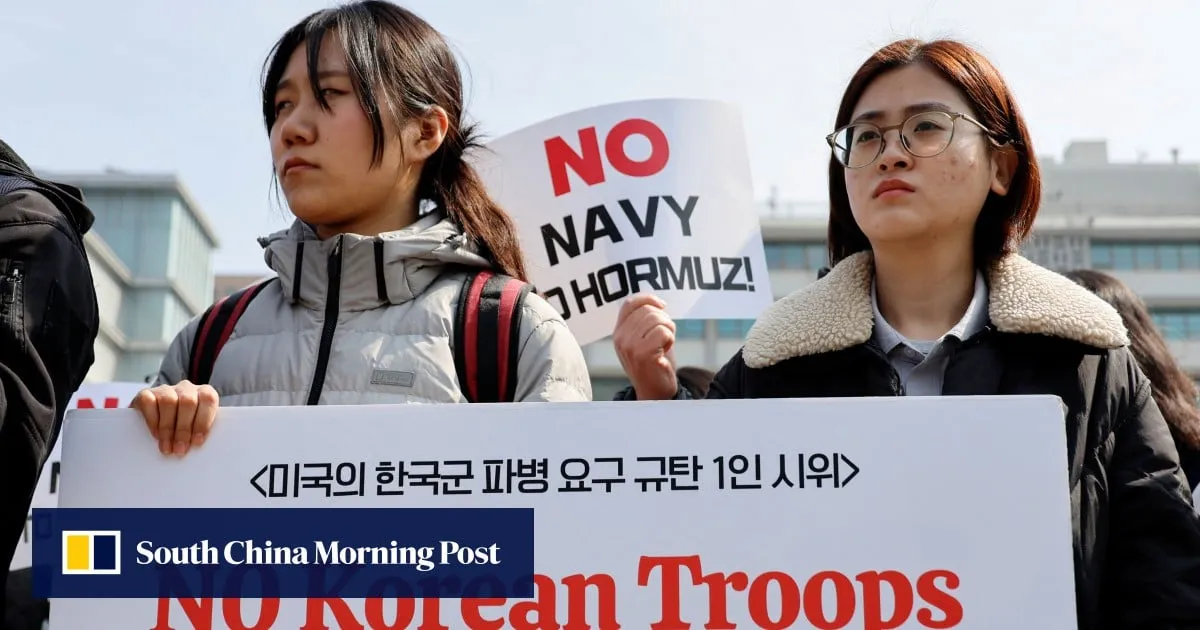
South Korea is expected to seek consensus through transparent procedures at its National Assembly before deciding on its next step, after US President Donald Trump bluntly called on various nations to help secure the Strait of Hormuz.Observers say Seoul is unlikely to move quickly, instead waiting for the outcome of the March 19 summit between Trump and Japanese Prime Minister Sanae Takaichi, as well as a formal request from Washington through official diplomatic channels.The country is a key American ally but has also maintained relatively balanced relations with Gulf countries, a key pillar of energy security and a major market for construction and plant projects.Hasty military intervention could deal a severe blow to diplomatic relations and economic interests with Iran and other Middle Eastern states, analysts warned.“This is a Catch-22 situation for Seoul. It has to choose between harsher US pressures including tariffs and potential harm to its people and businesses in the region and soured ties with Iran,” Doo Jin-ho, a senior research fellow at the Korea Research Institute for National Strategy, told This Week in Asia.A cargo ship sails in the Arabian Gulf towards the Strait of Hormuz in the United Arab Emirates on Sunday. Photo: APIn a social media post on Sunday, Trump had urged “China, France, Japan, South Korea, the UK, and others, that are affected by this artificial constraint, [to] send ships to the area so that the Hormuz Strait will no longer be a threat by a nation that has been totally decapitated”.
SRCSouth China Morning Post
LANGEN
LEANCenter-Right
WORDS249
ENT12
TUE · 2026-03-17 · 00:00 GMTBRIEF NSR-2026-0317-25145
NSR-2026-0317-25145News Report·EN·Diplomatic
South Korea in ‘Catch-22 situation’ over Trump’s call for warships to secure Hormuz
South Korea is facing a dilemma after President Trump called on several nations, including South Korea, to send warships to secure the Strait of Hormuz. South Korea is hesitant to act quickly, preferring to wait for the outcome of the upcoming US-Japan summit and a formal request from Washington.
Park Chan-kyongSouth China Morning PostFiled 2026-03-17 · 00:00 GMTLean · Center-RightRead · 1 min
South China Morning PostFIG 01
Reading time
1min
Word count
249words
Sources cited
1cited
Entities identified
12entities
Quality score
100%
§ 01
Briefing Summary
AI-generatedNEWSAR · AI
South Korea is facing a dilemma after President Trump called on several nations, including South Korea, to send warships to secure the Strait of Hormuz. South Korea is hesitant to act quickly, preferring to wait for the outcome of the upcoming US-Japan summit and a formal request from Washington. The country is balancing its alliance with the US against its economic and diplomatic ties with Gulf countries, including Iran, a key energy source and major market. Analysts suggest hasty military intervention could damage these relationships. South Korea will likely seek consensus at its National Assembly before making a decision, weighing potential US pressure against the risk of harming its regional interests.
Confidence 0.90Sources 1Claims 5Entities 12
§ 02
Article analysis
Model · rule-basedFraming
Diplomatic
National Security
Tone
Measured
AI-assessed
CalmNeutralAlarmist
Factuality
0.70 / 1.00
Factual
LowHigh
Sources cited
1
Limited
FewMany
§ 03
Key claims
5 extracted01
This is a Catch-22 situation for Seoul.
quoteDoo Jin-ho, Korea Research Institute for National Strategy
Confidence
1.00
02
Trump urged China, France, Japan, South Korea, the UK, and others to send ships to the Strait of Hormuz.
quoteTrump
Confidence
1.00
03
South Korea is expected to seek consensus at its National Assembly before deciding on its next step.
predictionArticle
Confidence
0.80
04
Hasty military intervention could deal a severe blow to diplomatic relations and economic interests with Iran.
predictionanalysts
Confidence
0.70
05
Seoul is unlikely to move quickly, waiting for the outcome of the Trump-Takaichi summit and a formal request from Washington.
predictionArticle
Confidence
0.70
§ 04
Full report
1 min read · 249 words§ 05
Entities
12 identifiedKey playerOppositionContextPositiveNeutralNegative
People3
Organizations2
§ 06
Keywords & salience
9 termsstrait of hormuz
1.00
south korea
0.90
us pressures
0.70
diplomatic relations
0.70
military intervention
0.60
energy security
0.60
donald trump
0.50
tariffs
0.40
iran
0.40
§ 07
Topic connections
Interactive graph Network visualization showing 51 related topics
View Full Graph Person Organization Location Event|Click node to navigate|Edge numbers = shared articles