The Kharg Island strike shows how US force is calibrated to avoid disrupting global oil flowsProfessor of Critical Development Studies at the Faculty of Environmental and Urban Change, York University, Toronto.Published On 18 Mar 2026Two explosions are seen in footage released by US President Donald that he says shows the bombing of Iran's Kharg Island. [Donald Trump via social media]The United States and Israel say their escalating military assault on Iran is about nuclear proliferation, deterrence and regional security. But recent developments suggest another, older logic at work. The deeper objective is not simply weakening Iran or forcing regime change. It is safeguarding the mobility of oil – the lifeblood of the global capitalist economy.Consider the recent US strike on Iran’s Kharg Island, the country’s main oil export terminal. The island sits just off the coast of the Gulf near the Strait of Hormuz, through which roughly one-fifth of the world’s oil passes each day. Any disruption there would reverberate immediately across global energy markets. Recent reports highlight how sensitive oil prices are to the threat of disruption in the strait.Yet the most revealing feature of the Kharg Island strike is not simply that it occurred, but what was deliberately spared.US President Donald Trump publicly celebrated the operation, declaring that American forces had destroyed “every MILITARY target” on the island. At the same time, he emphasised that the oil infrastructure itself had been left untouched. Writing on Truth Social, Trump said he had chosen not to “wipe out the Oil Infrastructure on the Island”, warning that such restraint could change if Iran threatened shipping in the Strait of Hormuz.This distinction is revealing. Kharg Island handles the vast majority of Iran’s crude exports. Destroying its oil terminals would have dramatically disrupted global supply and likely sent prices soaring. Instead, Washington opted for a calibrated strike: military damage without energy paralysis.The implication is difficult to ignore. The US is prepared to weaken Iran militarily, but it remains deeply invested in maintaining the flow of oil that sustains the global economy.Energy security has long structured US strategy in the Gulf. Since the Carter Doctrine of 1980 – which declared the region’s oil supply a vital American interest – Washington has treated Gulf energy infrastructure as a strategic priority. The possibility that Iran could restrict shipping through the Strait of Hormuz remains one of the most destabilising risks to the global economy.In this light, the Kharg Island strike looks less like a step towards total war than a signal. Iran’s military capacity may be targeted, but the oil infrastructure underpinning the global economy remains a protected asset.Taken in isolation, the Kharg strike could be read as escalation management. But placed alongside Washington’s behaviour across multiple theatres, a more consistent logic comes into view.This logic becomes clearer when placed alongside other recent moves by the Trump administration. In Venezuela, for example, Washington has intensified its confrontation with President Nicolas Maduro. While US officials frame their pressure campaign in terms of democracy and corruption, Venezuela also happens to possess the largest proven oil reserves in the world. Control over Venezuela’s political future is therefore inseparable from control over how and where its oil is produced and sold.If a more pro-US government were to emerge in Caracas, Venezuela’s oil industry could be reoriented towards Western markets and investment. In that sense, the conflict is not only ideological but also deeply material. Indeed, analysts have pointed out that Washington has long sought to reshape Venezuela’s oil sector in ways that align more closely with US economic interests.The same logic can be seen in Washington’s shifting stance towards Russian oil. Even as the US continues to frame Moscow as a strategic adversary, US policymakers have recently eased certain restrictions affecting Russian crude exports in order to stabilise global energy markets and prevent price spikes. Even confrontation with a strategic adversary is recalibrated when oil flows are at risk. The move underscores a broader reality: geopolitical rivalries often give way to the overriding imperative of keeping energy flows stable. Whether the source is Russia, Venezuela or the Persian Gulf, the priority remains the same – keep the oil flowing and the global economy running.The pattern extends beyond oil itself.The same imperative is now extending beyond oil to the critical minerals that underpin future energy and technological systems. Trump has repeatedly revived the idea of acquiring Greenland – a territory believed to hold enormous reserves of rare earth minerals as well as potentially significant energy resources beneath its Arctic seabed. These resources have become increasingly valuable in a world defined by technological competition and energy transition.Similarly, Washington has pushed aggressively for access to Ukraine’s rare earth minerals, which are essential for advanced electronics, renewable energy technologies and military systems. These minerals have become a central strategic concern for major powers seeking to secure supply chains for critical industries.Across these cases, what emerges is a consistent effort to secure control over the resources and infrastructures that sustain the global economy. Taken together, these moves point to a consistent geopolitical strategy. Trump’s foreign policy appears increasingly shaped by what might be called extractive imperialism – the effort to secure control over the resources that power global capitalism.Oil remains central to this system. Despite decades of discussion about renewable energy transitions, hydrocarbons still dominate the world’s energy supply. Global trade, transportation and industry remain deeply dependent on steady flows of crude oil and natural gas.The infrastructure enabling oil mobility – pipelines, export terminals, shipping routes and refineries – has become one of the most strategically protected elements of the global economy.The Kharg Island strike illustrates this dynamic with unusual clarity. Military assets were fair game; oil infrastructure was not. Violence was carefully calibrated so as not to disrupt the energy circulation on which the global economy depends.The war with Iran is often framed as a struggle over nuclear weapons or regional influence. Those concerns certainly matter. But beneath them lies a more fundamental geopolitical objective: preserving the energy arteries that sustain the global economic order.What is at stake is not simply conflict between states, but the management of a global system that cannot tolerate interruptions to its own energy lifelines.Oil has long structured the geopolitics of the Middle East. The Kharg Island episode shows that it still does. Beneath the rhetoric of deterrence and security lies a familiar imperial imperative: keep the oil moving.The views expressed in this article are the author’s own and do not necessarily reflect Al Jazeera’s editorial stance.
SRCAl Jazeera
LANGEN
LEANCenter
WORDS1 078
ENT9
WED · 2026-03-18 · 08:30 GMTBRIEF NSR-2026-0318-25634
NSR-2026-0318-25634Analysis·EN·Economic Impact
The oil logic behind Trump’s war on Iran
The United States and Israel have been conducting a military assault on Iran, citing concerns over nuclear proliferation, deterrence, and regional security. However, recent developments suggest that another objective is at play: safeguarding global oil flows.
Ilan KapoorAl JazeeraFiled 2026-03-18 · 08:30 GMTLean · CenterRead · 5 min
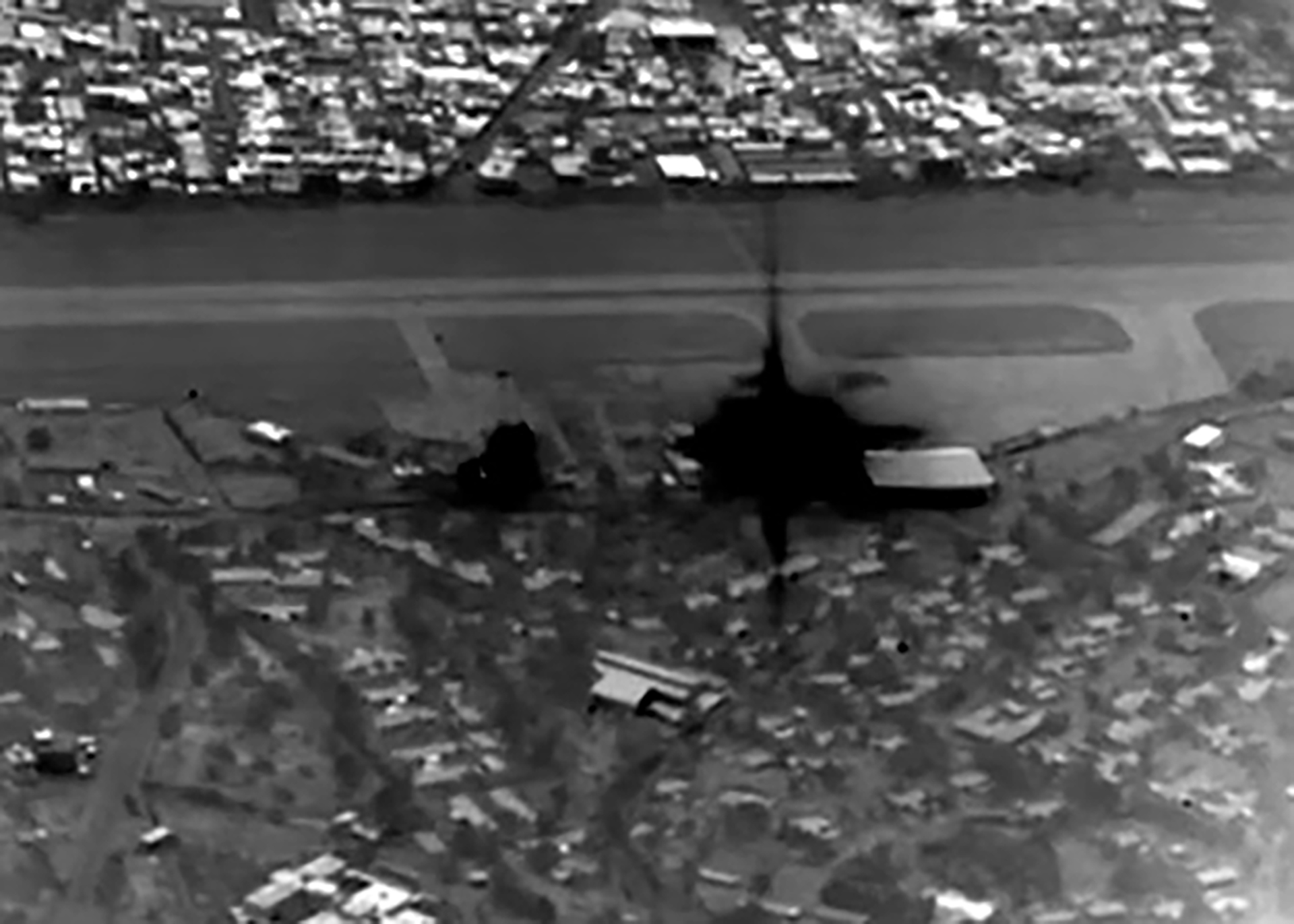
Al JazeeraFIG 01
Reading time
5min
Word count
1 078words
Sources cited
1cited
Entities identified
9entities
Quality score
100%
§ 01
Briefing Summary
AI-generatedNEWSAR · AI
The United States and Israel have been conducting a military assault on Iran, citing concerns over nuclear proliferation, deterrence, and regional security. However, recent developments suggest that another objective is at play: safeguarding global oil flows. The US strike on Iran's Kharg Island, the country's main oil export terminal, highlights this logic. The island handles most of Iran's crude exports, and destroying its oil terminals would have disrupted global supply and sent prices soaring. Instead, the US opted for a calibrated strike that damaged military targets but left energy infrastructure intact. This approach suggests that the US is prioritizing maintaining oil flows to support the global economy, as has been a strategic priority since the Carter Doctrine of 1980.
Confidence 0.90Sources 1Claims 5Entities 9
§ 02
Article analysis
Model · rule-basedFraming
Economic Impact
Political Strategy
Tone
Measured
AI-assessed
CalmNeutralAlarmist
Factuality
0.60 / 1.00
Mixed
LowHigh
Sources cited
1
Limited
FewMany
§ 03
Key claims
5 extracted01
US President Donald Trump said American forces had destroyed “every MILITARY target” on the island.
quoteDonald Trump
Confidence
1.00
02
Roughly one-fifth of the world’s oil passes each day through the Strait of Hormuz.
statisticArticle's own claim
Confidence
0.90
03
The US strike on Kharg Island deliberately spared the oil infrastructure.
factualArticle's own claim
Confidence
0.90
04
Kharg Island handles the vast majority of Iran’s crude exports.
factualArticle's own claim
Confidence
0.80
05
The US is prepared to weaken Iran militarily, but remains deeply invested in maintaining the flow of oil.
factualArticle's own claim
Confidence
0.70
§ 04
Full report
5 min read · 1 078 words§ 05
Entities
9 identifiedKey playerOppositionContextPositiveNeutralNegative
Organizations1
Locations6
§ 06
Keywords & salience
10 termsoil
1.00
iran
0.90
us
0.80
oil infrastructure
0.70
kharg island
0.70
energy security
0.60
strait of hormuz
0.60
military strike
0.50
global economy
0.50
oil flows
0.40
§ 07
Topic connections
Interactive graph Network visualization showing 51 related topics
View Full Graph Person Organization Location Event|Click node to navigate|Edge numbers = shared articles