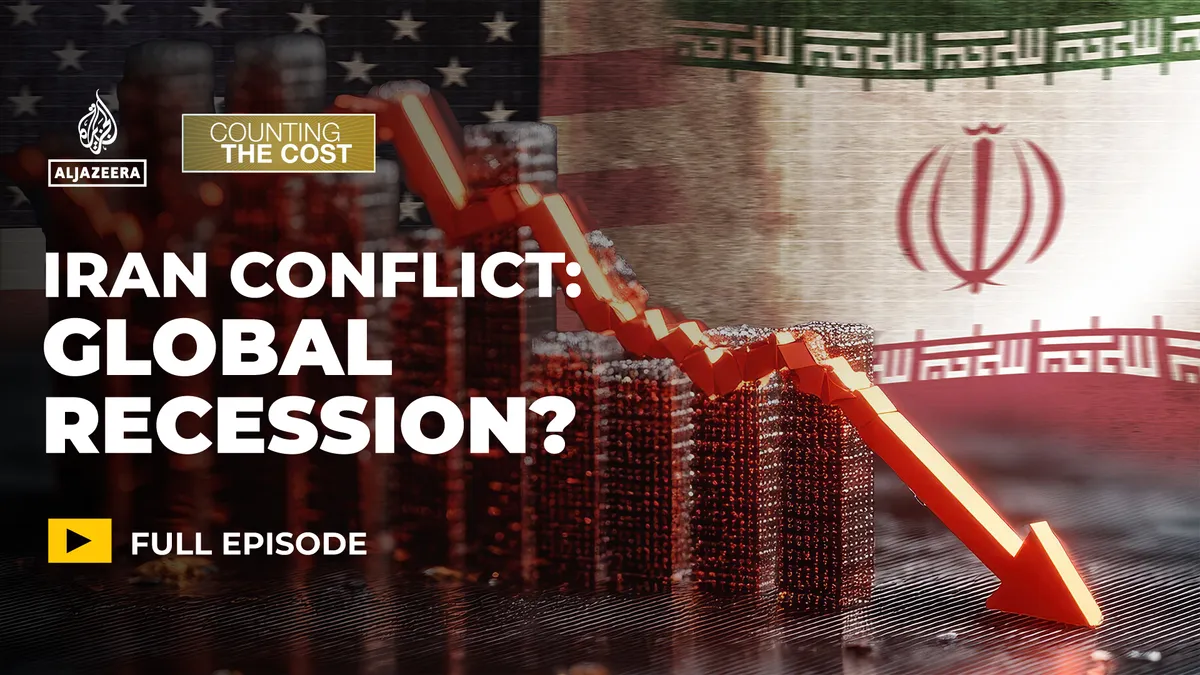
Counting the CostEnergy prices are surging as the Iran war disrupts supply, raising risks for the US, China and Europe.All eyes are on the Strait of Hormuz.The longer it remains closed, the greater the damage to the global economy.Iran continues to block tankers from shipping close to 20 percent of the world’s oil supply.That is roughly twice the disruption the world suffered during the energy shock of the 1970s.Big oil shocks have historically led to considerable economic turmoil, high inflation, stagnation and recession.Oil and gas prices are already surging, and economies are expected to slow.From American consumers to Chinese factories and European households, people across the world are already feeling the effect.Published On 18 Mar 2026
SRCAl Jazeera
LANGEN
LEANCenter
WORDS116
ENT6
WED · 2026-03-18 · 18:20 GMTBRIEF NSR-2026-0318-25740
NSR-2026-0318-25740News Report·EN·Economic Impact
Could the Iran war trigger a global recession?
On March 18, 2026, a news report highlighted the potential for a global recession triggered by the Iran war. The conflict is disrupting energy supplies, particularly through the Strait of Hormuz, a critical waterway for approximately 20% of the world's oil supply.
Al JazeeraFiled 2026-03-18 · 18:20 GMTLean · CenterRead · 1 min
Al JazeeraFIG 01
Reading time
1min
Word count
116words
Sources cited
0cited
Entities identified
6entities
Quality score
100%
§ 01
Briefing Summary
AI-generatedNEWSAR · AI
On March 18, 2026, a news report highlighted the potential for a global recession triggered by the Iran war. The conflict is disrupting energy supplies, particularly through the Strait of Hormuz, a critical waterway for approximately 20% of the world's oil supply. This disruption, twice the size of the 1970s energy shock, is causing a surge in oil and gas prices. The US, China, and Europe are particularly vulnerable, with consumers, factories, and households already feeling the economic impact. The longer the Strait of Hormuz remains blocked, the greater the potential damage to the global economy, raising the risk of high inflation, stagnation, and recession.
Confidence 0.85Claims 5Entities 6
§ 02
Article analysis
Model · rule-basedFraming
Economic Impact
Conflict
Tone
Mixed Tone
AI-assessed
CalmNeutralAlarmist
Factuality
0.60 / 1.00
Mixed
LowHigh
Sources cited
0
No named sources
FewMany
§ 03
Key claims
5 extracted01
Energy prices are surging as the Iran war disrupts supply.
factual
Confidence
0.90
02
Big oil shocks have historically led to considerable economic turmoil, high inflation, stagnation and recession.
factual
Confidence
0.80
03
Iran continues to block tankers from shipping close to 20 percent of the world’s oil supply.
factual
Confidence
0.80
04
That is roughly twice the disruption the world suffered during the energy shock of the 1970s.
statistic
Confidence
0.70
05
Economies are expected to slow.
prediction
Confidence
0.60
§ 04
Full report
1 min read · 116 words§ 05
Entities
6 identifiedKey playerOppositionContextPositiveNeutralNegative
§ 06
Keywords & salience
9 termsiran war
1.00
global recession
0.90
energy prices
0.80
oil supply
0.70
strait of hormuz
0.60
high inflation
0.50
economic turmoil
0.50
oil shocks
0.40
global economy
0.40
§ 07
Topic connections
Interactive graph Network visualization showing 51 related topics
View Full Graph Person Organization Location Event|Click node to navigate|Edge numbers = shared articles