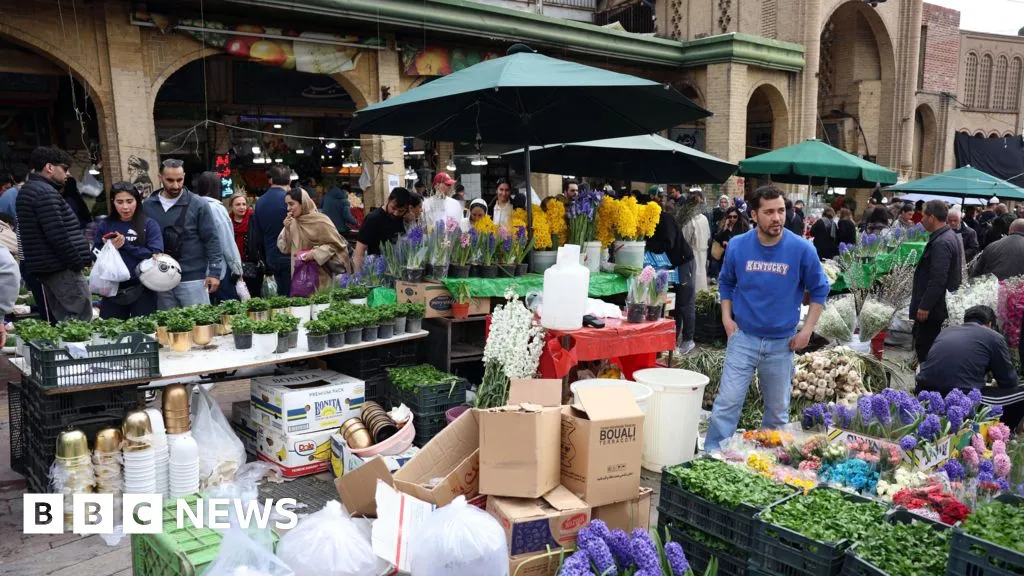
3 hours agoGhoncheh HabibiazadBBC PersianEPASome markets remain open in Tehran despite the warNames of contributors have been changed for safety reasons.In the days before the Persian new year festival of Nowruz, Iranians would usually be excitedly preparing."We'd be busy getting ready … cleaning the house, shopping for new clothes, sweets and snacks," says Mina, a woman in her 50s in Damavand, northeast of Tehran.But this year will be different, she says, in tears."This year? Every day feels so long. It's like I've lost track of time," Mina says.Nowruz, which translates to "new day", is a traditional festival that marks the spring equinox, the rebirth of nature and the start of the new year in Iran and other countries. The festival dates back more than 3,000 years, making it one of the oldest in the world.It falls on 20 March this year, with the following day marking the start of the Iranian new year.But this year's Nowruz will be the first many in the country have experienced at war.Iran has been under bombardment from US and Israeli strikes since 28 February.The US-based group Iran" class="entity-link entity-organization" data-entity-id="9778" data-entity-type="organization">Human Rights Activists in Iran reports that 3,114 people have been killed in Iran, including 1,354 civilians, of which at least 207 were children.Tehran has responded by launching attacks on Israel and US-allied states in the Gulf.Mina's son, Amir, who has also moved from Tehran to Damavand with his family, says this Nowruz feels very different."People are losing their jobs with the war. My biggest worry is our country's infrastructure," he says."At this rate, there might not even be much left of Iran. I don't want this to be our last Nowruz."AFP via Getty ImagesIranians celebrated Nowruz with fireworks in Tehran last yearTo Iranians, Nowruz represents their history, national character and tradition. Persians, Parsis, Kurds, Armenians, Azerbaijanis, Tajiks, Kazakhs, Uzbeks and other cultures celebrate the festival and have their own traditions surrounding it.The last time Iranians celebrated Nowruz during wartime was in the 1980s, during the eight-year conflict with Iraq.The festival comes with many traditions, including deep-cleaning the house beforehand to sweep away the old year's misfortunes and welcome a fresh start."When the new year comes, I don't know whether the sound of the holiday announcement on TV will be mixed with the noise of missiles and drones… but I really hope not," Mina says.During the two-week Nowruz holidays, families usually visit each other's homes.But some do not want to go back to Tehran, which has seen the heaviest attacks."Visits this year are very limited. We've been displaced ourselves, we left Tehran and came somewhere a bit safer," Mina says."I wish everything could be wiped from our memories like we just woke up from a bad dream."The streets of the capital are far quieter than usual this weekMarkets, shopping centres and streets across Iran are usually bustling with large crowds of shoppers in the final days before Nowruz.But this year, the buzz and excitement is not the same."It used to be so much easier to find all the items for Nowruz before. Now, if you go anywhere, you're always worried whether you will be caught up in an air strike or not," says Parmis, a woman in her 20s who lives in Tehran.Parmis still went out to get her nails done on 17 March. Salons are usually busy around this time, as people prepare to look their best for Nowruz."I feel like some are still carrying on despite everything, like me. I was in the salon when a loud explosion went off, and no-one even flinched," she says.Another woman, Maryam, says that some people are defiantly preparing for the festival and its centrepiece - the Haft Sin table."There were people out buying things for Haft Sin. I saw flowers and some street vendors. But no, it's not like it was in previous years," she says."At the same time, this is a tradition that happens once a year, and we must celebrate it. I bought some items and we had some at home. I'm planning to lay out Haft Sin tomorrow."Meanwhile, there are some inside the country who support the war continuing."What's the point of Nowruz? If the Islamic Republic stays in power, we have to live with endless hardships. Nowruz is always there, comes and goes. This time, the Islamic Republic must go," says Ramtin, a man in his 30s in Tehran.Kian, also from Tehran, says his mum "says she'd even be willing for the house to collapse on her head if it meant the clerics would be gone."I feel the same. Even if everything falls apart, I still think the Islamic Republic needs to go. We don't care about Nowruz, we don't even have Haft Sin on our table."Nowruz marks the point when the cold of winter begins to recede, giving way to the lively and hopeful arrival of spring. People make wishes, usually for health, happiness and a fresh start in the new year for themselves and their loved ones.Shirin, a woman in her 20s from Tehran, says the war coinciding with Nowruz "makes me feel even worse"."Some shops are open, but you can't smell Nowruz in the air."
SRCBBC News - World
LANGEN
LEANCenter
WORDS853
ENT10
FRI · 2026-03-20 · 00:04 GMTBRIEF NSR-2026-0320-26205
NSR-2026-0320-26205News Report·EN·Human Interest
Iranians prepare for Persian new year under shadow of war
Iranians are preparing for Nowruz, the Persian New Year, on March 20th, but celebrations are subdued due to ongoing conflict. Since February 28th, Iran has been subject to US and Israeli strikes, with reported casualties exceeding 3,000.
BBC News - WorldFiled 2026-03-20 · 00:04 GMTLean · CenterRead · 4 min
BBC News - WorldFIG 01
Reading time
4min
Word count
853words
Sources cited
2cited
Entities identified
10entities
Quality score
100%
§ 01
Briefing Summary
AI-generatedNEWSAR · AI
Iranians are preparing for Nowruz, the Persian New Year, on March 20th, but celebrations are subdued due to ongoing conflict. Since February 28th, Iran has been subject to US and Israeli strikes, with reported casualties exceeding 3,000. This marks the first Nowruz during wartime for many Iranians since the 1980s Iran-Iraq war. The holiday, a celebration of spring equinox and new beginnings, is usually marked by traditions like house cleaning and family visits. However, concerns about the war's impact on infrastructure and the somber atmosphere are overshadowing the festivities this year.
Confidence 0.90Sources 2Claims 5Entities 10
§ 02
Article analysis
Model · rule-basedFraming
Human Interest
Conflict
Tone
Mixed Tone
AI-assessed
CalmNeutralAlarmist
Factuality
0.70 / 1.00
Factual
LowHigh
Sources cited
2
Limited
FewMany
§ 03
Key claims
5 extracted01
At this rate, there might not even be much left of Iran. I don't want this to be our last Nowruz.
quoteAmir
Confidence
1.00
02
Tehran has responded by launching attacks on Israel and US-allied states in the Gulf.
factualBBC Persian
Confidence
1.00
03
Iran has been under bombardment from US and Israeli strikes since 28 February.
factualBBC Persian
Confidence
1.00
04
Iranians prepare for Persian new year under shadow of war.
factualBBC Persian
Confidence
1.00
05
3,114 people have been killed in Iran, including 1,354 civilians, of which at least 207 were children.
statisticHuman Rights Activists in Iran
Confidence
0.80
§ 04
Full report
4 min read · 853 words§ 05
Entities
10 identifiedKey playerOppositionContextPositiveNeutralNegative
Organizations1
Locations6
Events1
§ 06
Keywords & salience
8 termsnowruz
1.00
persian new year
0.90
war
0.80
iran
0.80
iranian new year
0.60
tradition
0.60
strikes
0.50
civilians
0.40
§ 07
Topic connections
Interactive graph Network visualization showing 51 related topics
View Full Graph Person Organization Location Event|Click node to navigate|Edge numbers = shared articles