Rodney Bushmeyer has been farming as long as he can remember. Bushmeyer’s father was a farmer, as was his grandfather.The family-run Bushmeyer Farms in Illinois dates back more than 100 years, when his ancestors came to the US from Germany. They acquired the first 80 acres cost-free as homesteaders, cleared the land, and worked it.Now Bushmeyer, 69, gets to see the sunrise on his way to work every day. Wheat is planted and will be followed by soy and corn in the next several weeks. In a month, the farm will “be greening up”, revealing a powerful palette.“It’s a great life,” he said.But Bushmeyer’s farm, which he runs with his son and cousin, has felt the impact of “dramatically” increased fertilizer prices over the past five or six years. And while some fertilizers have doubled in cost, commodity prices for grain have dwindled.“There is really no profit right now,” Bushmeyer said, later adding: “It’s not sustainable in the long term. We can do that for a few years, but eventually it’ll put us out of business.”While Bushmeyer’s fight with fertilizer costs started several years ago, many US farmers are seeing themselves squeezed even more as prices for agricultural nutrients have jumped in recent weeks.American farmers have become casualties in the US-Israel war against Iran. Iran closed the Strait of Hormuz, cutting off a key fertilizer production and transportation route, and efforts to reopen this crucial trade route have stalled.The closure has intensified pressure on farmers as it comes as during the US spring planting season. The price spike also comes as farmers are experiencing several years of losing money on growing crops.“It’s not a great time for the grower,” said Matt Bennett, CEO of AgMarket, a brokerage and farmer consulting firm. Bennett is also a seventh-generation grain farmer based in Shelby County, Illnois.The Middle East is critical to global fertilizer trade, with 35% of global urea trade, a solid nitrogen fertilizer, coming through the region. Roughly 20% of the phosphate trade comes from Saudi Arabia, says Chris Yearsley, CEO and head of nitrogen at Profercy, a global fertilizer pricing, analysis and forecasting firm.The US imports about 25% of its total fertilizer use, including 18% of its nitrogen use, says the American Farm Bureau.Fertilizer prices have been elevated since the onset of the Russia-Ukraine war, and nitrogen values were already rising in late 2025, but prices have nearly doubled since the shipping channel closed.Benchmark New Orleans nitrogen prices were at $350 a short ton in late December, and in late February, just before the conflict, had risen to $470, Yearsley says. As of 10 March, nitrogen prices were trading about $600, he says.Fertilizer is the most volatile and significant non-land cost for most farmers. For corn, the US’s biggest production crop, it can account for 20% of total production expenses, according to the US Department of Agriculture (USDA).A person loads manure to be spread as fertilizer on fields at their family’s farm in Lamar, Colorado. Photograph: RJ Sangosti/MediaNews Group/The Denver Post/Denver Post/Getty ImagesFarmers have struggled with their costs being higher than the prices they are paid for harvest for at least three years, and the USDA had forecast 2026 would be another year of lowered profits, even before the spike in fertilizer prices.“With crop economics as bad as they are right now, it doesn’t take much to destroy (a farmer’s) income statement,” said Philip Coffin, independent grain industry analyst.In 2025, if it wasn’t for federal subsidies, including the $12bn in bridge loans the USDA is offering to farmers hurt by Donald Trump’s tariffs, producers would have lost money.Gregg Ibendahl, associate professor at Kansas State University, says the extra payments were a lifeline to farmers. “They turned a really bad year into at least a mediocre year,” he said.Lance Lillibridge, who farms about 1,250 acres of corn in east-central Iowa, grew up on a farm and knows full well what economic pressure can do to farmers.During high school, Lillbridge saw the 1980s farm crisis unfold. An agriculture teacher even told him “you might as well find something else to do, Mr Lillibridge, because you’ll never make it in farming,” he recalled.So Lillibridge – who had dreamed of owning a farm – worked in a factory for five years out of high school. “I hated every minute of it,” he said. Lillibridge returned to farm work in the 1990s and started a trucking company, which helped him get back into farming.Newly harvested corn in Inwood, Iowa. Photograph: UCG/Universal Images Group/Getty ImagesHe managed to buy land right before the ethanol-fueled agricultural boom and transition into farming full-time. But with that boom, Lillibridge said, came consolidation in agricultural sectors such as meatpacking, fertilizer and seed production.“The fertilizer industry is probably the most concentrated industry in the entire world, and they are able to manipulate markets. They have market power, and there’s not a damn thing that we can do about it right now, other than hope and pray that our Department of Justice comes down on them,” he said.Lillibridge said he has already purchased fertilizer he will need coming up, but says that continued price levels will prove unsustainable in the future.“We won’t be able to buy the fertilizer,” he said. Lenders won’t want to help farmers with credit. “Banks are already cutting guys and saying, ‘Yeah, sorry, we can’t finance that. There’s not a return on investment. We can’t do it.’”The consequences could prove disastrous. A distressed farmer could sell their property, but the person who buys their farm would also find themselves facing high fertilizer prices. Or, a farmer might eschew fertilizer.“That will reduce crop yields and that, in turn, is going to make everything much more expensive,” he said. “For you, me, everybody else, your cost at the grocery store is going to go up.”Without meaningful action to address fertilizer prices, the future could prove bleak.“My farm is probably going to be OK for another couple [of] years, but something has to change, or I’m going to be at the point where I don’t want to do it.”“I’ve got a 19-year-old son. This is what he wants to do,” Lillibridge said of farming. “And I just don’t know if it’s going to be a good thing for him to do.”Soybeans ready for planting in Iowa. Photograph: Bloomberg/Getty ImagesThe high fertilizer prices could affect what some farmers plant this spring. The USDA is currently surveying farmers about their planting intentions, with the result slated to be released on 31 March. The survey results are the first important report for the coming growing season, as the data often causes prices in the futures markets to swing if the data surprises.In February, the USDA’s preliminary grain-acreage estimate has already forecast a 4 million-acre swing to soybeans from corn. This is not unusual, as many grain farmers rotate annually between corn and soybeans for agronomic reasons, but soybeans now may steal more acres from corn in 2026 because the oilseed requires less fertilizer, making them cheaper to grow.Some farmers are pinning their hopes on a new government biofuels policy that could create more demand for soybeans, in part to offset some of the lost export business.Bennett says he is sticking with his traditional corn and soybean rotation and the field prep that requires; however, he has spoken to other farmers who waited to put down fertilizer in the fall, hoping for lower prices.“That’s where the growers are kind of hamstrung right now,” he said.Farmers who applied fall fertilizer haven’t necessarily gotten off lucky. Farmers who plan to grow corn usually are the ones who apply fertilizer after the fall harvest; they’re locked into that decision because of sunken costs. They also need to add more nutrients in the spring, so they’re affected by the same high fertilizer prices as farmers who were finalizing their plans.Coffin says the price spike happened so fast that farmers were unlikely to have booked their needs before prices rose. Now they have to make decisions about what to plant and how much to use throughout the growing season. Fewer nutrients can reduce yields and how much money producers earn.Even if farmers paid for fertilizer earlier, there’s a chance the nutrients may be stuck in limbo. Fertilizer deliveries from the Middle East can take up to two months to get to farmers in the northern US, Coffin says.He believes there’s a “fair amount” of fertilizer in the US already, but what’s unknown is how much is floating in the Red Sea awaiting shipment to the US for spring planting needs.“That’s the really critical part here,” Coffin said. “How much of the fertilizer that’s bought and ordered for shipment – how much of that will get hung up in this conflict here?”A tractor lays fertilizer on a field at a farm in Church Hill, Maryland. Photograph: Jim Watson/AFP/Getty ImagesAngela Guentzel, a sixth-generation farmer whose family’s land sits at the north end of the corn belt. During the spring and summer, fields are lush with rain.Guentzel, 37, purchased fertilizer this fall, before the recent price spike. Modern farming technology has also helped the farm be more precise and efficient with fertilizer application.If fertilizer prices remain high in the fall, that will only heighten the economic strain on farmers. “Cuts are going to have to be made, just between the depressed price of what we can sell our crop for, and increased prices for everything that will have for inputs,” said Guentzel, a board member of the Minnesota Corn Growers Association.“It’s a double-edged sword,” she said. “Putting inappropriate amounts of fertilizer is kind of basically just not an option, because if you have less fertilizer, then you’re going to have less yield.”Guentzel said the crisis facing farmers poses problems that extend far beyond those who work the land.“Food security is basically national security,” she said. “Everything on the table starts with a farmer and seed in the ground. And fertilizer isn’t really an optional thing.”“If we can’t afford to put a crop in the ground, we then become more dependent on foreign nations to feed our own people.”It’s unclear whether there is any relief in sight for farmers grappling with high fertilizer prices. If fertilizer prices continue to increase, there could even be political implications.“Farmers are the backbone of America, and when they’re squeezed by rising costs like fertilizer, it carries real political weight,” said Brittany Martinez, a Republican strategist and the executive director of Principles First. “Many of these voters have historically supported Republicans, but if they feel the Trump administration isn’t delivering on economic promises, that frustration could negatively impact Republicans on election day.”“To earn their support, both parties need to focus on practical relief – lowering input costs, stabilizing supply chains, and actually showing up for rural communities with solutions, not rhetoric,” Martinez said.For now, farmers are doing their best to contend with blistering economic headwinds brought by fertilizer prices and brutal commodities markets.“It’s out of our control,” Bushmeyer said.Still, Bushmeyer is remaining hopeful.“My dad used to say, we’re at the mercy of the weather and the government, and we can’t control either,” he said. “When you grow up in this business, you just just take whatever comes and you raise the best crop you can and rest is up to God and mother nature.”“We have to be optimistic or we would never raise a crop, never try.”
SRCThe Guardian - World News
LANGEN
LEANCenter-Left
WORDS1 886
ENT12
FRI · 2026-03-20 · 11:00 GMTBRIEF NSR-2026-0320-26358
NSR-2026-0320-26358News Report·EN·Economic Impact
‘It’s not sustainable’: US farmers reeling as Iran war pushes fertilizer costs up
US farmers are facing increased financial strain due to rising fertilizer costs, exacerbated by recent geopolitical events. The closure of the Strait of Hormuz, a key fertilizer trade route, due to the US-Israel conflict with Iran, has further driven up prices during the critical spring planting season.
Debbie Carlson in Chicago and Victoria Bekiempis in New YorkThe Guardian - World NewsFiled 2026-03-20 · 11:00 GMTLean · Center-LeftRead · 8 min
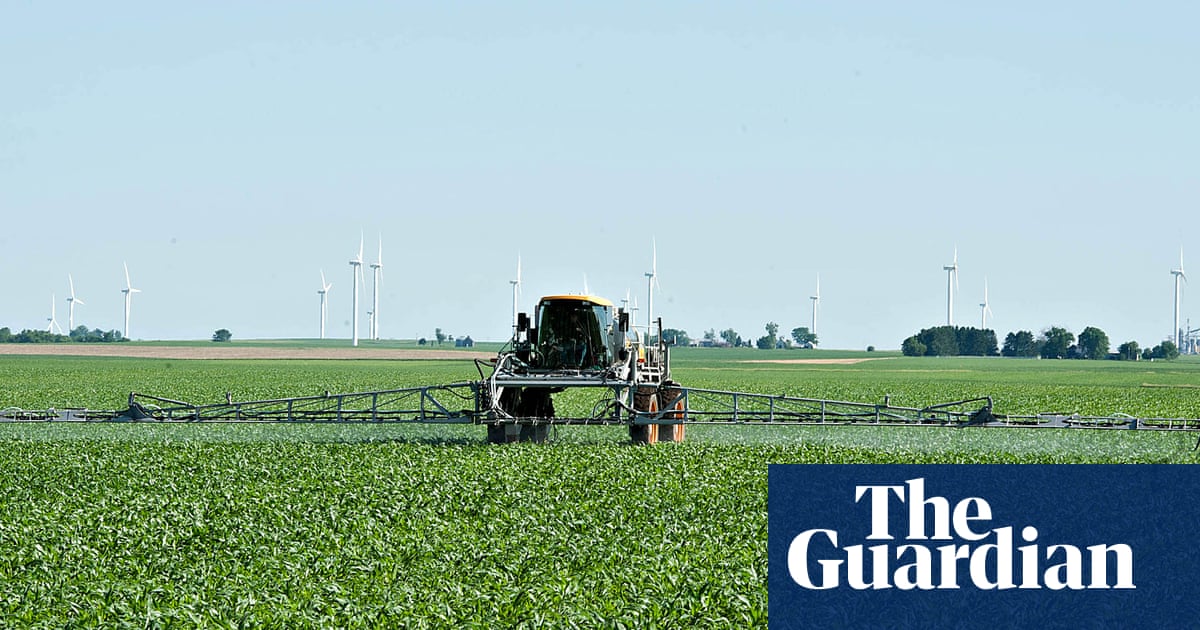
The Guardian - World NewsFIG 01
Reading time
8min
Word count
1 886words
Sources cited
3cited
Entities identified
12entities
Quality score
100%
§ 01
Briefing Summary
AI-generatedNEWSAR · AI
US farmers are facing increased financial strain due to rising fertilizer costs, exacerbated by recent geopolitical events. The closure of the Strait of Hormuz, a key fertilizer trade route, due to the US-Israel conflict with Iran, has further driven up prices during the critical spring planting season. Farmers like Rodney Bushmeyer, whose family has farmed in Illinois for generations, are struggling with dwindling profits as fertilizer costs have doubled while commodity prices for grain have decreased. The Middle East is a crucial hub for global fertilizer trade, and the US relies on imports for a significant portion of its fertilizer needs. Experts warn that these conditions are unsustainable in the long term, potentially threatening the viability of American farms.
Confidence 0.90Sources 3Claims 5Entities 12
§ 02
Article analysis
Model · rule-basedFraming
Economic Impact
Conflict
Tone
Mixed Tone
AI-assessed
CalmNeutralAlarmist
Factuality
0.70 / 1.00
Factual
LowHigh
Sources cited
3
Well sourced
FewMany
§ 03
Key claims
5 extracted01
Nitrogen prices were trading about $600 as of March 10.
factualChris Yearsley
Confidence
1.00
02
The US imports about 25% of its total fertilizer use.
statisticAmerican Farm Bureau
Confidence
1.00
03
The Middle East accounts for 35% of global urea trade.
statisticChris Yearsley, CEO and head of nitrogen at Profercy
Confidence
1.00
04
Fertilizer prices have dramatically increased over the past five or six years.
quoteRodney Bushmeyer
Confidence
0.90
05
American farmers have become casualties in the US-Israel war against Iran.
factual
Confidence
0.60
§ 04
Full report
8 min read · 1 886 words§ 05
Entities
12 identifiedKey playerOppositionContextPositiveNeutralNegative
Organizations2
§ 06
Keywords & salience
10 termsfertilizer prices
1.00
us farmers
0.90
iran war
0.80
agricultural nutrients
0.70
spring planting season
0.60
strait of hormuz
0.50
grain
0.50
commodity prices
0.50
nitrogen fertilizer
0.40
global fertilizer trade
0.40
§ 07
Topic connections
Interactive graph Network visualization showing 51 related topics
View Full Graph Person Organization Location Event|Click node to navigate|Edge numbers = shared articles