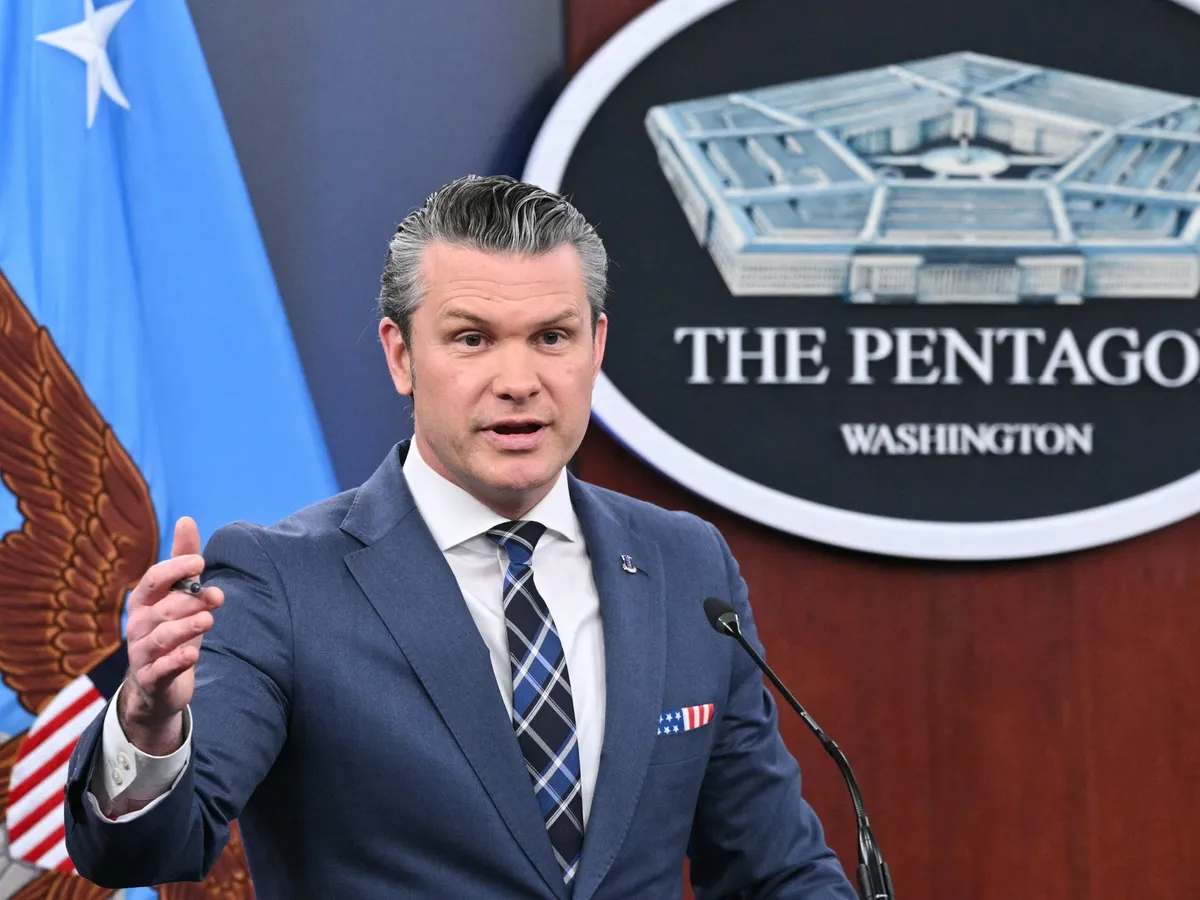
In his ruling, Judge Paul Friedman ruled the Trump administration sought to force out ‘disfavoured journalists’.US Secretary of Defense Pete Hegseth speaks during a news conference at the Pentagon in Washington, DC, on March 19 [AFP]Published On 20 Mar 2026A federal judge in the United States has agreed to block the administration of President Donald Trump from enforcing a policy limiting news reporters’ access to the Pentagon.Friday’s ruling sides with The New York Times in its argument that key portions of the new rules are unlawful.Recommended Stories list of 3 itemslist 1 of 3Anthropic sues Trump administration to undo US ‘supply chain risk’ taglist 2 of 3US civil rights group documents ‘broad attack on Muslim life’ in 2025list 3 of 3Press freedom declines in Americas, with US seeing sharpest drop: Reportend of listUS District Judge Paul Friedman in Washington, DC, ruled that the Pentagon policy illegally restricts the press credentials of reporters who walked out of the building rather than agree to the new rules.The Times sued the Pentagon and Defense Secretary Pete Hegseth in December, claiming the credentialing policy violates the journalists’ constitutional rights to free speech and due process.The current Pentagon press corps is comprised mostly of conservative outlets that agreed to the policy. Reporters from outlets that refused to consent to the new rules, including those from The Associated Press, have continued reporting on the military.Friedman, who was nominated to the bench by Democratic President Bill Clinton, said the policy “fails to provide fair notice of what routine, lawful journalistic practices will result in the denial, suspension, or revocation” of Pentagon press credentials.He ruled that the Pentagon policy ultimately violates the First and Fifth Amendment rights to free speech and due process.“Those who drafted the First Amendment believed that the nation’s security requires a free press and an informed people and that such security is endangered by governmental suppression of political speech. That principle has preserved the nation’s security for almost 250 years. It must not be abandoned now,” the judge wrote.Times lauds rulingNew York Times spokesperson Charlie Stadtlander said the newspaper believes the ruling “enforces the constitutionally protected rights for the free press in this country”.“Americans deserve visibility into how their government is being run, and the actions the military is taking in their name and with their tax dollars,” Stadtlander said in a statement. “Today’s ruling reaffirms the right of The Times and other independent media to continue to ask questions on the public’s behalf.”Theodore Boutrous, a lawyer who represented the Times at a hearing earlier this month, said in a statement that the court ruling is “a powerful rejection of the Pentagon’s effort to impede freedom of the press and the reporting of vital information to the American people during a time of war”.The Pentagon did not immediately respond to a request for comment on the ruling.It has argued that the policy imposes “common sense” rules that protect the military from the disclosure of national security information.“The goal of that process is to prevent those who pose a security risk from having broad access to American military headquarters,” government lawyers wrote.The Times’ legal team, meanwhile, claimed the policy is designed to silence unfavourable press coverage of President Trump’s administration.“The First Amendment flatly prohibits the government from granting itself the unbridled power to restrict speech because the mere existence of such arbitrary authority can lead to self-censorship,” they wrote.Weeding out ‘disfavoured’ journalistsThe judge said he recognises that “national security must be protected, the security of our troops must be protected, and war plans must be protected”.“But especially in light of the country’s recent incursion into Venezuela and its ongoing war with Iran, it is more important than ever that the public have access to information from a variety of perspectives about what its government is doing,” Friedman wrote.Friedman said the “undisputed evidence” shows that the policy is designed to weed out “disfavored journalists” and replace them with those who are “on board and willing to serve” the government, a clear instance of illegal viewpoint discrimination.“In sum, the Policy on its face makes any newsgathering and reporting not blessed by the Department a potential basis for the denial, suspension, or revocation of a journalist’s [credentials],” he wrote. “It provides no way for journalists to know how they may do their jobs without losing their credentials.”The Pentagon had asked the judge to suspend his ruling for a week for an appeal. Friedman refused.The judge ordered the Pentagon to reinstate the press credentials of seven Times journalists. But he said his decision to vacate the challenged policy terms applies to “all regulated parties”.Friedman gave the Pentagon a week to file a written report on its compliance with the order.The Times argued that the Pentagon has applied its own rules inconsistently. The newspaper noted that Trump ally Laura Loomer, a right-wing personality who agreed to the Pentagon policy, appeared to violate the Pentagon’s prohibition on soliciting unauthorised information by promoting her “tip line”.The government didn’t object to Loomer’s tip line but concluded that a Washington Post tip line does violate its policy because it purportedly “targets” military personnel and department employees.The judge said he does not see any meaningful difference between the two tip lines.“But the problem is that nothing in the Policy explicitly prevents the Department from treating these two nearly identical tip lines differently,” Friedman added.
SRCAl Jazeera
LANGEN
LEANCenter
WORDS889
ENT9
FRI · 2026-03-20 · 23:07 GMTBRIEF NSR-2026-0321-26508
NSR-2026-0321-26508News Report·EN·Legal & Judicial
US judge sides with New York Times against Pentagon journalism policies
A US federal judge has sided with The New York Times, blocking the Trump administration from enforcing a policy limiting news reporters' access to the Pentagon. Judge Paul Friedman ruled that the Pentagon policy illegally restricts press credentials of reporters who refused to agree to new rules, violating their First and Fifth Amendment rights to free speech and due process.
By The Associated PressAl JazeeraFiled 2026-03-20 · 23:07 GMTLean · CenterRead · 4 min
Al JazeeraFIG 01
Reading time
4min
Word count
889words
Sources cited
4cited
Entities identified
9entities
Quality score
100%
§ 01
Briefing Summary
AI-generatedNEWSAR · AI
A US federal judge has sided with The New York Times, blocking the Trump administration from enforcing a policy limiting news reporters' access to the Pentagon. Judge Paul Friedman ruled that the Pentagon policy illegally restricts press credentials of reporters who refused to agree to new rules, violating their First and Fifth Amendment rights to free speech and due process. The Times sued the Pentagon and Defense Secretary Pete Hegseth in December, arguing the credentialing policy was unconstitutional. The judge, nominated by Democratic President Bill Clinton, stated the policy failed to provide fair notice regarding journalistic practices that could result in denial or suspension of credentials. The New York Times lauded the ruling, stating it enforces constitutionally protected rights for a free press.
Confidence 0.90Sources 4Claims 5Entities 9
§ 02
Article analysis
Model · rule-basedFraming
Legal & Judicial
Political Strategy
Tone
Measured
AI-assessed
CalmNeutralAlarmist
Factuality
0.80 / 1.00
Factual
LowHigh
Sources cited
4
Well sourced
FewMany
§ 03
Key claims
5 extracted01
The court ruling is “a powerful rejection of the Pentagon’s effort to impede freedom of the press”.
quoteTheodore Boutrous, a lawyer who represented the Times
Confidence
1.00
02
The Pentagon policy illegally restricts the press credentials of reporters who walked out of the building rather than agree to the new rules.
factualUS District Judge Paul Friedman
Confidence
1.00
03
The Times sued the Pentagon and Defense Secretary Pete Hegseth in December, claiming the credentialing policy violates journalists’ constitutional rights.
factualArticle
Confidence
1.00
04
A federal judge has agreed to block the administration of President Donald Trump from enforcing a policy limiting news reporters’ access to the Pentagon.
factualArticle
Confidence
1.00
05
Judge Paul Friedman ruled the Trump administration sought to force out ‘disfavoured journalists’.
factualArticle
Confidence
1.00
§ 04
Full report
4 min read · 889 words§ 05
Entities
9 identifiedKey playerOppositionContextPositiveNeutralNegative
People5
Organizations3
Locations1
§ 06
Keywords & salience
10 termspress freedom
0.90
new york times
0.90
pentagon journalism policies
0.80
free speech
0.70
donald trump administration
0.70
first amendment
0.70
due process
0.60
us district judge paul friedman
0.60
press credentials
0.50
pentagon press corps
0.40
§ 07
Topic connections
Interactive graph No topic relationship data available yet. This graph will appear once topic relationships have been computed.