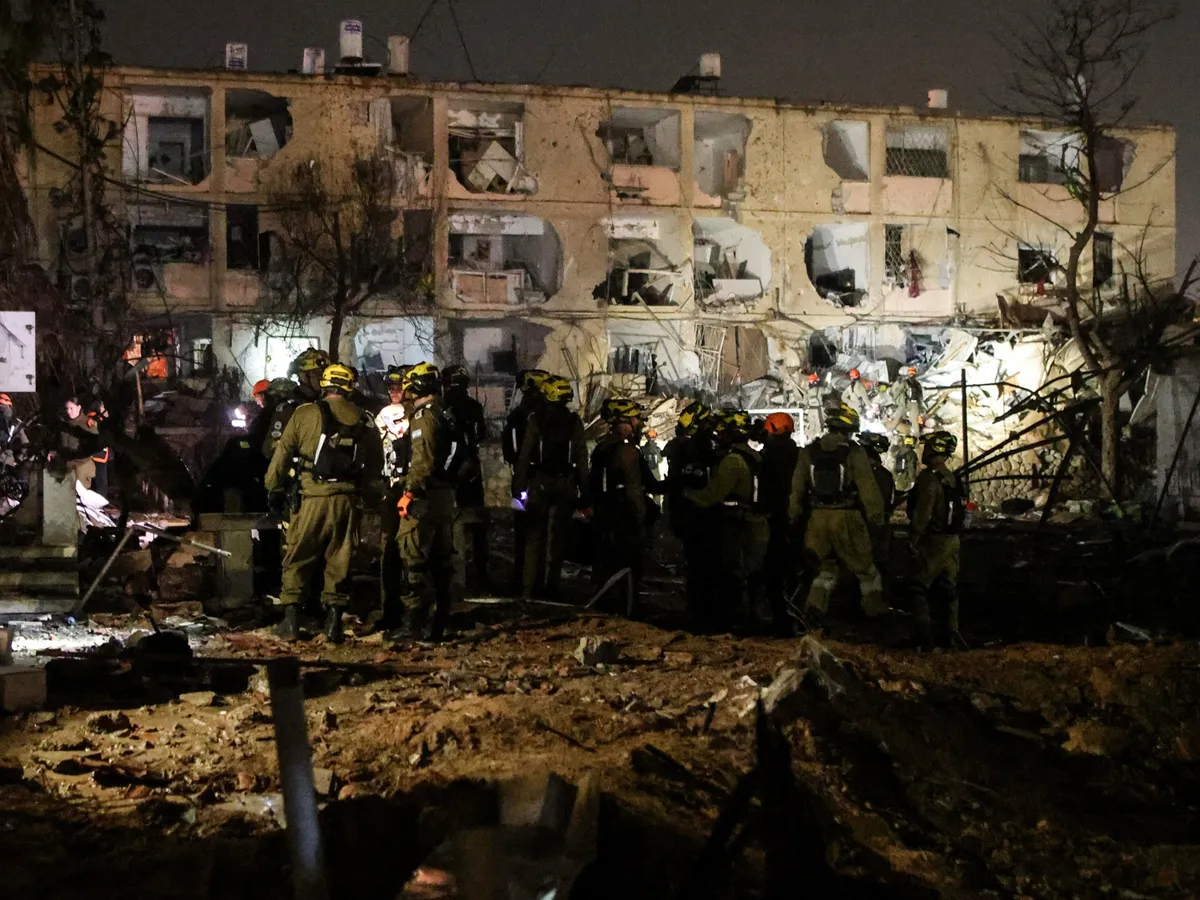
The threshold the Israeli authorities have set for the use of a nuclear weapon is dangerously low.Palestinian political analyst and playwright.Published On 22 Mar 2026For decades, the world has treated Israel’s nuclear arsenal as an awkward secret — something everyone knows exists but few are willing to discuss openly. Israel has never officially acknowledged possessing nuclear weapons, yet it is widely understood among security experts that the country maintains a significant nuclear capability.Estimates from institutions such as the Stockholm International Peace Research Institute suggest Israel possesses roughly around 80 nuclear warheads, along with delivery systems that could include aircraft and ballistic missiles. The policy governing this arsenal is known as “nuclear opacity.”Israel neither confirms nor denies the existence of its weapons. In practice, this ambiguity has allowed the international community to avoid confronting a difficult question: under what circumstances would Israel actually use them?That question matters more today than at any point in recent decades, as the United States and Israel wage a dangerous war on Iran. On Saturday, Iran struck the Israeli city of Dimona which houses a key nuclear facility, demonstrating that it can retaliate for attacks on its own nuclear sites.Israeli strategic thinking has long been shaped by the fear of an existential threat. Unlike most nuclear states, whose doctrines revolve around deterrence or competition with other nuclear powers, Israel’s security narrative is rooted in the belief that the country could face destruction if a war turns decisively against it. Israeli leaders have repeatedly framed regional conflicts — from the wars of 1967 and 1973 to present confrontations with Iran and armed groups in Gaza and Lebanon — as struggles for national survival. That mindset matters enormously when nuclear weapons are involved.
SRCAl Jazeera
LANGEN
LEANCenter
WORDS285
ENT7
SUN · 2026-03-22 · 09:01 GMTBRIEF NSR-2026-0322-28710
NSR-2026-0322-28710Analysis·EN·National Security
Why the world should worry about Israel’s nuclear doctrine
This article examines the potential dangers of Israel's nuclear doctrine, particularly its "nuclear opacity" policy of neither confirming nor denying its nuclear capabilities. It highlights concerns that Israel's threshold for nuclear weapon use may be dangerously low due to its perception of existential threats.
Ahmed NajarAl JazeeraFiled 2026-03-22 · 09:01 GMTLean · CenterRead · 2 min
Al JazeeraFIG 01
Reading time
2min
Word count
285words
Sources cited
1cited
Entities identified
7entities
Quality score
100%
§ 01
Briefing Summary
AI-generatedNEWSAR · AI
This article examines the potential dangers of Israel's nuclear doctrine, particularly its "nuclear opacity" policy of neither confirming nor denying its nuclear capabilities. It highlights concerns that Israel's threshold for nuclear weapon use may be dangerously low due to its perception of existential threats. Estimates suggest Israel possesses approximately 80 nuclear warheads and delivery systems. The article emphasizes the increasing relevance of this issue as tensions escalate between the United States, Israel, and Iran, especially after Iran struck the Israeli city of Dimona which houses a key nuclear facility. It argues that Israel's history of framing regional conflicts as struggles for national survival significantly impacts its nuclear decision-making. The analysis suggests that the international community should confront the question of when Israel might use its nuclear weapons.
Confidence 0.90Sources 1Claims 5Entities 7
§ 02
Article analysis
Model · rule-basedFraming
National Security
Conflict
Tone
Mixed Tone
AI-assessed
CalmNeutralAlarmist
Factuality
0.60 / 1.00
Mixed
LowHigh
Sources cited
1
Limited
FewMany
§ 03
Key claims
5 extracted01
Iran struck the Israeli city of Dimona which houses a key nuclear facility.
factual
Confidence
1.00
02
The policy governing Israel's nuclear arsenal is known as “nuclear opacity.”
factual
Confidence
1.00
03
Israel has never officially acknowledged possessing nuclear weapons.
factual
Confidence
1.00
04
Israeli strategic thinking has long been shaped by the fear of an existential threat.
factual
Confidence
0.90
05
Estimates suggest Israel possesses roughly around 80 nuclear warheads.
statisticStockholm International Peace Research Institute
Confidence
0.80
§ 04
Full report
2 min read · 285 words§ 05
Entities
7 identifiedKey playerOppositionContextPositiveNeutralNegative
§ 06
Keywords & salience
9 termsnuclear weapons
1.00
israel
0.90
nuclear doctrine
0.80
nuclear opacity
0.70
iran
0.60
existential threat
0.60
national survival
0.50
deterrence
0.40
dimona
0.40
§ 07
Topic connections
Interactive graph Network visualization showing 51 related topics
View Full Graph Person Organization Location Event|Click node to navigate|Edge numbers = shared articles