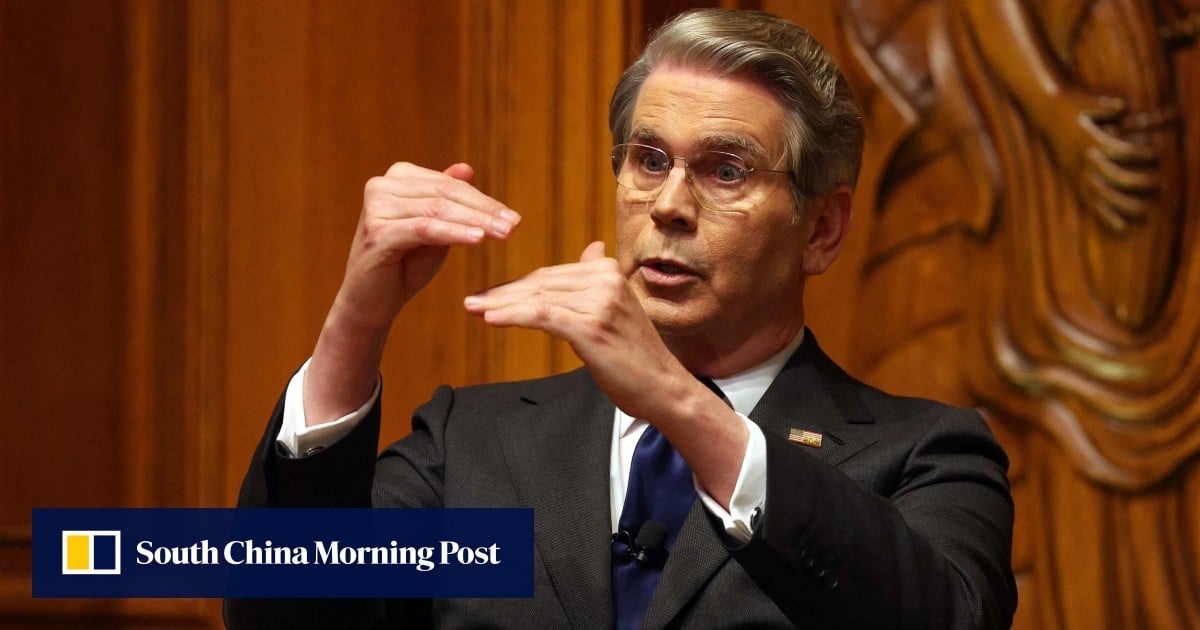
The United States may need to “escalate” its attacks against Iran to be able to wind down the war, US Treasury Secretary Scott Bessent said on Sunday, after US President Donald Trump gave seemingly contradictory trajectories for the US military campaign.Trump on Saturday threatened to “obliterate” Iranian energy plants if Tehran did not fully open the pivotal Strait of Hormuz, just a day after saying US objectives were “very close” and that he was considering “winding down” the war.Asked on NBC’s Meet the Press if Trump was winding down or escalating the war, Bessent said: “They’re not mutually exclusive. Sometimes you have to escalate to de-escalate.”“This is the only language the Iranians understand,” he argued.Iran’s threats against shipping through the Strait of Hormuz, through which about a fifth of global gas and oil supplies flow, have caused energy prices to soar around the world.Bessent, as part of efforts to abate market turmoil, has temporarily lifted US sanctions on Iranian and Russian oil that had already been loaded onto ships.But the move has produced some backlash, with critics saying it will provide funding to Iran at the same time that the US-Israeli conflict is ongoing.
SRCSouth China Morning Post
LANGEN
LEANCenter-Right
WORDS194
ENT9
SUN · 2026-03-22 · 16:42 GMTBRIEF NSR-2026-0322-29121
NSR-2026-0322-29121News Report·EN·Political Strategy
US may ‘escalate to de-escalate’ attacks against Iran, says Scott Bessent
US Treasury Secretary Scott Bessent stated that the United States might need to escalate attacks against Iran to ultimately de-escalate the conflict. This statement followed seemingly contradictory messages from President Trump, who threatened to "obliterate" Iranian energy plants if the Strait of Hormuz wasn't fully opened, but also suggested potentially winding down the war.
Agence France-PresseSouth China Morning PostFiled 2026-03-22 · 16:42 GMTLean · Center-RightRead · 1 min
South China Morning PostFIG 01
Reading time
1min
Word count
194words
Sources cited
2cited
Entities identified
9entities
Quality score
100%
§ 01
Briefing Summary
AI-generatedNEWSAR · AI
US Treasury Secretary Scott Bessent stated that the United States might need to escalate attacks against Iran to ultimately de-escalate the conflict. This statement followed seemingly contradictory messages from President Trump, who threatened to "obliterate" Iranian energy plants if the Strait of Hormuz wasn't fully opened, but also suggested potentially winding down the war. Bessent argued that escalation is the only language Iran understands, particularly regarding threats to shipping through the Strait of Hormuz, which have impacted global energy prices. To ease market turmoil, Bessent temporarily lifted US sanctions on Iranian and Russian oil already loaded on ships, a move that has faced criticism for potentially funding Iran during the ongoing US-Israeli conflict.
Confidence 0.90Sources 2Claims 5Entities 9
§ 02
Article analysis
Model · rule-basedFraming
Political Strategy
National Security
Tone
Mixed Tone
AI-assessed
CalmNeutralAlarmist
Factuality
0.70 / 1.00
Factual
LowHigh
Sources cited
2
Limited
FewMany
§ 03
Key claims
5 extracted01
Bessent has temporarily lifted US sanctions on Iranian and Russian oil that had already been loaded onto ships.
factual
Confidence
1.00
02
Trump threatened to “obliterate” Iranian energy plants if Tehran did not fully open the Strait of Hormuz.
quoteDonald Trump
Confidence
1.00
03
About a fifth of global gas and oil supplies flow through the Strait of Hormuz.
statistic
Confidence
0.90
04
Iran’s threats against shipping through the Strait of Hormuz have caused energy prices to soar.
factual
Confidence
0.90
05
US may need to “escalate” its attacks against Iran to be able to wind down the war.
quoteScott Bessent
Confidence
0.80
§ 04
Full report
1 min read · 194 words§ 05
Entities
9 identifiedKey playerOppositionContext
§ 06
Keywords & salience
9 termsiran
1.00
us
0.90
escalate to de-escalate
0.90
strait of hormuz
0.80
sanctions
0.70
oil supplies
0.60
energy prices
0.60
military campaign
0.50
market turmoil
0.40
§ 07
Topic connections
Interactive graph Network visualization showing 51 related topics
View Full Graph Person Organization Location Event|Click node to navigate|Edge numbers = shared articles