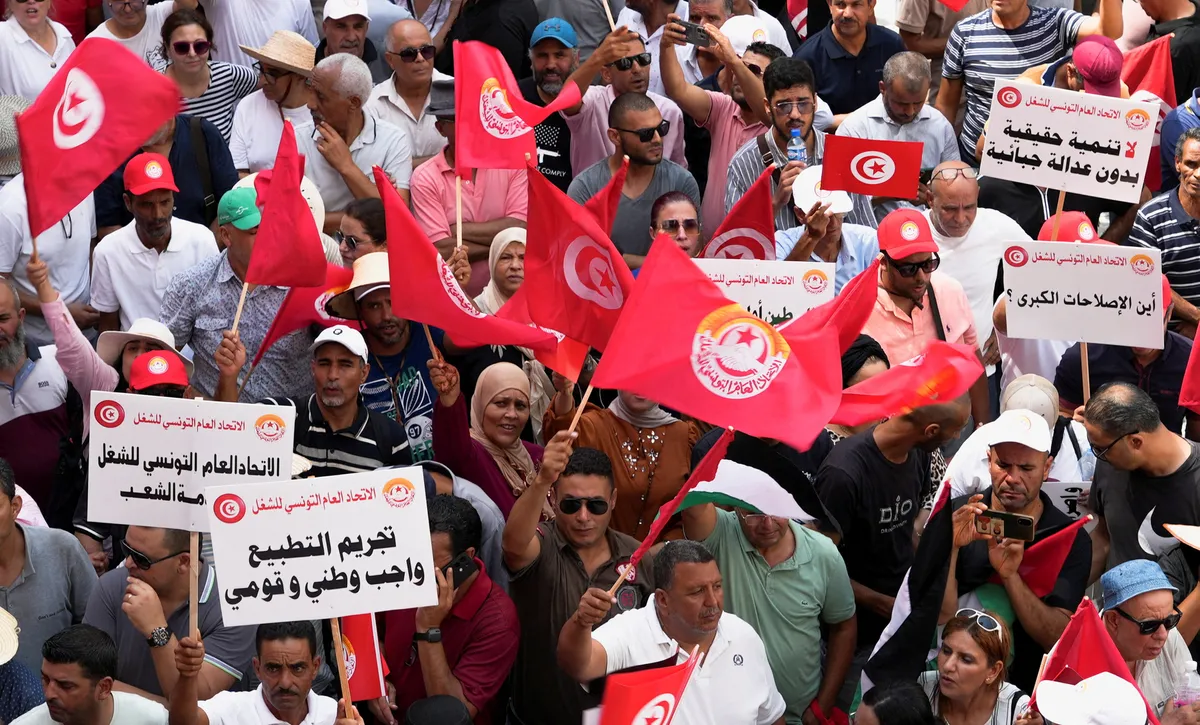
NewsFeedThe Arab Spring began in Tunisia 15 years ago, after Mohamed Bouazizi set fire to himself triggering unrest which toppled the dictator and sparked hopes for freedom. Relatives of political prisoners say President Kais Saied has pushed the country back into authoritarianism.Published On 17 Dec 2025
SRCAl Jazeera
LANGEN
LEANCenter
WORDS46
ENT4
WED · 2025-12-17 · 12:38 GMTBRIEF NSR-2025-1217-3085
NSR-2025-1217-3085News Report·EN·Political Strategy
Activists decry state of Tunisia’s democracy, 15 years after Arab Spring
Fifteen years after the Arab Spring began in Tunisia, activists and relatives of political prisoners are criticizing the current state of the country's democracy. The Arab Spring, sparked by Mohamed Bouazizi's self-immolation, began in Tunisia in December 2010 and led to the ousting of the dictator and hopes for increased freedom.
Al JazeeraFiled 2025-12-17 · 12:38 GMTLean · CenterRead · 1 min
Al JazeeraFIG 01
Reading time
1min
Word count
46words
Sources cited
1cited
Entities identified
4entities
Quality score
100%
§ 01
Briefing Summary
AI-generatedNEWSAR · AI
Fifteen years after the Arab Spring began in Tunisia, activists and relatives of political prisoners are criticizing the current state of the country's democracy. The Arab Spring, sparked by Mohamed Bouazizi's self-immolation, began in Tunisia in December 2010 and led to the ousting of the dictator and hopes for increased freedom. However, in December 2025, critics are alleging that President Kais Saied has reversed democratic progress, pushing Tunisia back towards authoritarianism. These concerns highlight a perceived deterioration of the freedoms initially sought during the Arab Spring. The activists are decrying the current political climate.
Confidence 0.70Sources 1Claims 4Entities 4
§ 02
Article analysis
Model · rule-basedFraming
Political Strategy
Human Rights
Tone
Measured
AI-assessed
CalmNeutralAlarmist
Factuality
0.70 / 1.00
Factual
LowHigh
Sources cited
1
Limited
FewMany
§ 03
Key claims
4 extracted01
Mohamed Bouazizi set fire to himself triggering unrest.
factualNewsFeed
Confidence
1.00
02
The Arab Spring began in Tunisia 15 years ago.
factualNewsFeed
Confidence
1.00
03
The unrest toppled the dictator and sparked hopes for freedom.
factualNewsFeed
Confidence
0.90
04
President Kais Saied has pushed the country back into authoritarianism.
quoteRelatives of political prisoners
Confidence
0.80
§ 04
Full report
1 min read · 46 words§ 05
Entities
4 identifiedKey playerOppositionContextPositiveNeutralNegative
Locations1
§ 06
Keywords & salience
8 termsarab spring
0.90
tunisia
0.80
authoritarianism
0.70
democracy
0.70
kais saied
0.60
political prisoners
0.60
dictator
0.50
unrest
0.40
§ 07
Topic connections
Interactive graph Network visualization showing 7 related topics
View Full Graph Person Organization Location Event|Click node to navigate|Edge numbers = shared articles