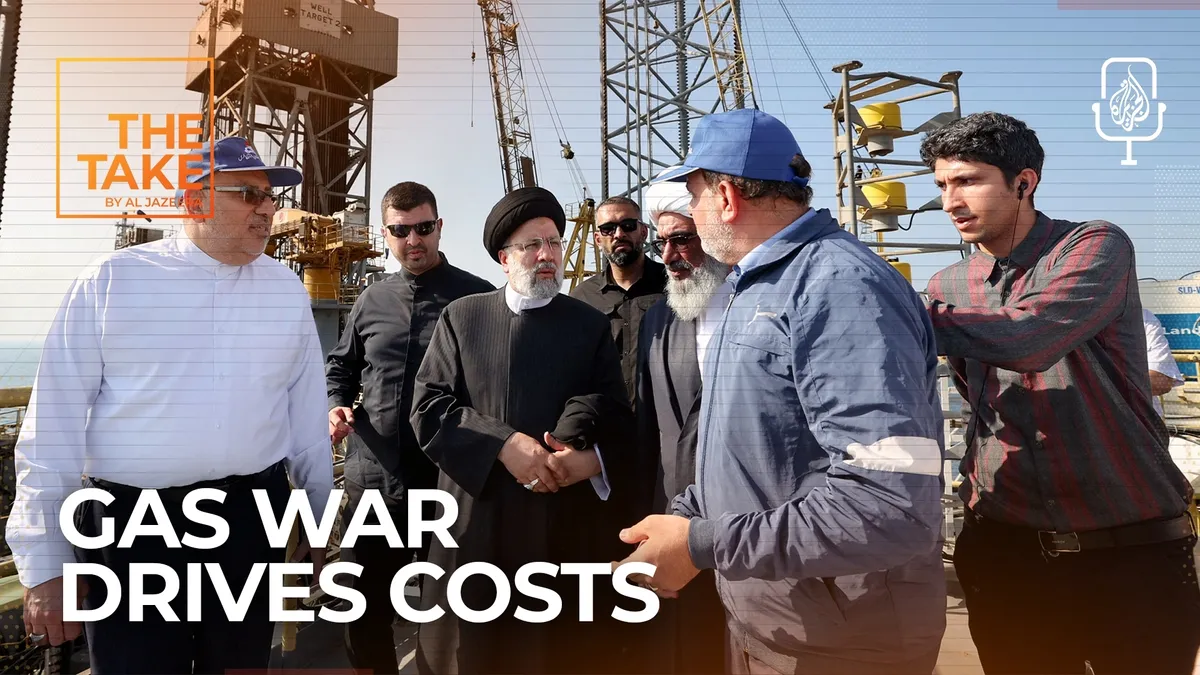
The TakeStrikes on gas sites in the Iran war are driving up energy costs, pushing up prices for power, food and more worldwide.Strikes on gas sites are now part of the US-Israel war with Iran. But its effect will echo far beyond the Gulf, hitting power, food, and prices worldwide. As gas supply shrinks and costs rise, who will feel it most, and how far could the shock spread?In this episode: Justin Dargin (@justindargin), Energy Expert, Middle East Council on Global Affairs Episode credits:This episode was produced by Marcos Bartolomé, Tamara Khandaker, Sarí el-Khalili, Chloe K. Li, Tuleen Barakat, Catherine Nouhan and our guest host, Kevin Hirten. It was edited by Sarí el-Khalili. Alex Roldan is our sound designer. The Take production team is Marcos Bartolomé, Sonia Bhagat, Spencer Cline, Sarí el-Khalili, Tamara Khandaker, Chloe K. Li, Alexandra Locke, Catherine Nouhan, Alex Roldan, and Noor Wazwaz. Our host is Malika Bilal. Our editorial intern is Tuleen Barakat. Our engagement producers are Adam Abou-Gad and Vienna Maglio. Andrew Greiner is lead of audience engagement. Our video editors are Hisham Abu Salah and Mohannad al-Melhem. Alexandra Locke is The Take’s executive producer. Connect with us:@AJEPodcasts on X, Instagram, Facebook, and YouTubePublished On 23 Mar 2026
SRCAl Jazeera
LANGEN
LEANCenter
WORDS203
ENT8
MON · 2026-03-23 · 17:56 GMTBRIEF NSR-2026-0323-31190
NSR-2026-0323-31190News Report·EN·Economic Impact
How the Iran war is about to hit your wallet
Strikes on gas sites, stemming from the US-Israel conflict with Iran, are predicted to have global economic repercussions. Published on March 23, 2026, the report indicates that these strikes are reducing gas supply, leading to increased energy costs worldwide.
Al JazeeraFiled 2026-03-23 · 17:56 GMTLean · CenterRead · 1 min
Al JazeeraFIG 01
Reading time
1min
Word count
203words
Sources cited
1cited
Entities identified
8entities
Quality score
100%
§ 01
Briefing Summary
AI-generatedNEWSAR · AI
Strikes on gas sites, stemming from the US-Israel conflict with Iran, are predicted to have global economic repercussions. Published on March 23, 2026, the report indicates that these strikes are reducing gas supply, leading to increased energy costs worldwide. The anticipated consequences include higher prices for power, food, and other essential goods. The report examines who will be most affected by the shrinking gas supply and rising costs and how far the economic shockwaves could spread globally. Energy expert Justin Dargin provides insights into the situation. The report was produced by Al Jazeera.
Confidence 0.90Sources 1Claims 5Entities 8
§ 02
Article analysis
Model · rule-basedFraming
Economic Impact
Conflict
Tone
Mixed Tone
AI-assessed
CalmNeutralAlarmist
Factuality
0.60 / 1.00
Mixed
LowHigh
Sources cited
1
Limited
FewMany
§ 03
Key claims
5 extracted01
Strikes on gas sites are driving up energy costs
factual
Confidence
0.80
02
Strikes on gas sites in the Iran war are driving up energy costs.
factual
Confidence
0.80
03
Rising energy costs are pushing up prices for power, food and more worldwide.
factual
Confidence
0.70
04
Strikes on gas sites are now part of the US-Israel war with Iran.
factual
Confidence
0.60
05
As gas supply shrinks and costs rise, who will feel it most, and how far could the shock spread?
prediction
Confidence
0.50
§ 04
Full report
1 min read · 203 words§ 05
Entities
8 identifiedKey playerOppositionContextPositiveNeutralNegative
People4
§ 06
Keywords & salience
8 termsiran war
1.00
energy costs
0.90
gas sites
0.80
prices
0.70
power
0.60
food
0.60
us-israel war
0.50
global affairs
0.40
§ 07
Topic connections
Interactive graph Network visualization showing 51 related topics
View Full Graph Person Organization Location Event|Click node to navigate|Edge numbers = shared articles