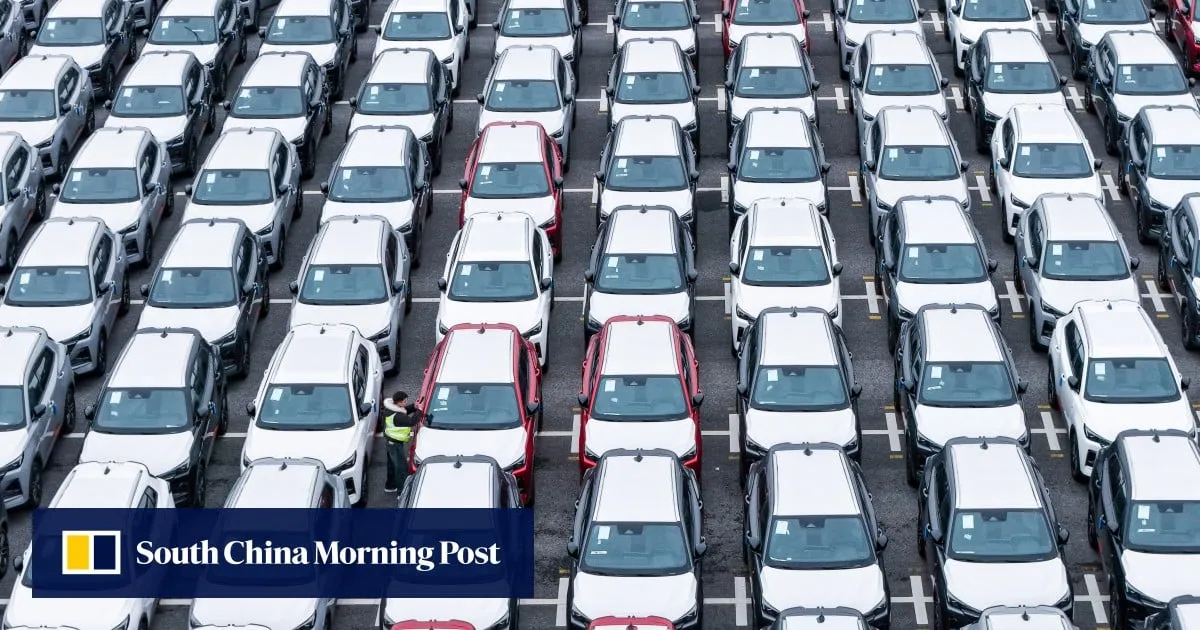
Surging oil prices driven by the US-Israel war on Iran could accelerate the global adoption of electric vehicles – a sector that helped China overtake Japan to become the world’s largest seller of automobiles last year.“The closure of the Strait of Hormuz could be a game-changer for EVs,” said David Brown, director of energy transition research at Wood Mackenzie, in a report released on Friday.The “eye-watering” 50 per cent surge in global oil prices so far this month would further incentivise consumers to pivot towards EVs, he said.Brent crude was trading at more than US$100 per barrel on Monday, as the upwards pressure on oil prices continued. On Saturday, US President Donald Trump threatened to “obliterate” Iran’s power plants unless it fully reopened the Strait of Hormuz to shipping traffic within 48 hours.“In those countries with access to low-cost Chinese EVs, the competitive advantage over gasoline-engined cars will come even sooner,” Brown said, noting that Brazil had already become the largest overseas market for Chinese EV giant BYD.Justin Feng, an Asia economist at HSBC, also highlighted this trend in a Friday report. He said higher and more volatile oil prices could turn EVs into a clearer “cost-savings proposition” if the conflict persisted, accelerating the electrification of Asia’s road transport.There are now 39 countries where EVs account for more than 10 per cent of total auto sales, up from four in 2019, according to a report by the British think tank Ember released on Wednesday. Emerging markets are adopting electric cars at a rapid pace, with some now surpassing advanced economies in terms of their EV sales share, the report added.
SRCSouth China Morning Post
LANGEN
LEANCenter-Right
WORDS270
ENT12
TUE · 2026-03-24 · 01:00 GMTBRIEF NSR-2026-0324-31678
NSR-2026-0324-31678News Report·EN·Economic Impact
Why the Iran war could be a ‘game-changer’ for EVs – and China’s car industry
Rising oil prices, potentially exacerbated by conflict involving Iran and the Strait of Hormuz, could significantly accelerate the global shift to electric vehicles (EVs). Analysts at Wood Mackenzie and HSBC suggest that a substantial increase in oil prices would make EVs a more attractive and cost-effective alternative for consumers, particularly in markets with access to affordable Chinese EVs.
Carol YangSouth China Morning PostFiled 2026-03-24 · 01:00 GMTLean · Center-RightRead · 2 min
South China Morning PostFIG 01
Reading time
2min
Word count
270words
Sources cited
3cited
Entities identified
12entities
Quality score
100%
§ 01
Briefing Summary
AI-generatedNEWSAR · AI
Rising oil prices, potentially exacerbated by conflict involving Iran and the Strait of Hormuz, could significantly accelerate the global shift to electric vehicles (EVs). Analysts at Wood Mackenzie and HSBC suggest that a substantial increase in oil prices would make EVs a more attractive and cost-effective alternative for consumers, particularly in markets with access to affordable Chinese EVs. This trend could further solidify China's position as the world's leading auto seller, a title it claimed last year. A recent report indicates that EV adoption is rapidly increasing globally, with a growing number of countries seeing EVs account for over 10% of total auto sales, and emerging markets are quickly catching up to advanced economies in EV adoption rates.
Confidence 0.90Sources 3Claims 5Entities 12
§ 02
Article analysis
Model · rule-basedFraming
Economic Impact
Technology
Tone
Measured
AI-assessed
CalmNeutralAlarmist
Factuality
0.70 / 1.00
Factual
LowHigh
Sources cited
3
Well sourced
FewMany
§ 03
Key claims
5 extracted01
There are now 39 countries where EVs account for more than 10 per cent of total auto sales, up from four in 2019.
statisticBritish think tank Ember
Confidence
1.00
02
Brent crude was trading at more than US$100 per barrel on Monday.
factual
Confidence
1.00
03
China overtook Japan to become the world’s largest seller of automobiles last year.
factual
Confidence
1.00
04
The closure of the Strait of Hormuz could be a game-changer for EVs.
quoteDavid Brown, director of energy transition research at Wood Mackenzie
Confidence
0.80
05
Surging oil prices driven by the US-Israel war on Iran could accelerate the global adoption of electric vehicles.
prediction
Confidence
0.70
§ 04
Full report
2 min read · 270 words§ 05
Entities
12 identifiedKey playerOppositionContextPositiveNeutralNegative
§ 06
Keywords & salience
8 termselectric vehicles
1.00
oil prices
0.90
china's car industry
0.80
strait of hormuz
0.70
ev adoption
0.70
cost-savings proposition
0.60
emerging markets
0.50
gasoline-engined cars
0.40
§ 07
Topic connections
Interactive graph Network visualization showing 51 related topics
View Full Graph Person Organization Location Event|Click node to navigate|Edge numbers = shared articles