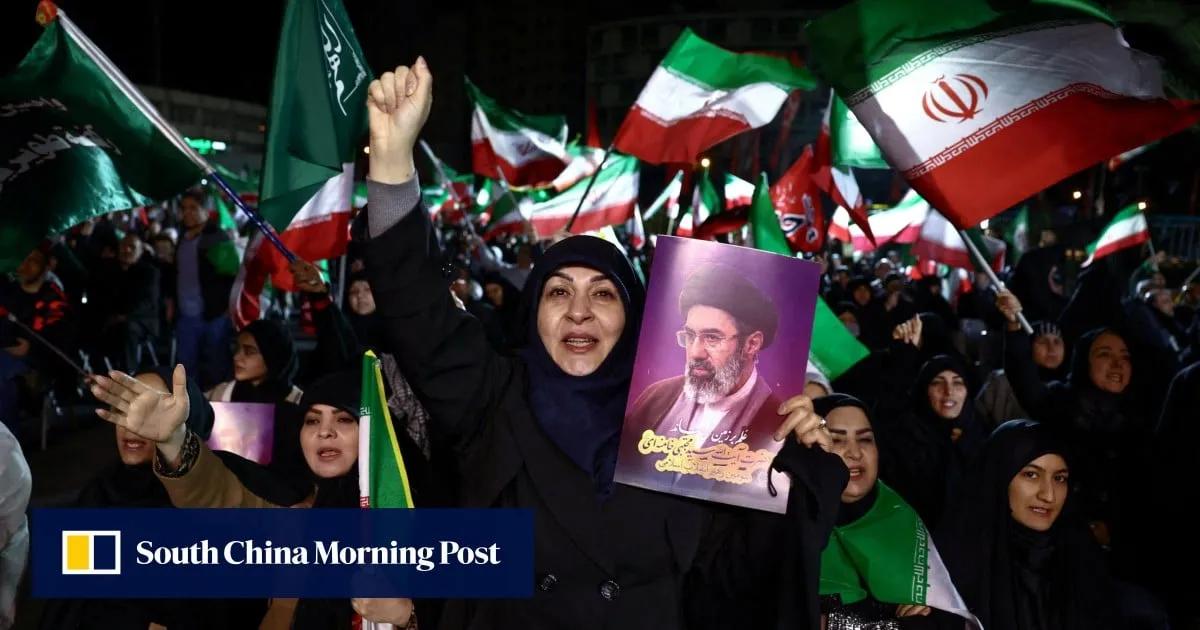
Iran’s veteran supreme leader and a host of other top figures and Revolutionary Guards commanders have been killed in US-Israeli strikes but the ruling system has maintained its ability to strategise and operate in the war that began on February 28.Born from a 1979 revolution, the Islamic Republic built a complex power structure with layered institutions buttressed by a shared commitment to the survival of the theocratic system rather than relying on a small number of individuals.Is the new supreme leader really in charge?Iran’s veteran Supreme Leader Ayatollah Ali Khamenei was killed in one of the first strikes of the war. In office since 1989 he enjoyed unquestioning obedience throughout the system and the last say on all major issues.Under Iran’s official ideology of velayat-e faqih, or “rule of the Islamic jurist”, the supreme leader is a learned cleric wielding temporal power on behalf of Shiite Islam’s 12th imam, who disappeared in the ninth century.The leader’s office, known as the bayt, has a large staff that shadows other parts of Iran’s government, allowing the leader to intervene directly across the bureaucracy.The new leader, Khamenei’s son Mojtaba, has inherited the role and its extensive formal powers, but he lacks the automatic authority enjoyed by his father. The choice of the Revolutionary Guards, he may also be beholden to the hardline military corps.
SRCSouth China Morning Post
LANGEN
LEANCenter-Right
WORDS221
ENT8
TUE · 2026-03-24 · 04:55 GMTBRIEF NSR-2026-0324-31979
NSR-2026-0324-31979Analysis·EN·Political Strategy
With a host of top figures killed in war, who is now running Iran?
Following the deaths of Iran's Supreme Leader Ayatollah Ali Khamenei and other top figures in US-Israeli strikes that began on February 28th, Iran's theocratic system, established after the 1979 revolution, continues to operate. The Islamic Republic's complex power structure, built on layered institutions and commitment to the system's survival, has allowed it to strategize despite the loss of key individuals.
ReutersSouth China Morning PostFiled 2026-03-24 · 04:55 GMTLean · Center-RightRead · 1 min
South China Morning PostFIG 01
Reading time
1min
Word count
221words
Sources cited
0cited
Entities identified
8entities
Quality score
100%
§ 01
Briefing Summary
AI-generatedNEWSAR · AI
Following the deaths of Iran's Supreme Leader Ayatollah Ali Khamenei and other top figures in US-Israeli strikes that began on February 28th, Iran's theocratic system, established after the 1979 revolution, continues to operate. The Islamic Republic's complex power structure, built on layered institutions and commitment to the system's survival, has allowed it to strategize despite the loss of key individuals. Khamenei's son, Mojtaba, has inherited the formal powers of the Supreme Leader, a role wielding temporal power on behalf of Shiite Islam’s 12th imam, including a large staff that shadows the government. However, Mojtaba lacks his father's unquestioned authority and may be influenced by the Revolutionary Guards, who chose him.
Confidence 0.90Claims 5Entities 8
§ 02
Article analysis
Model · rule-basedFraming
Political Strategy
National Security
Tone
Mixed Tone
AI-assessed
CalmNeutralAlarmist
Factuality
0.60 / 1.00
Mixed
LowHigh
Sources cited
0
No named sources
FewMany
§ 03
Key claims
5 extracted01
The new leader, Khamenei’s son Mojtaba, has inherited the role and its extensive formal powers.
factualnull
Confidence
1.00
02
Under Iran’s official ideology of velayat-e faqih, the supreme leader is a learned cleric wielding temporal power.
factualnull
Confidence
1.00
03
Iran’s veteran Supreme Leader Ayatollah Ali Khamenei was killed in one of the first strikes of the war.
factualnull
Confidence
1.00
04
Mojtaba lacks the automatic authority enjoyed by his father.
factualnull
Confidence
0.80
05
The ruling system has maintained its ability to strategise and operate in the war.
factualnull
Confidence
0.70
§ 04
Full report
1 min read · 221 words§ 05
Entities
8 identifiedKey playerOppositionContextPositiveNeutralNegative
Organizations3
§ 06
Keywords & salience
9 termsiran
1.00
supreme leader
0.90
revolutionary guards
0.80
islamic republic
0.70
ayatollah ali khamenei
0.60
velayat-e faqih
0.60
mojtaba khamenei
0.50
theocratic system
0.50
us-israeli strikes
0.40
§ 07
Topic connections
Interactive graph Network visualization showing 51 related topics
View Full Graph Person Organization Location Event|Click node to navigate|Edge numbers = shared articles