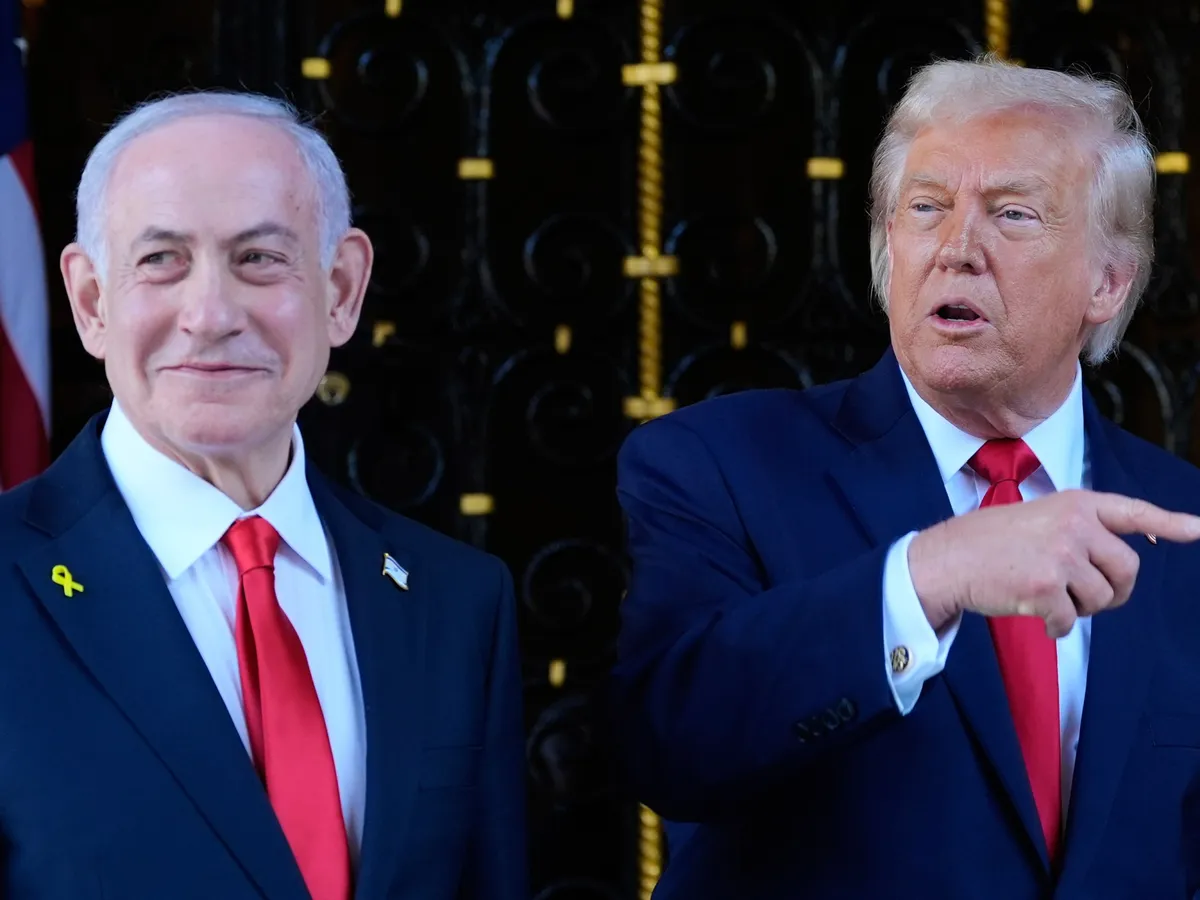
Israeli analysts describe confusion after US President Trump unexpectedly shifts from threatened strikes on Iran to talks.US President Donald Trump speaks to reporters as he greets Israeli Prime Minister Benjamin Netanyahu at his Mar-a-Lago club, on December 29, 2025, in Palm Beach, Florida [Alex Brandon/AP Photo]Published On 24 Mar 2026Israeli analysts have described a sense of disappointment and confusion in the country after United States President Donald Trump’s claim that negotiations with Iran to wind down the war would continue.Trump’s comments come despite his threats to launch a wave of strikes against Iran’s energy infrastructure, and denials from Iran that any negotiations are taking place.Recommended Stories list of 4 itemslist 1 of 4‘False flag attack’: Iran denies claims it fired missiles at Diego Garcialist 2 of 4Threats over Iran war bare Trump efforts to transform free speech: Analystslist 3 of 4Iraq pulled into Iran war as US targets Iran-aligned groupslist 4 of 4Trump says Iran, US seeking ‘deal’ after he pauses strikes on power plantsend of listThroughout the war, Israeli leaders have framed themselves as being at the forefront of the fight against Iran, with Prime Minister Benjamin Netanyahu frequently boasting of having convinced the US to join what he has repeatedly framed as an existential threat posed to Israel by Iran.In a video statement released on Monday after Trump’s comments, Netanyahu said that the US president believed that it was possible to leverage “the mighty achievements obtained by [the Israeli military] and the US military to realise the goals of the war in an agreement … that will safeguard our vital interests”.“In parallel, we continue to attack, both in Iran and Lebanon,” the prime minister added. “We are methodically dismantling the missile programme and the nuclear programme, and continue to hit Hezbollah hard.”Despite that framing, many in Israel are acutely aware that the war was presented to the Israeli people at the outset as one that would likely overthrow the Iranian government and end the threat from the country. With the Islamic Republic still standing and deadly Iranian attacks hitting Israel in the last few days, talk of a negotiated end to the conflict is unsettling to many.Former Israeli ambassador Alon Pinkas told Al Jazeera that, if Trump has pushed for negotiations over Netanyahu’s objections, it may be a sign that the US president is aware that “Netanyahu may have duped [Trump] on how quick and resounding a victory would be, and how viable regime change is”.Political scientist Ori Goldberg said that Israel did not appear to have been consulted about negotiations beforehand, a stark rejection of Netanyahu’s efforts in convincing the US to entrench itself further in the war.“Is it a defeat for Netanyahu? Hell, yes!” he told Al Jazeera from outside Tel Aviv. “It’s Trump essentially ditching Israel. For now, at least, we’ll still be able to destroy Lebanon and starve Gaza, but any idea that we’re a serious player that the US or any state would want to talk with has gone. Nobody wants to talk to us.”Objectives achieved?Netanyahu and his allies on Israel’s far right have placed great store in the support of the US president, whose 2024 US presidential election victory was celebrated by the Israeli prime minister and framed as marking a new period of closer Israel-US partnership.However, Trump’s unpredictable behaviour, as well as the huge power imbalance between the two countries, has led to various periods of concern, such as when the US imposed a ceasefire on Israel in Gaza in late 2025, as well as ordering the cessation of its previous attacks on Iran in June 2025.But given the outsized role of the US in Israeli politics, some analysts have suggested that even if it is true that Israel has been sidelined in any current negotiations, that does not negate the gains it has achieved in its fight against Iran.“I don’t think there was any expectation that Israel would be involved in diplomatic efforts to end the war. Israel is no longer a country that does diplomacy,” Israeli political analyst Nimrod Flashenberg said from Berlin. “[But] I’m doubtful that Netanyahu was ever serious about regime change. If he was, he wouldn’t have sabotaged or even killed so many people inside the regime that could have brought that about.”“If you assume, instead, that this was about downgrading Iran’s military capabilities, then he’s done that, and he’s done it in such a way that’s going to ensure the US’s long-term commitment to making sure it remains downgraded.”
SRCAl Jazeera
LANGEN
LEANCenter
WORDS744
ENT9
TUE · 2026-03-24 · 07:13 GMTBRIEF NSR-2026-0324-32036
NSR-2026-0324-32036Analysis·EN·Political Strategy
Where do reported US-Iran ‘negotiations’ leave Israel?
Following US President Trump's unexpected shift from threatened strikes to potential negotiations with Iran to end the ongoing war, Israeli analysts have expressed confusion and disappointment. This is despite Iran denying that any negotiations are taking place.
Simon Speakman CordallAl JazeeraFiled 2026-03-24 · 07:13 GMTLean · CenterRead · 3 min
Al JazeeraFIG 01
Reading time
3min
Word count
744words
Sources cited
3cited
Entities identified
9entities
Quality score
100%
§ 01
Briefing Summary
AI-generatedNEWSAR · AI
Following US President Trump's unexpected shift from threatened strikes to potential negotiations with Iran to end the ongoing war, Israeli analysts have expressed confusion and disappointment. This is despite Iran denying that any negotiations are taking place. Throughout the war, Israeli leaders, particularly Prime Minister Netanyahu, have portrayed themselves as leading the fight against Iran, framing it as an existential threat to Israel. While Netanyahu claims Trump believes a deal can be reached that safeguards Israeli interests, many Israelis are unsettled by the prospect of a negotiated end, as the war was initially presented as a means to overthrow the Iranian government. Some analysts suggest Trump's openness to negotiations may indicate a realization that Netanyahu may have misled him regarding the war's potential outcome.
Confidence 0.90Sources 3Claims 5Entities 9
§ 02
Article analysis
Model · rule-basedFraming
Political Strategy
National Security
Tone
Measured
AI-assessed
CalmNeutralAlarmist
Factuality
0.60 / 1.00
Mixed
LowHigh
Sources cited
3
Well sourced
FewMany
§ 03
Key claims
5 extracted01
Netanyahu said the US president believed it was possible to leverage achievements to realize the goals of the war in an agreement.
quoteBenjamin Netanyahu
Confidence
1.00
02
Trump claims negotiations with Iran to wind down the war would continue.
quoteDonald Trump
Confidence
1.00
03
Israel continues to attack in both Iran and Lebanon.
quoteBenjamin Netanyahu
Confidence
0.90
04
Netanyahu claims to have convinced the US to join what he frames as an existential threat posed to Israel by Iran.
factualBenjamin Netanyahu
Confidence
0.90
05
Israel did not appear to have been consulted about negotiations beforehand.
factualOri Goldberg
Confidence
0.80
§ 04
Full report
3 min read · 744 words§ 05
Entities
9 identifiedKey playerOppositionContextPositiveNeutralNegative
People3
§ 06
Keywords & salience
10 termsus-iran negotiations
0.90
israel
0.80
donald trump
0.70
iran
0.70
benjamin netanyahu
0.60
us foreign policy
0.60
israeli analysts
0.50
war
0.50
missile programme
0.40
nuclear programme
0.40
§ 07
Topic connections
Interactive graph Network visualization showing 51 related topics
View Full Graph Person Organization Location Event|Click node to navigate|Edge numbers = shared articles