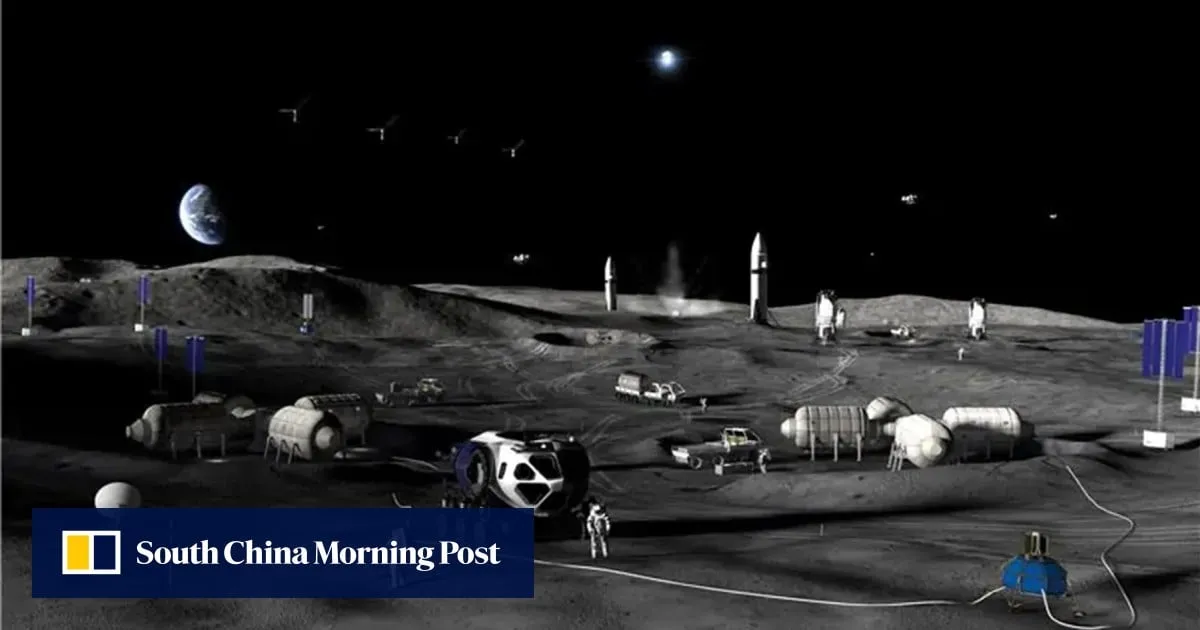
Nasa announced on Tuesday it has cancelled plans to deploy a space station in lunar orbit and would instead use components from the project to build a US$20 billion base on the Moon’s surface, while also planning to send a nuclear-powered spacecraft to Mars.US space agency chief Jared Isaacman, an appointee of US President Donald Trump who took charge at Nasa in December, announced an unprecedented array of changes to the Artemis Moon programme that would expand humanity’s footprint in space, as the US pushes to return to the Moon before China sends its astronauts there around 2030.The plans for the Moon base included an aim to send more robotic landers, deploy a fleet of drones and lay the groundwork for using nuclear power on the lunar surface in the next few years.“This revised step-by-step approach to learn, build muscle memory, bring down risk, and gain confidence is exactly how Nasa achieved the near impossible in the 1960s,” Isaacman said, referring to the US Apollo programme.SpaceX and Blue Origin have been contracted to develop lunar landers used in the Artemis programme. Photo: Blue Origin via TNSNasa also disclosed plans to launch a spacecraft called Space Reactor 1 Freedom to Mars before the end of 2028 in a mission it said would demonstrate advanced nuclear electric propulsion in deep space.
SRCSouth China Morning Post
LANGEN
LEANCenter-Right
WORDS219
ENT12
WED · 2026-03-25 · 03:54 GMTBRIEF NSR-2026-0325-33881
NSR-2026-0325-33881News Report·EN·Technology
Nasa abandons orbital station, plans moon base and nuclear spacecraft
NASA, under the leadership of Jared Isaacman, has announced a shift in its Artemis program, abandoning plans for a lunar orbital station in favor of a $20 billion moon base. This change aims to accelerate the US return to the moon, ahead of China's planned lunar mission around 2030.
ReutersSouth China Morning PostFiled 2026-03-25 · 03:54 GMTLean · Center-RightRead · 1 min
South China Morning PostFIG 01
Reading time
1min
Word count
219words
Sources cited
3cited
Entities identified
12entities
Quality score
100%
§ 01
Briefing Summary
AI-generatedNEWSAR · AI
NASA, under the leadership of Jared Isaacman, has announced a shift in its Artemis program, abandoning plans for a lunar orbital station in favor of a $20 billion moon base. This change aims to accelerate the US return to the moon, ahead of China's planned lunar mission around 2030. The moon base plans include robotic landers, drones, and the development of nuclear power on the lunar surface. Additionally, NASA intends to launch Space Reactor 1 Freedom, a nuclear-powered spacecraft, to Mars before the end of 2028 to demonstrate advanced nuclear electric propulsion. These changes reflect a step-by-step approach to expanding humanity's presence in space, reminiscent of the Apollo program.
Confidence 0.90Sources 3Claims 5Entities 12
§ 02
Article analysis
Model · rule-basedFraming
Technology
Political Strategy
Tone
Measured
AI-assessed
CalmNeutralAlarmist
Factuality
0.80 / 1.00
Factual
LowHigh
Sources cited
3
Well sourced
FewMany
§ 03
Key claims
5 extracted01
This revised step-by-step approach to learn, build muscle memory, bring down risk, and gain confidence is exactly how Nasa achieved the near impossible in the 1960s.
quoteJared Isaacman
Confidence
1.00
02
Nasa plans to launch a spacecraft called Space Reactor 1 Freedom to Mars before the end of 2028.
factualNasa
Confidence
1.00
03
Nasa will use components from the cancelled project to build a US$20 billion base on the moon’s surface.
factualNasa
Confidence
1.00
04
Nasa cancelled plans to deploy a space station in lunar orbit.
factualNasa
Confidence
1.00
05
The US pushes to return to the moon before China sends its astronauts there around 2030.
factualnull
Confidence
0.90
§ 04
Full report
1 min read · 219 words§ 05
Entities
12 identifiedKey playerOppositionContextPositiveNeutralNegative
Organizations3
Locations4
§ 06
Keywords & salience
9 termsmoon base
0.90
artemis moon programme
0.80
nuclear spacecraft
0.80
lunar orbit
0.60
mars
0.60
nuclear power
0.50
robotic landers
0.50
deep space
0.40
space reactor 1 freedom
0.40
§ 07
Topic connections
Interactive graph No topic relationship data available yet. This graph will appear once topic relationships have been computed.