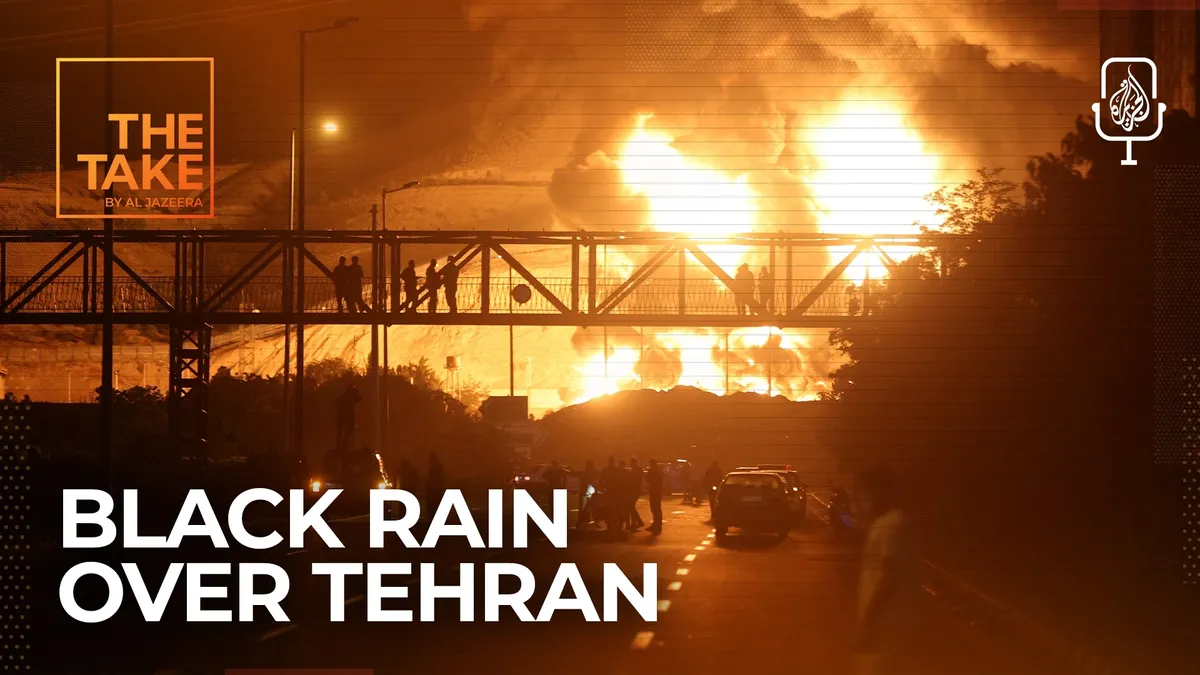
The TakeBlack rain follows Tehran oil strikes, spreading toxic fallout into air, soil and water.Black rain fell over Tehran after oil depot strikes in the Israel-war-on-Iran" class="entity-link entity-event" data-entity-id="38678" data-entity-type="event">US-Israel war on Iran filled the sky with toxic petrochemical smoke. The contamination can seep into lungs, soil and water, with long-term risks from cancer to lasting environmental damage. What happens when the air people breathe becomes part of the battlefield?In this episode: Narges Bajoghli, Cultural Anthropologist, Johns Hopkins University Episode credits:This episode was produced by Noor Wazwaz, Marcos Bartolomé and Sarí el-Khalili with Catherine Nouhan, Tuleen Barakat, and our guest host, Tamara Khandaker. It was edited by Sarí el-Khalili.Our sound designer is Alex Roldan. Our video editors are Hisham Abu Salah and Mohannad al-Melhem. Alexandra Locke is The Take’s executive producer. Connect with us:@AJEPodcasts on X, Instagram, Facebook, and YouTubePublished On 25 Mar 2026
SRCAl Jazeera
LANGEN
LEANCenter
WORDS140
ENT7
WED · 2026-03-25 · 16:25 GMTBRIEF NSR-2026-0325-35497
NSR-2026-0325-35497News Report·EN·Environmental
Is war turning Tehran’s air into a chemical weapon?
Following oil depot strikes in Tehran during a US-Israel war on Iran, black rain has fallen, spreading toxic petrochemical smoke and fallout. Published on March 25, 2026, by AJEPodcasts, the report details how this contamination poses risks to human health through inhalation and environmental damage by seeping into soil and water.
Al JazeeraFiled 2026-03-25 · 16:25 GMTLean · CenterRead · 1 min
Al JazeeraFIG 01
Reading time
1min
Word count
140words
Sources cited
1cited
Entities identified
7entities
Quality score
100%
§ 01
Briefing Summary
AI-generatedNEWSAR · AI
Following oil depot strikes in Tehran during a US-Israel war on Iran, black rain has fallen, spreading toxic petrochemical smoke and fallout. Published on March 25, 2026, by AJEPodcasts, the report details how this contamination poses risks to human health through inhalation and environmental damage by seeping into soil and water. The fallout potentially leads to long-term health issues like cancer and lasting environmental consequences. The report explores the implications of weaponizing the air people breathe in conflict zones, focusing on the aftermath of the strikes in Tehran. Narges Bajoghli, a Cultural Anthropologist from Johns Hopkins University, is featured in the episode.
Confidence 0.85Sources 1Claims 5Entities 7
§ 02
Article analysis
Model · rule-basedFraming
Environmental
Public Health
Tone
Sensational
AI-assessed
CalmNeutralAlarmist
Factuality
0.40 / 1.00
Mixed
LowHigh
Sources cited
1
Limited
FewMany
§ 03
Key claims
5 extracted01
Narges Bajoghli is a Cultural Anthropologist at Johns Hopkins University
factual
Confidence
1.00
02
Black rain fell over Tehran after oil depot strikes.
factual
Confidence
0.90
03
Oil depot strikes in the US-Israel war on Iran filled the sky with toxic petrochemical smoke.
factual
Confidence
0.80
04
The contamination can seep into lungs, soil and water.
factual
Confidence
0.70
05
There are long-term risks from cancer to lasting environmental damage.
prediction
Confidence
0.60
§ 04
Full report
1 min read · 140 words§ 05
Entities
7 identifiedKey playerOppositionContextPositiveNeutralNegative
Organizations1
Locations4
§ 06
Keywords & salience
10 termswar
0.90
tehran
0.80
air pollution
0.80
toxic fallout
0.70
chemical weapon
0.70
black rain
0.60
environmental damage
0.60
oil strikes
0.60
us-israel war on iran
0.50
cancer risks
0.40
§ 07
Topic connections
Interactive graph No topic relationship data available yet. This graph will appear once topic relationships have been computed.