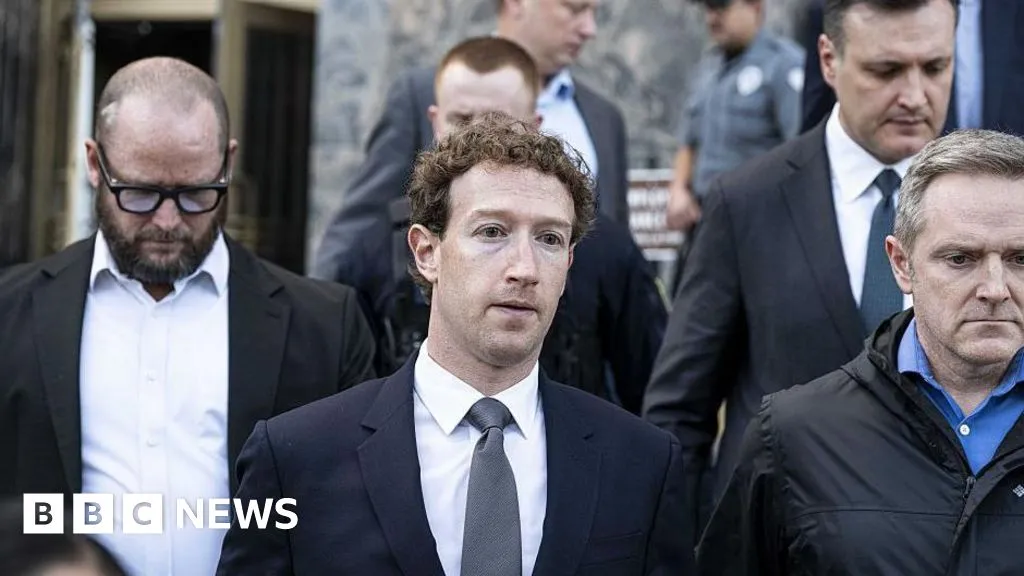
2 days agoZoe KleinmanTechnology editorGetty ImagesMeta's boss Mark Zuckerberg appeared in court in February to defend the company, but it could now face further challenges over how it runs its platformsIt ruled those apps are addictive, and deliberately engineered that way – and that its owners have been negligent in their safeguarding of the children who have used them.It's a sombre moment for Silicon Valley and the implications are global.The tech giants in this case, Meta and Google, must now pay $6m (£4.5m) in damages to a young woman known as Kaley, the victim at the centre of this case.She claimed the platforms left her with body dysmorphia, depression and suicidal thoughts.Both companies intend to appeal, with Meta maintaining a single app cannot be solely responsible for a teen mental health crisis.Google, meanwhile, says YouTube is not a social network.But for now the ruling means "the era of impunity is over" according to Dr Mary Franks, a law professor at George Washington University.It is hard to overstate what a game-changing moment this court verdict is for social media.Whatever happens next, and there will undoubtedly be appeals and further legal processes, this is going to redefine the landscape.It could even be the beginning of the end of the social media era as we know it.A 'big tobacco' moment?The world's doomscrollers might not have been shocked by the verdict but I think the tech companies were.Meta and Google racked up eye-watering legal fees defending this. This case, and others like it, are clearly of huge significance to them.The other two companies in the trial – TikTok and Snap, the owner of Snapchat – settled before it went to court. There were mutterings in the tech sphere they couldn't afford the fight.I had been invited to slick briefings about all the tools social networks offer (mainly to parents) to protect kids. But ultimately the court ruled their measures were not enough.Allow Google YouTube content?This article contains content provided by Google YouTube. We ask for your permission before anything is loaded, as they may be using cookies and other technologies. You may want to read and before accepting. To view this content choose ‘accept and continue’.The BBC is not responsible for the content of external sites. Google YouTube content may contain adverts."It changed from a product you used to a product that uses you," he told BBC Radio 4's Today programme on Thursday. Meta has denied his claims.Some experts have described the verdict as big tech's "big tobacco" moment, and we know how that worked out - although it didn't stop people smoking altogether.Could there be health warnings on screens? Restricted advertising and sponsorship opportunities? The tech companies are currently legally protected in the US by a clause known as Section 230, which shields them from liability for the content that is published on them. Other types of media companies do not have this benefit. It is often said the tech industry couldn't survive without it.But scepticism over the shield may be growing, with Senate Commerce Committee having held a hearing to discuss it on Wednesday.The tech leaders enjoy a generally cosy relationship with US President Donald Trump, who has championed the sector. He hasn't yet leapt to their defence.AFP via Getty ImagesAnother option is that the platforms are forced to strip out all the features designed to keep people there. But engagement is big tech's lifeblood. Lose all the techniques: the endless scrolling, the algorithmic recommendations, the auto play, and you're left with a very different, and arguably limited, social media experience. The success of big platforms lies in their footfall - keeping large numbers of people online for as long as possible and coming back as often as possible, in order that they might be targeted with as many ads as possible. That's how the companies make money. In several territories, including the UK, children do not contribute to this advertising machine but only since regulators intervened.However, today's children are tomorrow's adults and the ideal scenario for the tech companies is that they turn 18 as established users already.Facebook, Meta's original social network, is often jokingly referred to as the "boomer platform" - but 2025 figures suggest nearly half of its worldwide users are aged 18-35.More challenges to comeKaley's court victory is now big tech's second defeat in a number of similar cases set for trial in the US this year. There are more to come."This landmark verdict, along with many other similar lawsuits against social media companies, signals a shift in how courts view platform design as a set of choices that can carry real legal and social consequences," said Dr Rob Nicholls of the University of Sydney."It opens the door to wider challenges against social media and other technology systems engineered to maximise engagement at the expense of user wellbeing."In December it blocked under-16s from the biggest social platforms.What's your average screen time? Landmark addiction verdict sparks debateThe UK and other countries are considering the same thing, and this verdict certainly adds weight to the arguments in favour.For some parents who have already struggled with it, banning the platforms for children is a no-brainer."Just do it now," said bereaved British mum Ellen Roome recently.Parliament, however, remains divided on what action to take.The House of Lords and Commons are currently engaged in what is known as "ping pong" over a proposed amendment to the Children's Schools and Wellbeing Bill which would give ministers a year to decide which platforms to ban for Under 16s. Perhaps the new verdict will unite the politicians and the peers, and not just in the UK: will we one day look back on this period of history and wonder why on earth we ever let children run free on social media?
SRCBBC News - World
LANGEN
LEANCenter
WORDS955
ENT10
THU · 2026-03-26 · 09:37 GMTBRIEF NSR-2026-0326-37067
NSR-2026-0326-37067Analysis·EN·Legal & Judicial
'A game-changing moment for social media' - what next for big tech after landmark addiction verdict?
A recent court ruling in the case of a young woman, known as Kaley, against Meta and Google has found the tech giants liable for designing addictive social media platforms that contributed to her mental health issues. The court ordered Meta and Google to pay $6 million in damages, determining they were negligent in safeguarding children using their platforms.
BBC News - WorldFiled 2026-03-26 · 09:37 GMTLean · CenterRead · 4 min
BBC News - WorldFIG 01
Reading time
4min
Word count
955words
Sources cited
1cited
Entities identified
10entities
Quality score
100%
§ 01
Briefing Summary
AI-generatedNEWSAR · AI
A recent court ruling in the case of a young woman, known as Kaley, against Meta and Google has found the tech giants liable for designing addictive social media platforms that contributed to her mental health issues. The court ordered Meta and Google to pay $6 million in damages, determining they were negligent in safeguarding children using their platforms. Meta and Google intend to appeal, arguing their platforms are not solely responsible for teen mental health crises. Experts suggest this verdict marks a significant shift, potentially ending the "era of impunity" for social media companies and redefining the legal landscape. Other companies involved in similar lawsuits, like TikTok and Snap, settled before the trial. The ruling raises questions about the effectiveness of current safety measures and could lead to further legal challenges for big tech.
Confidence 0.90Sources 1Claims 5Entities 10
§ 02
Article analysis
Model · rule-basedFraming
Legal & Judicial
Technology
Tone
Mixed Tone
AI-assessed
CalmNeutralAlarmist
Factuality
0.60 / 1.00
Mixed
LowHigh
Sources cited
1
Limited
FewMany
§ 03
Key claims
5 extracted01
The tech companies are currently legally protected in the US by a clause known as Section 230.
factual
Confidence
1.00
02
"The era of impunity is over"
quoteDr Mary Franks, a law professor at George Washington University
Confidence
1.00
03
Meta maintains a single app cannot be solely responsible for a teen mental health crisis.
quoteMeta
Confidence
1.00
04
The court ruled those apps are addictive, and deliberately engineered that way.
factual
Confidence
1.00
05
Meta and Google must now pay $6m (£4.5m) in damages to a young woman known as Kaley.
factual
Confidence
1.00
§ 04
Full report
4 min read · 955 words§ 05
Entities
10 identifiedKey playerOppositionContextPositiveNeutralNegative
Organizations7
Locations1
§ 06
Keywords & salience
10 termssocial media addiction
0.90
legal verdict
0.80
google
0.70
tech giants
0.70
mental health
0.70
meta
0.70
safeguarding children
0.60
negligence
0.60
legal challenges
0.50
body dysmorphia
0.50
§ 07
Topic connections
Interactive graph No topic relationship data available yet. This graph will appear once topic relationships have been computed.