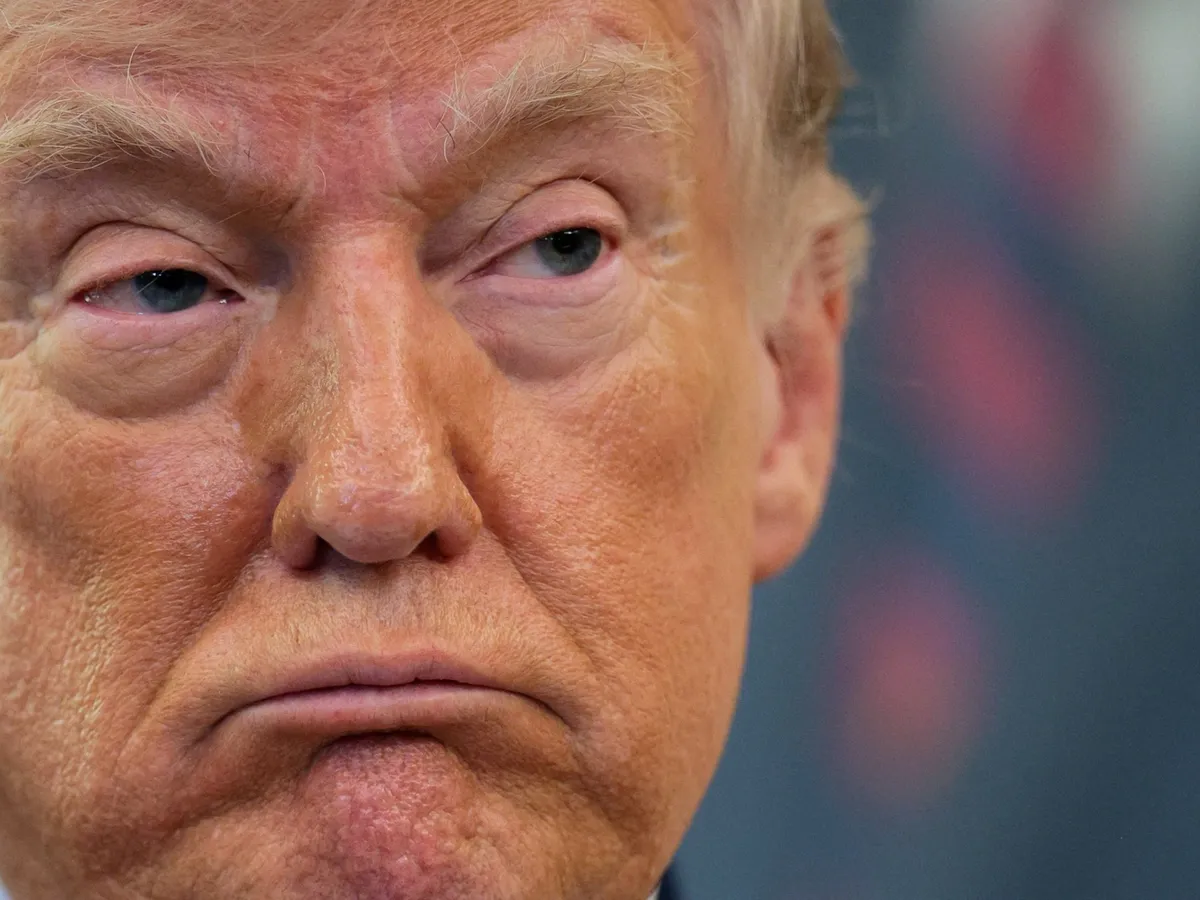
The US president has threatened the attacks as a means of pressuring Iran to reopen the Strait of Hormuz, a vital waterway.US President Donald Trump has repeatedly said Iran has been 'obliterated' [Evan Vucci/Reuters]Published On 26 Mar 2026United States President Donald Trump has pushed back a self-imposed deadline for attacks on Iran’s power grid to April 6, citing progress in negotiations to end the ongoing war in the country.Thursday’s announcement comes as the president continues to pressure Iran to reopen the Strait of Hormuz, a vital waterway for oil traffic.Recommended Stories list of 3 itemslist 1 of 3Germany warns of world economic ‘catastrophe’; OECD cuts UK growth forecastlist 2 of 3Tehran’s ‘toll booth’: How Iran picks who to let through Strait of Hormuzlist 3 of 3Trump says Iran ‘begging’ for deal to end war as Tehran issues new demandsend of list“As per Iranian Government request, please let this statement serve to represent that I am pausing the period of Energy Plant destruction by 10 Days to Monday, April 6, 2026, at 8 PM, Eastern Time,” Trump wrote in a Truth Social post.“Talks are ongoing and, despite erroneous statements to the contrary by the Fake News Media, and others, they are going very well.”The post marked the latest postponement Trump has announced since he first threatened Iran’s energy system.On Sunday, Trump threatened to attack Iran’s power grid if the Strait of Hormuz was not opened within 48 hours. He wrote that he would strike energy plants, “STARTING WITH THE BIGGEST ONE FIRST”.Then, on Monday, he said he would delay the strikes for another five days based on “good and productive conversations” that Iran denies took place. Thursday’s is the second such delay.The Trump administration has often put forward contradictory statements about the direction of the war, which began when the US and Israel attacked Iran nearly one month ago, on February 28.But intentionally targeting Iran’s power supply could increase criticism of the overall military campaign.A possible war crime?Already, legal experts have described the initial attack on Iran as an act of unprovoked aggression.Destroying or damaging civilian infrastructure, meanwhile, could be considered a war crime under the Geneva Conventions.Analysts, however, have noted a trend in contemporary warfare towards attacking “dual-use” structures that benefit both military and civilian populations.In Ukraine, for instance, Russian President Vladimir Putin justified an attack on energy infrastructure by saying it would set back the country’s military industrial complex. Still, the International Criminal Court has issued arrest warrants for those Russian attacks.Amnesty International is among the rights groups that have denounced Trump’s plans to bomb Iranian power stations as “a threat to commit war crimes”.Despite confident assertions from the White House that the victory in Iran is close at hand, the war shows few signs of ending.Iran’s chokehold on the Strait of Hormuz, meanwhile, has sent shockwaves through the global economy. More than one-fifth of the world’s oil supply passes through the narrow waterway, along Iran’s shoreline.Faced with threats to oil tankers, traffic through the strait has largely ground to a halt.Trump has issued calls to allies to help reopen the strait, but so far, he has encountered scepticism from NATO countries and other partners.In a cabinet meeting earlier on Thursday, Trump reiterated his position that Iran was “begging” for a deal to end the war, despite continued strikes against US bases and allies across the region. He also blasted media reports that Iran has rejected the US’s 15-point plan to reach a ceasefire.“ They’ll tell you, ‘We’re not negotiating. We will not negotiate.’ Of course, they’re negotiating. They’ve been obliterated. Who wouldn’t negotiate?” Trump asked.“If they make the right deal, then the strait will open up.”Reports in the US media have suggested that the White House is considering ground operations against Iran, a step that analysts warn would lead to further escalation.Already, an estimated 1,937 people have been killed in Iran, and 13 US military members have died. Dozens more deaths have been reported around the Middle East.Iran, however, has denied that talks are taking place and has threatened to step up attacks around the region if the US or Israel target its energy grid.
SRCAl Jazeera
LANGEN
LEANCenter
WORDS687
ENT10
THU · 2026-03-26 · 22:03 GMTBRIEF NSR-2026-0326-37854
NSR-2026-0326-37854News Report·EN·Conflict
Trump postpones US strikes on Iranian power grid to April 6 amid talks
US President Donald Trump has postponed threatened strikes on Iran's power grid until April 6, 2026, citing progress in negotiations to reopen the Strait of Hormuz. This marks the second delay after Trump initially threatened attacks if the waterway, vital for oil traffic, remained closed.
Al Jazeera StaffAl JazeeraFiled 2026-03-26 · 22:03 GMTLean · CenterRead · 3 min
Al JazeeraFIG 01
Reading time
3min
Word count
687words
Sources cited
3cited
Entities identified
10entities
Quality score
100%
§ 01
Briefing Summary
AI-generatedNEWSAR · AI
US President Donald Trump has postponed threatened strikes on Iran's power grid until April 6, 2026, citing progress in negotiations to reopen the Strait of Hormuz. This marks the second delay after Trump initially threatened attacks if the waterway, vital for oil traffic, remained closed. Trump claims talks are progressing well, despite denials from Iran regarding previous conversations. The US and Israel initiated military action against Iran nearly a month prior, on February 28. Legal experts have already described the initial attack as unprovoked aggression and destroying civilian infrastructure could be considered a war crime under the Geneva Conventions.
Confidence 0.90Sources 3Claims 5Entities 10
§ 02
Article analysis
Model · rule-basedFraming
Conflict
Political Strategy
Tone
Mixed Tone
AI-assessed
CalmNeutralAlarmist
Factuality
0.70 / 1.00
Factual
LowHigh
Sources cited
3
Well sourced
FewMany
§ 03
Key claims
5 extracted01
Amnesty International has denounced Trump’s plans to bomb Iranian power stations as “a threat to commit war crimes”.
quoteAmnesty International
Confidence
1.00
02
The US and Israel attacked Iran nearly one month ago, on February 28.
factualArticle
Confidence
1.00
03
Trump threatened to attack Iran’s power grid if the Strait of Hormuz was not opened within 48 hours.
factualArticle
Confidence
1.00
04
Donald Trump has pushed back a self-imposed deadline for attacks on Iran’s power grid to April 6.
factualArticle
Confidence
1.00
05
Destroying or damaging civilian infrastructure could be considered a war crime under the Geneva Conventions.
factualArticle
Confidence
0.90
§ 04
Full report
3 min read · 687 words§ 05
Entities
10 identifiedKey playerOppositionContextPositiveNeutralNegative
Locations7
§ 06
Keywords & salience
8 termsiran
1.00
donald trump
0.90
us strikes
0.90
strait of hormuz
0.80
power grid
0.70
negotiations
0.60
war crime
0.50
military campaign
0.40
§ 07
Topic connections
Interactive graph Network visualization showing 51 related topics
View Full Graph Person Organization Location Event|Click node to navigate|Edge numbers = shared articles