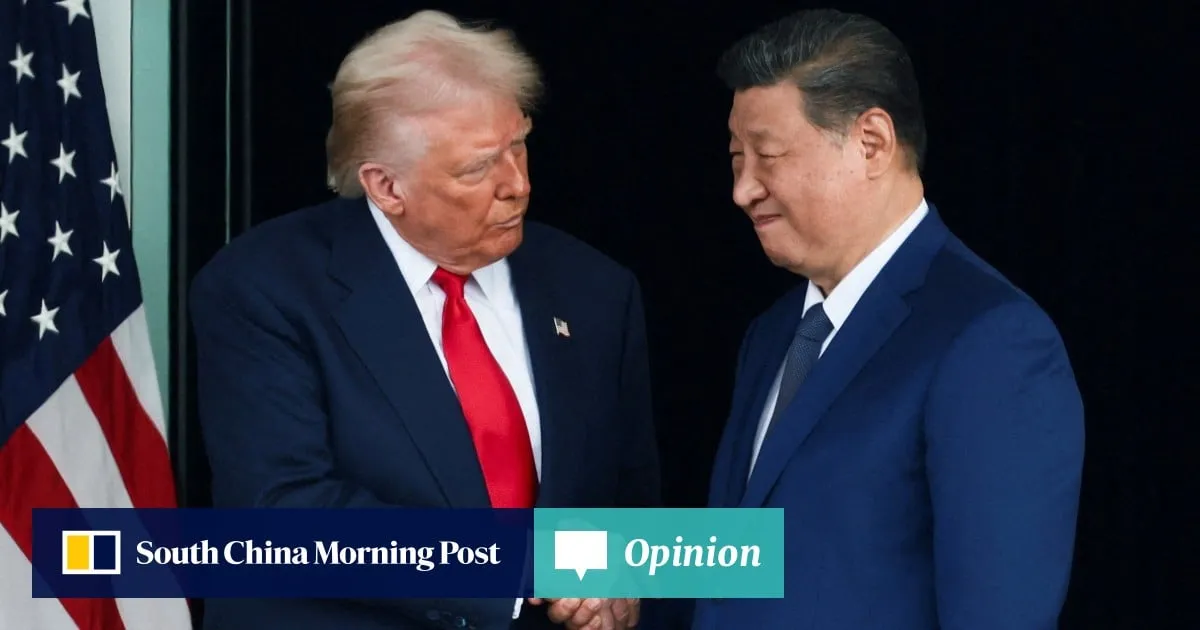
Beijing is probably sighing with relief following US President Donald Trump’s postponement of his visit to China for “a month or so”. Initially, Trump had tried to threaten China for not joining a proposed naval escort campaign in the Strait of Hormuz, but quickly changed his tone after recognising the absurdity of such a demand. Not even the United States’ closest allies are willing to lend a hand.However, Beijing is even more frustrated with Washington’s lack of clarity and Trump’s hazy agenda for what he wants to accomplish on his coming visit. This month’s meeting in Paris, France, between Vice-Premier He Lifeng and US Treasury Secretary Bessent to discuss the detailed agenda apparently yielded little of substance.Few seem to understand why Trump is unwilling to reveal his hand before his much hyped visit: in fact, his operational style has changed – from traditional strategic ambiguity into one that may perhaps be best understood as “compound strategic ambiguity”.The fundamental principle of traditional strategic ambiguity is to foster uncertainty – in this case, to deter Taiwan’s reunification by force. During his first term, Trump primarily employed traditional strategic ambiguity, using the unspoken uncertainty of how the US would react to a military unification of Taiwan.Traditional strategic ambiguity has long been a US tool for seeking stability in the Taiwan-strait" class="entity-link entity-location" data-entity-id="5508" data-entity-type="location">Taiwan Strait. However, such a strategy has a singular objective and lacks the operational space to use Taiwan as a bargaining chip. Thus, it fails to meet the demands of Trump’s preference for making deals.He once publicly suggested that the one-China policy was meaningless to the US unless it could be used as a bargaining chip for something else. To compensate for the shortcomings of traditional strategic ambiguity, his team of modern-day West Coast Straussians have proposed a strategy of compound strategic ambiguity, the gist of which was reflected in the US’ 2025 National Security Strategy.
SRCSouth China Morning Post
LANGEN
OutletPrivately owned · Hong Kong
WORDS312
ENT12
THU · 2026-03-26 · 21:30 GMTBRIEF NSR-2026-0326-37911
NSR-2026-0326-37911Analysis·EN·Political Strategy
On Taiwan, Trump reimagines strategic ambiguity to suit his own ends
The article discusses Donald Trump's approach to US policy on Taiwan, arguing he's moved beyond traditional "strategic ambiguity." Trump's administration has seemingly adopted a "compound strategic ambiguity," using uncertainty not just to deter China from forcibly reunifying Taiwan, but also to potentially leverage the "One China" policy in negotiations. This shift, reportedly influenced by advisors, aims to provide more flexibility for deal-making, contrasting with the singular objective of stability that characterized the traditional approach.
Lanxin XiangSouth China Morning PostFiled 2026-03-26 · 21:30 GMTOutlet · Privately owned · Hong KongRead · 2 min
South China Morning PostFIG 01
Reading time
2min
Word count
312words
Sources cited
0cited
Entities identified
12entities
NEWSAR · AI
The article discusses Donald Trump's approach to US policy on Taiwan, arguing he's moved beyond traditional "strategic ambiguity." Trump's administration has seemingly adopted a "compound strategic ambiguity," using uncertainty not just to deter China from forcibly reunifying Taiwan, but also to potentially leverage the "One China" policy in negotiations. This shift, reportedly influenced by advisors, aims to provide more flexibility for deal-making, contrasting with the singular objective of stability that characterized the traditional approach. The article highlights Beijing's frustration with the lack of clarity surrounding Trump's agenda, particularly concerning his postponed visit to China. The US strategy is outlined in the 2025 National Security Strategy.
Confidence 0.90Claims 4Entities 12
Framing
Political Strategy
National Security
Tone
Measured
AI-assessed
CalmNeutralAlarmist
Factuality
0.40 / 1.00
Mixed
LowHigh
Sources cited
0
No named sources
FewMany
01
Trump publicly suggested that the one-China policy was meaningless unless it could be used as a bargaining chip.
factualArticle
Confidence
0.90
02
Trump postponed his visit to China for “a month or so”.
factualArticle
Confidence
0.90
03
Traditional strategic ambiguity is to deter Taiwan’s reunification by force.
factualArticle
Confidence
0.80
04
Trump's operational style has changed from traditional strategic ambiguity into 'compound strategic ambiguity'.
factualArticle
Confidence
0.70
§ 04
Full report
2 min read · 312 wordsKey playerOppositionContextPositiveNeutralNegative
Organizations1
Locations8
strategic ambiguity
1.00
taiwan
0.90
china
0.80
donald trump
0.70
us foreign policy
0.70
us-china relations
0.60
one-china policy
0.60
taiwan strait
0.50
compound strategic ambiguity
0.50
bargaining chip
0.40
§ 07
Connections
Who appears together in the newsIn this articleWider coverageLine weight = articles in common
Laying out network…
Strongest ties articles in common
- 15,001
- 4,854
- 3,563
- 2,429
- 2,399
- 1,809
Recurring context not named in this article
- LIranlinks 10
- LShanghailinks 9
- TArtificial Intelligencelinks 9
- PScott Bessentlinks 9
- LSouth Korealinks 9
- OEuropean Unionlinks 9
- PXi Jinpinglinks 9
- LHong Konglinks 9