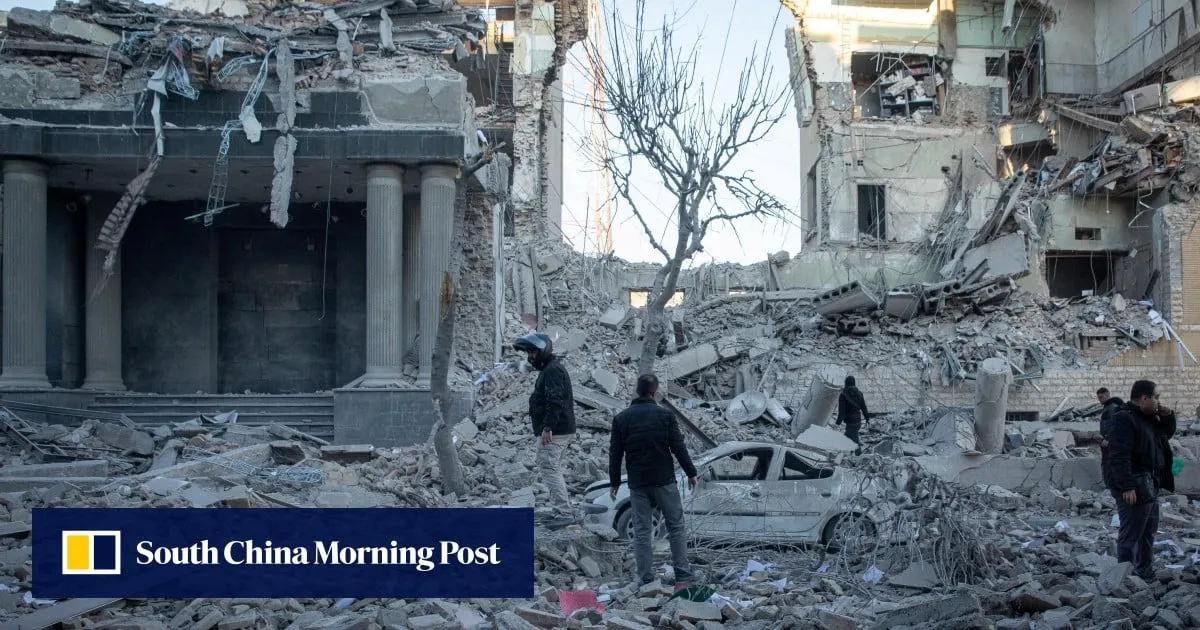
Massive carbon emissions from military activities and war-driven fossil fuel dependence are undermining the global energy transition, climate advocates warn as they point to the ongoing Iran conflict exacerbating this long-standing blind spot.Activists from Climate Action Network Southeast Asia, Oxfam and the Fossil Fuel Treaty convened in Kuala Lumpur earlier this week to discuss strategies to protect the global environment at the Southeast Asia-South Asia Preparatory Meeting for the Santa Marta Conference in Colombia next month and Cop31 in Antalya, Turkey, in November.Harjeet Singh, strategic adviser of the Fossil Fuel Treaty, a global campaign pushing for an agreement to end new fossil fuel expansion and phase out existing fossil fuel production, said military-linked emissions might account for 5 per cent of global carbon output.“That share is likely higher, especially when the full life cycle is considered, from weapons production to battlefield fuel use and post-war reconstruction,” Singh said.A report released in November 2025 by the Conflict and Environment Observatory (CEOBS), a UK-based body that researches and raises awareness of the environmental harm caused by armed conflicts and military activities, points to the lack of data transparency as a key challenge.It said analysis of military emissions data submitted by countries to the UN Framework Convention on Climate Change (UNFCCC) continued to be limited, with the top three military spenders – the United States, China and Russia – either not submitting data or providing incomplete figures.
SRCSouth China Morning Post
LANGEN
LEANCenter-Right
WORDS234
ENT12
FRI · 2026-03-27 · 08:57 GMTBRIEF NSR-2026-0327-38815
NSR-2026-0327-38815News Report·EN·Environmental
As wars threaten global climate, activists push for Cop31 to discuss defence spending
Climate activists are urging for the inclusion of military emissions and defense spending in discussions at COP31 in Antalya, Turkey, due to the significant impact of war and military activities on global carbon emissions. Organizations like Climate Action Network Southeast Asia, Oxfam, and the Fossil Fuel Treaty met in Kuala Lumpur to strategize on addressing this issue at upcoming climate conferences.
Ushar DanieleSouth China Morning PostFiled 2026-03-27 · 08:57 GMTLean · Center-RightRead · 1 min
South China Morning PostFIG 01
Reading time
1min
Word count
234words
Sources cited
3cited
Entities identified
12entities
Quality score
100%
§ 01
Briefing Summary
AI-generatedNEWSAR · AI
Climate activists are urging for the inclusion of military emissions and defense spending in discussions at COP31 in Antalya, Turkey, due to the significant impact of war and military activities on global carbon emissions. Organizations like Climate Action Network Southeast Asia, Oxfam, and the Fossil Fuel Treaty met in Kuala Lumpur to strategize on addressing this issue at upcoming climate conferences. They highlight that military-linked emissions could account for a substantial percentage of global carbon output, potentially exceeding 5% when considering the full lifecycle of military activities. A report by the Conflict and Environment Observatory (CEOBS) emphasizes the lack of transparency in military emissions data reported to the UNFCCC, particularly from top military spenders like the United States, China, and Russia, hindering accurate assessment and mitigation efforts. The activists aim to address this "blind spot" to ensure a comprehensive approach to the global energy transition.
Confidence 0.90Sources 3Claims 4Entities 12
§ 02
Article analysis
Model · rule-basedFraming
Environmental
Political Strategy
Tone
Measured
AI-assessed
CalmNeutralAlarmist
Factuality
0.70 / 1.00
Factual
LowHigh
Sources cited
3
Well sourced
FewMany
§ 03
Key claims
4 extracted01
Analysis of military emissions data submitted by countries to the UNFCCC continued to be limited.
quoteConflict and Environment Observatory (CEOBS)
Confidence
0.90
02
The United States, China and Russia either not submitting data or providing incomplete figures to UNFCCC.
factualConflict and Environment Observatory (CEOBS)
Confidence
0.80
03
Military activities and war-driven fossil fuel dependence are undermining the global energy transition.
quoteclimate advocates
Confidence
0.80
04
Military-linked emissions might account for 5 per cent of global carbon output.
quoteHarjeet Singh, strategic adviser of the Fossil Fuel Treaty
Confidence
0.60
§ 04
Full report
1 min read · 234 words§ 05
Entities
12 identifiedKey playerOppositionContextPositiveNeutralNegative
Organizations4
§ 06
Keywords & salience
9 termsmilitary emissions
0.90
climate change
0.80
defence spending
0.70
fossil fuel
0.70
energy transition
0.60
cop31
0.60
carbon emissions
0.50
war
0.50
data transparency
0.40
§ 07
Topic connections
Interactive graph No topic relationship data available yet. This graph will appear once topic relationships have been computed.