Iran-allied Houthis yet to get involved in conflict, but could target shipping in Red Sea.Supporters of Yemen's Houthi rebels hold a placard bearing a portrait of Iran’s slain Supreme Leader Ayatollah Ali Khamenei on March 13, 2026 [AFP]Published On 27 Mar 2026Sanaa, Yemen – Iran is facing the full might of the United States and Israel, and is fighting back, using the cards at its disposal.Maritime traffic in the Strait of Hormuz has been crippled as a result of Iranian threats, leading to a worldwide energy shock. Iran’s allies across the region are fighting in support of Iran, particularly Hezbollah in Lebanon.Recommended Stories list of 3 itemslist 1 of 3At least nine people dead, dozens missing as boat sinks off Djibouti coastlist 2 of 3Tehran’s ‘toll booth’: How Iran picks who to let through Strait of Hormuzlist 3 of 3US-Israel war on Iran: What’s happening on day 27 of attacks?end of listBut there is one card that appears not to have been played, yet.The Iran-allied Houthi rebels in Yemen, despite demonstrating their capabilities by attacking shipping in the Red Sea for two years after the start of Israel’s genocidal war on Gaza, have so far sat out the current conflict.Observers, and Yemenis themselves, are asking, for how long?Houthi chief Abdel-Malik al-Houthi has previously said that his group’s “hands are on the trigger”, promising action at the right time.An Iranian military official told the country’s semi-official Tasnim news agency on March 21 that any “US aggression” against Iran’s oil facilities on Kharg Island would pave the way for Tehran to destabilise the Red Sea and the Bab al-Mandeb Strait, which lies west of Yemen, at the entrance to the Red Sea.A blockade of Bab al-Mandeb, a vital maritime chokepoint linking the Red Sea to global trade routes, would further destabilise the energy market, but the military, economic and humanitarian repercussions for Yemen could be just as devastating and costly, analysts told Al Jazeera.Abdulsalam Mohammed, the head of the Yemeni Abaad Studies and Research Center, told Al Jazeera that if the Houthis were to get involved in the war in support of Iran, they would focus on attacking energy facilities and ports in Gulf countries, and preventing ships from passing through Bab al-Mandeb.Mohammed said that the effects of such a move would trigger a renewal of Yemen’s own internal conflict.“The clashes on [Yemen’s] front lines are poised to reignite, potentially ushering in a new chapter of war between the Houthis and pro-government Yemeni forces,” Mohammed said.The two sides fought a seven-year war, which effectively paused in April 2022 after they signed a United Nations-backed truce.But Yemen’s anti-Houthi forces may seize the opportunity if the Iranian ally is weakened by foreign attacks or distracted by conflict and launch their own battle.Last year, the US and Israel conducted a series of air strikes in Houthi-held areas of Yemen, killing several political and military leaders in Sanaa, the country’s Houthi-controlled capital.But in May, the Houthis and the US agreed to a truce, which included a Houthi agreement to stop attacks on US shipping in the Red Sea. The group later stopped attacks on Israel and Israeli-linked shipping after the October Gaza ceasefire deal.Mohammed, the analyst, now believes that the Houthi-US agreement is on the verge of collapse. And if that happens, he says that a renewal of the ground war in Yemen is likely.“Today, the military preparedness of the Yemeni government forces appears better, particularly after they stabilised the situation in South Yemen. In addition, pro-government Yemeni forces will receive foreign support, particularly from the US and Saudi Arabia, should they commence a new battle against the Houthis.”Earlier this year, the Yemeni government, backed by Saudi Arabia, regained control of Aden and other southern provinces, ending years-long infighting with separatists seeking an independent state in southern Yemen. The developments have led to a renewed confidence within the Yemeni government, which now believes that it can consolidate and eventually take the fight to the Houthis.Economic consequencesAny escalation in Bab al-Mandeb will complicate the movement of fuel and goods from the region, adding to the global economic troubles brought on by the US-Israel war on Iran.But it would also deal a “tremendous blow” to Yemen’s economy, Mustafa Nasr, head of the Studies and Economic Media Center, told Al Jazeera.“Yemen depends on imports for petrol, diesel and food commodities. The chaos in the waterway off the country will disrupt the shipping operations, which can result in immediate price hikes. With no substitutes, Yemeni civilians will bear the brunt,” said Nasr.Traders in Yemen recently said that international shipping companies had informed importers of a new $3,000 “war risk” fee on each container bound for Yemen amid the continued war in Iran.Those fees have been imposed even though Bab al-Mandeb is currently safe for ships to travel through.“When this passage becomes an effective war front, the repercussions for the local population will be harsher. There will be an increase in the price of fuel, a rise in shipping fees and an increase in the insurance fees. It will form a serious tragedy for the population,” said Nasr.He indicated that instability in Bab al-Mandeb would also harm the economies of the Gulf Arab states, which would, in turn, have a big impact on Yemen.Nasr added, “At present, the Yemeni state [the internationally-recognised Yemeni government] depends on the financial backing of Saudi Arabia. The longer this war goes on, the bigger the losses will be in the Gulf economies. This will definitely derail the Yemeni economy.”Yemen depends on imports to meet domestic demand for food and other essential goods, with roughly 85 percent of its food supply coming from abroad.‘The hungry will be hungrier’Laila, a 26-year-old university graduate who volunteers with local humanitarian initiatives in Sanaa, said that any escalation of the regional conflict that draws in Yemen would “just make the hungry hungrier”.“Take an example, a four-member family can live off three dollars a day. But if transportation fees increase and prices of goods jump because of shipping risks, the three dollars cannot help protect this family against hunger,” Laila told Al Jazeera.Laila says she is against any move that could endanger the security of shipping in Bab al-Mandeb. She describes the Houthis’ lack of involvement in the war over the past four weeks as “wise” and hopes the group will not be drawn into the “ring of conflict”.“The Houthi involvement in the Iran war could be a headache for the US and Israel. However, the humanitarian fallout in Yemen will be incredibly painful. Disrupting the shipping lanes and blockading ports is a recipe for further starvation here,” she said.Yemen is the Middle East’s poorest country, and the UN has previously described it as having the world’s worst humanitarian crisis.Samiha Awad Bataher, a health coordinator with the International Rescue Committee, wrote in a recent opinion article for Al Jazeera that while international attention was focused on the conflict in Iran and its regional spillover, a devastating crisis in Yemen was drawing almost no notice.She added, “For many families [in Yemen], meals have become a daily ration of bread and water. For others, adults go without food so their children can eat.”On Monday, Jorge Moreira da Silva, UN under-secretary-general and executive director of the UN Office for Project Services, warned that the blockade of the Strait of Hormuz would aggravate the situation in countries suffering from hunger, including Sudan, South Sudan, Afghanistan, Yemen and Somalia.He said in a statement, “Disruptions in the Hormuz Strait compromise the delivery of energy supplies. Fertiliser markets are impacted, threatening food security in countries where famine or food insecurity are highest.”
SRCAl Jazeera
LANGEN
LEANCenter
WORDS1 264
ENT12
FRI · 2026-03-27 · 11:24 GMTBRIEF NSR-2026-0327-38832
NSR-2026-0327-38832News Report·EN·Economic Impact
Yemenis fear economic consequences of being dragged into US-Iran conflict
Yemenis fear potential economic consequences as they could be drawn into the conflict between the U.S. and Iran.
Al Jazeera StaffAl JazeeraFiled 2026-03-27 · 11:24 GMTLean · CenterRead · 6 min
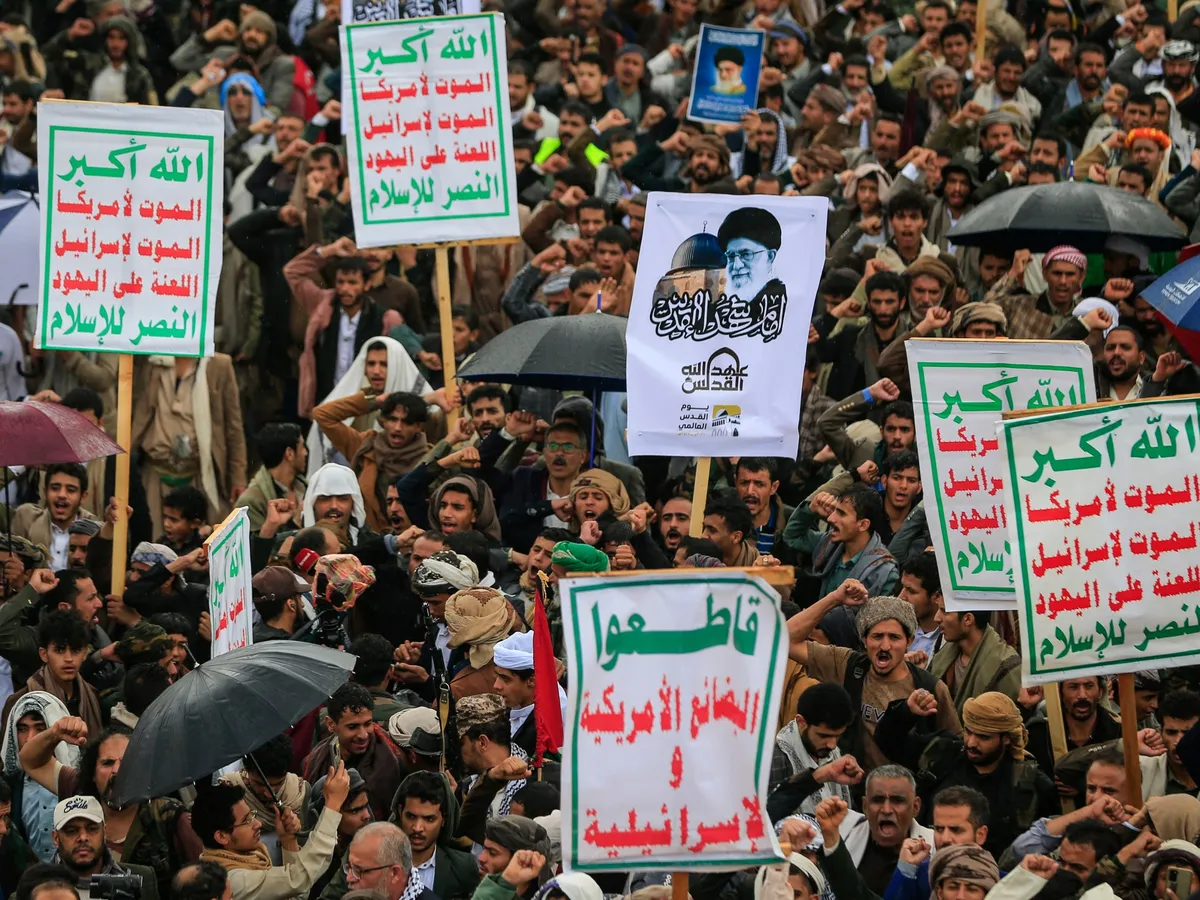
Al JazeeraFIG 01
Reading time
6min
Word count
1 264words
Sources cited
2cited
Entities identified
12entities
Quality score
100%
§ 01
Briefing Summary
AI-generatedNEWSAR · AI
Yemenis fear potential economic consequences as they could be drawn into the conflict between the U.S. and Iran. While Iran's allies, such as Hezbollah, are actively involved, the Iran-allied Houthis in Yemen have not yet engaged. However, the Houthis possess the capability to target shipping in the Red Sea, and an Iranian official suggested they could destabilize the Red Sea and Bab al-Mandeb Strait if the U.S. attacks Iranian oil facilities. Analysts warn that Houthi involvement, such as blockading Bab al-Mandeb, would devastate Yemen economically and humanitarianly, and could reignite Yemen's internal conflict. Abdulsalam Mohammed suggests the Houthis would likely target energy facilities and ports in Gulf countries.
Confidence 0.90Sources 2Claims 5Entities 12
§ 02
Article analysis
Model · rule-basedFraming
Economic Impact
Conflict
Tone
Mixed Tone
AI-assessed
CalmNeutralAlarmist
Factuality
0.70 / 1.00
Factual
LowHigh
Sources cited
2
Limited
FewMany
§ 03
Key claims
5 extracted01
Houthi chief Abdel-Malik al-Houthi has previously said that his group’s “hands are on the trigger”.
quoteAbdel-Malik al-Houthi
Confidence
1.00
02
The Iran-allied Houthi rebels in Yemen have so far sat out the current conflict.
factualAl Jazeera (article's claim)
Confidence
0.90
03
Maritime traffic in the Strait of Hormuz has been crippled as a result of Iranian threats.
factualAl Jazeera (article's claim)
Confidence
0.80
04
A blockade of Bab al-Mandeb would further destabilise the energy market.
predictionAl Jazeera (article's claim)
Confidence
0.70
05
If the Houthis were to get involved in the war, they would focus on attacking energy facilities and ports in Gulf countries.
predictionAbdulsalam Mohammed
Confidence
0.60
§ 04
Full report
6 min read · 1 264 words§ 05
Entities
12 identifiedKey playerOppositionContextPositiveNeutralNegative
§ 06
Keywords & salience
10 termsyemen
1.00
iran-us conflict
0.90
houthis
0.80
economic consequences
0.70
red sea
0.70
bab al-mandeb strait
0.60
shipping
0.60
internal conflict
0.50
energy market
0.50
maritime chokepoint
0.40
§ 07
Topic connections
Interactive graph Network visualization showing 51 related topics
View Full Graph Person Organization Location Event|Click node to navigate|Edge numbers = shared articles