After eight decades of relative peace following the end of World War II, we now find ourselves in the midst of the Russian invasion of Ukraine entering its fourth year and escalating violence between Israel, the US and Iran. After 12 days of fighting last June, the latter conflagration has erupted again in a widening war that has killed Iran’s Supreme leader Ayatollah Ali Khamenei and closed the Strait of Hormuz, sending oil prices to near record highs.In 1984, American historian Barbara Tuchman – celebrated for her analysis of World War I in The Guns of August – wrote The March of Folly: From Troy to Vietnam on how leaders throughout history have pursued policies contrary to their own best interests, even though there are better alternatives. Governments make horrible mistakes when they are blinded by individual egos, excessive political manoeuvring, lack of moral direction and outcomes that become catastrophic for everyone.After the US suffered defeat in Vietnam and spent years bogged down by ruinous invasions of Afghanistan and Iraq, why would US President Donald Trump join the ranks of American leaders signing up for forever wars when one of his major promises while campaigning for president was to end wars rather than start them?Trump might be able to blame his predecessors for the state of Ukraine, Iraq, Afghanistan and Syria. But the current war in Iran – which has not received approval from the US Congress – will be known as either Trump’s triumph or Trump’s folly.Tuchman argued that folly thrives where few key advisers or experts have the moral courage to speak truth to power, because many succumb to personal ambition or fear of being outcast in an institutionalised groupthink.We are now sliding into a dangerous psychological phase of a looming nuclear World War III. If there is no acceptable off-ramp for either Israel or the US, someone could authorise the use of a small nuclear device or strike a nuclear facility that would change the whole dimension of the war. The devastation and post-nuclear costs are unthinkable, but we must confront such consequences.
SRCSouth China Morning Post
LANGEN
LEANCenter-Right
WORDS346
ENT12
FRI · 2026-03-27 · 12:30 GMTBRIEF NSR-2026-0327-39239
NSR-2026-0327-39239Analysis·EN·Conflict
Time to confront folly of Iran war and irrational US spending
The article discusses a hypothetical escalating conflict between Israel, the US, and Iran, triggered by renewed violence that resulted in the death of Iran’s Supreme Leader and the closure of the Strait of Hormuz. It draws a parallel to Barbara Tuchman's "The March of Folly," suggesting leaders often pursue detrimental policies despite better options.
Andrew ShengSouth China Morning PostFiled 2026-03-27 · 12:30 GMTLean · Center-RightRead · 2 min
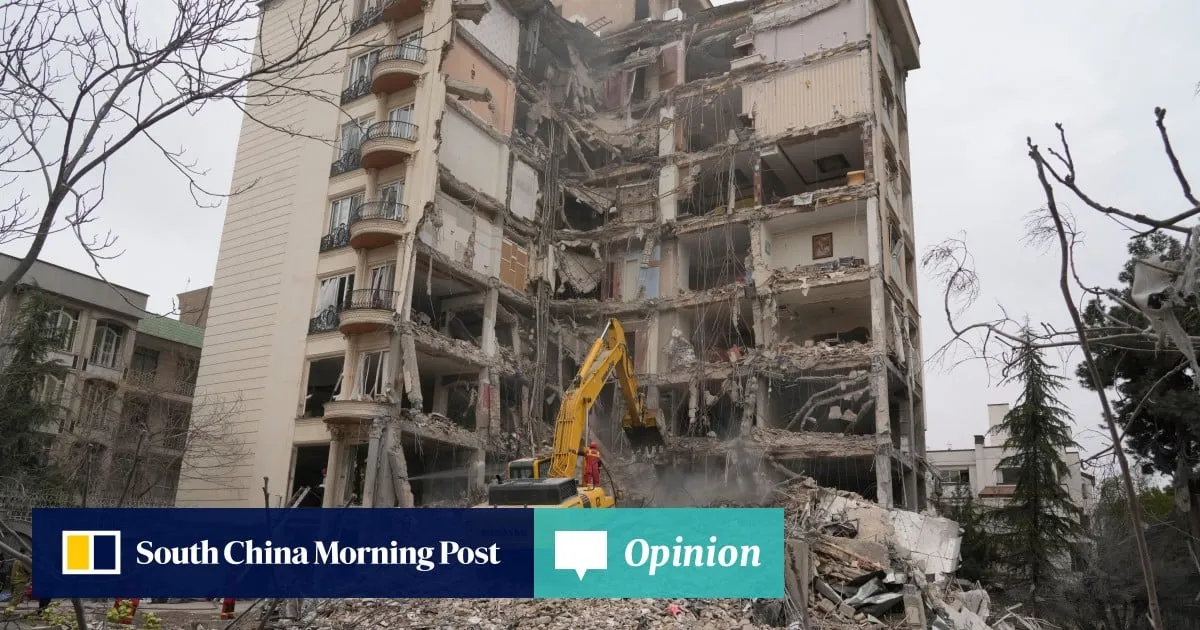
South China Morning PostFIG 01
Reading time
2min
Word count
346words
Sources cited
1cited
Entities identified
12entities
Quality score
100%
§ 01
Briefing Summary
AI-generatedNEWSAR · AI
The article discusses a hypothetical escalating conflict between Israel, the US, and Iran, triggered by renewed violence that resulted in the death of Iran’s Supreme Leader and the closure of the Strait of Hormuz. It draws a parallel to Barbara Tuchman's "The March of Folly," suggesting leaders often pursue detrimental policies despite better options. The author questions why a US President, despite campaigning on ending wars, would initiate a conflict in Iran without Congressional approval. The piece warns of the dangers of groupthink and lack of moral courage in advisors, potentially leading to catastrophic decisions. It expresses concern about the possibility of nuclear escalation and the unthinkable consequences of a larger war.
Confidence 0.90Sources 1Claims 5Entities 12
§ 02
Article analysis
Model · rule-basedFraming
Conflict
Political Strategy
Tone
Sensational
AI-assessed
CalmNeutralAlarmist
Factuality
0.30 / 1.00
Opinion-Heavy
LowHigh
Sources cited
1
Limited
FewMany
§ 03
Key claims
5 extracted01
The current war in Iran has not received approval from the US Congress.
factual
Confidence
0.90
02
The war in Iran has killed Iran’s Supreme leader Ayatollah Ali Khamenei and closed the Strait of Hormuz.
factual
Confidence
0.90
03
Violence is escalating between Israel, the US, and Iran.
factual
Confidence
0.80
04
Governments make horrible mistakes when blinded by individual egos.
quoteBarbara Tuchman
Confidence
0.70
05
We are now sliding into a dangerous psychological phase of a looming nuclear World War III.
prediction
Confidence
0.60
§ 04
Full report
2 min read · 346 words§ 05
Entities
12 identifiedKey playerOppositionContextPositiveNeutralNegative
Locations8
§ 06
Keywords & salience
9 termsiran war
0.90
folly
0.80
us spending
0.70
world war iii
0.70
nuclear war
0.60
strait of hormuz
0.50
political maneuvering
0.50
moral courage
0.40
groupthink
0.40
§ 07
Topic connections
Interactive graph Network visualization showing 51 related topics
View Full Graph Person Organization Location Event|Click node to navigate|Edge numbers = shared articles