Iran’s regime has organised more than 850 public demonstrations of support of the government since the beginning of the war and launched a continuing crackdown on unrest that has led to at least 1,400 detentions, research reveals.The high number of pro-regime gatherings and the increasing number of detentions underlines the resilience of the Islamic Republic despite a month-long campaign of intensive airstrikes by the US and Israel, experts said.Chart showing protests in IranThe war began with a surprise Israeli strike, which killed Ayatollah Ali Khamenei, Iran’s supreme leader, and many senior officials. Israel has since continued to assassinate senior commanders, most recently Alireza Tangsiri, the naval commander of the Revolutionary Guards, who died in an attack on the port city of Bandar Abbas on Thursday.“The US-Israeli decapitation strategy could not have been more successful and continues to be so … but the regime has not fragmented and there are no defections. The messaging within Iran is how they are winning, and that is constant and consistent,” said Clionadh Raleigh, the president of Acled, an independent conflict monitor, which has built up a database of protest incidents and violence in the month-long conflict.The Acled research also shows that the number of US and Israeli strikes on Iran has remained steady at between 47 and 102 attacks daily that have caused “significant” civilian casualties.Tehran’s retaliation has been largely ineffective, Acled said in a research note shared with the Guardian, causing only 70 fatalities during the war, compared with 1,157 killed inside Iran, of whom 341 have been identified as civilians.Acled uses multiple sources among Iranian, regional and international media and social media, as well as its own sources on the ground, to cross-check and verify reports of violence, which it then logs and sorts into categories.Graph of reported airstrikes in past weekDonald Trump said earlier this week that the US had already achieved “regime change” in Iran, while Benjamin Netanyahu, Israel’s prime minister, has made repeated calls for the Iranian public to rise up and oust their leaders. Many experts and officials in the US and Israel believe early forecasts of a mass revolt were misguided, however.The third week of the conflict had the most sustained waves of mass public demonstrations in Iran in support of the regime. Acled counted 195 pro-regime demonstrations from 28 February to 6 March, focused on mourning for Khamenei and condemning Israel and the US, then 158 in the following week and nearly 300 from 13-19 March, with celebrations of the succession of Mojtaba Khamenei prominent. Most took place in Tehran, though some were recorded in the north-east and south-west.“The protest wave [in Iran] is regime-managed – [of] 845 protests, 99.2% [are] pro-regime. The transition from mourning to succession endorsement appears orchestrated. The single anti-regime protest on 25 March met with lethal force [with] 10 killed [and] demonstrates the cost of dissent,” said Acled.The researchers noted that 99.2% of protests were pro-regime. “The near total absence of anti-regime protests suggests either genuine nationalist consolidation under external attack, heavy self-censorship, or effective pre-emptive suppression through the arrest campaign,” they wrote.“The arrest campaign is the regime’s primary domestic tool – [with approximately] 1,465-plus detained in 27 days. Charges escalated from ‘filming damage’ to ‘espionage’ and ‘mercenary’ as the conflict progressed.”Chart of arrests in Iran since the start of the warDetails of such repression are difficult to obtain, but recent incidents include the deaths of 10 people when Revolutionary Guards fired on anti-regime demonstrators and shot at apartment windows in Tehran on 25 March, and three killed on 18 March in Chabahar when detainees protested over food ration cuts inside a prison. On 17 March, security forces intervened against gatherings in Fardis and four Tehran districts when demonstrators chanted anti-government slogans, Acled said.“It was only really on the first night of the death of Ali Khamenei that you saw any small level of anti-regime activism. Since, there has been a coordinated effort to have pro-Iran or anti-war protests,” said Raleigh.Alia Brahimi, a regional expert with the Atlantic Council thinktank, said none of the pro-regime protests would have been spontaneous and showed how leadership structures in Iran had withstood the joint US-Israeli offensive.“That leaders will be killed has long been accepted, and there has been decades of ideological conditioning to prepare Iranians to absorb the death of senior commanders,” Brahimi said.“That moral effort has an organisational counterpart which has built resilience by making sure there are multiple replacements for anyone who holds a senior post, and by, more recently, decentralising decision-making. This is part of the Islamic Republic’s unique system and worldview.”Estimates of civilian casualties vary. More than 1,900 people have been killed and at least 20,000 injured in Iran since the start of US and Israeli attacks, said María Martinez of the International Federation of Red Cross and Red Crescent Societies (IFRC) on Friday, citing figures provided by the Iranian Red Crescent.People gather in Tehran on 1 March to mourn the death of Ayatollah Ali Khamenei. Photograph: Majid Asgaripour/ReutersThe US-based Human Rights Activists news agency (HRANA) said on Wednesday that 3,300 people had been killed since the war began. It said 1,464 of those were civilians, including at least 217 children.In January, large protests across Iran were bloodily put down, with 7,000 killed by security forces, according to HRANA. Three men accused of killing police officers during the protests were hanged in public earlier this month.The unrest was the most serious internal threat to the radical clerical regime in Iran for more than 45 years.Since war broke out a month ago, security forces have set up checkpoints throughout major cities and cut off the internet, one of the longest and largest outages recorded. Senior officials said on 16 March that 500 “spies” had been arrested.“If anyone comes forward in line with the wishes of the enemy, we will no longer see them as merely a protester, we will see them as an enemy … And we will do to them what we do to an enemy,” said Ahmad-Reza Radan, the national police commander.
SRCThe Guardian - World News
LANGEN
LEANCenter-Left
WORDS1 003
ENT11
SAT · 2026-03-28 · 09:00 GMTBRIEF NSR-2026-0328-40593
NSR-2026-0328-40593News Report·EN·Political Strategy
Hundreds of organised protests show resilience of Iranian regime, experts say
Since the start of the US and Israeli airstrikes a month ago, the Iranian regime has organized over 850 public demonstrations of support and detained at least 1,400 people in a crackdown on unrest. Despite the assassination of key leaders, including Ayatollah Ali Khamenei, and continued attacks, the regime has not fragmented.
Jason Burke International security correspondentThe Guardian - World NewsFiled 2026-03-28 · 09:00 GMTLean · Center-LeftRead · 5 min
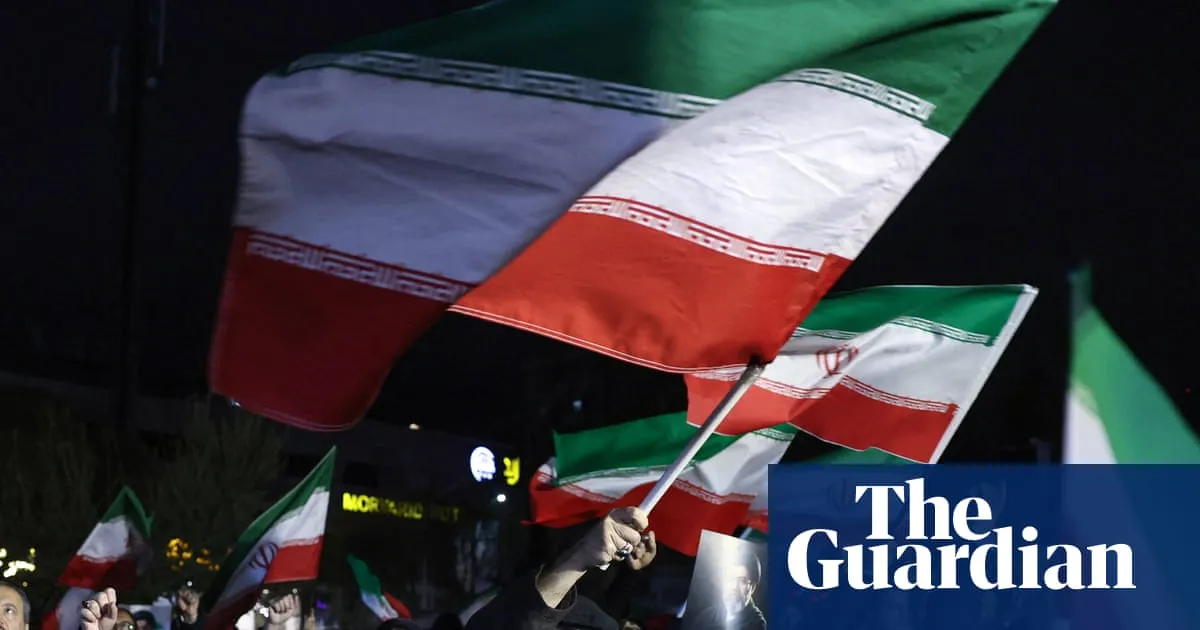
The Guardian - World NewsFIG 01
Reading time
5min
Word count
1 003words
Sources cited
4cited
Entities identified
11entities
Quality score
100%
§ 01
Briefing Summary
AI-generatedNEWSAR · AI
Since the start of the US and Israeli airstrikes a month ago, the Iranian regime has organized over 850 public demonstrations of support and detained at least 1,400 people in a crackdown on unrest. Despite the assassination of key leaders, including Ayatollah Ali Khamenei, and continued attacks, the regime has not fragmented. According to Acled, the US and Israel have launched between 47 and 102 attacks daily, causing significant civilian casualties, while Iran's retaliation has been largely ineffective. Despite claims from US and Israeli leaders about regime change and calls for public uprising, experts believe the Iranian regime has shown resilience, maintaining its messaging and control within the country. The third week of the conflict saw the most pro-regime demonstrations, with 195 recorded between February 28 and March 6.
Confidence 0.90Sources 4Claims 5Entities 11
§ 02
Article analysis
Model · rule-basedFraming
Political Strategy
National Security
Tone
Measured
AI-assessed
CalmNeutralAlarmist
Factuality
0.70 / 1.00
Factual
LowHigh
Sources cited
4
Well sourced
FewMany
§ 03
Key claims
5 extracted01
The war began with a surprise Israeli strike, which killed Ayatollah Ali Khamenei, Iran’s supreme leader.
factualnull
Confidence
1.00
02
Acled counted 195 pro-regime demonstrations from 28 February to 6 March.
statisticAcled
Confidence
0.90
03
At least 1,400 detentions have occurred during a crackdown on unrest.
factualresearch
Confidence
0.90
04
Iran’s regime has organised more than 850 public demonstrations of support of the government since the beginning of the war.
factualresearch
Confidence
0.90
05
The number of US and Israeli strikes on Iran has remained steady at between 47 and 102 attacks daily.
statisticAcled research
Confidence
0.80
§ 04
Full report
5 min read · 1 003 words§ 05
Entities
11 identifiedKey playerOppositionContextPositiveNeutralNegative
People5
§ 06
Keywords & salience
9 termsiranian regime
1.00
pro-regime demonstrations
0.90
us-israeli strikes
0.80
political resilience
0.70
crackdown on unrest
0.70
civilian casualties
0.60
regime change
0.50
airstrikes
0.50
acled
0.40
§ 07
Topic connections
Interactive graph Network visualization showing 51 related topics
View Full Graph Person Organization Location Event|Click node to navigate|Edge numbers = shared articles