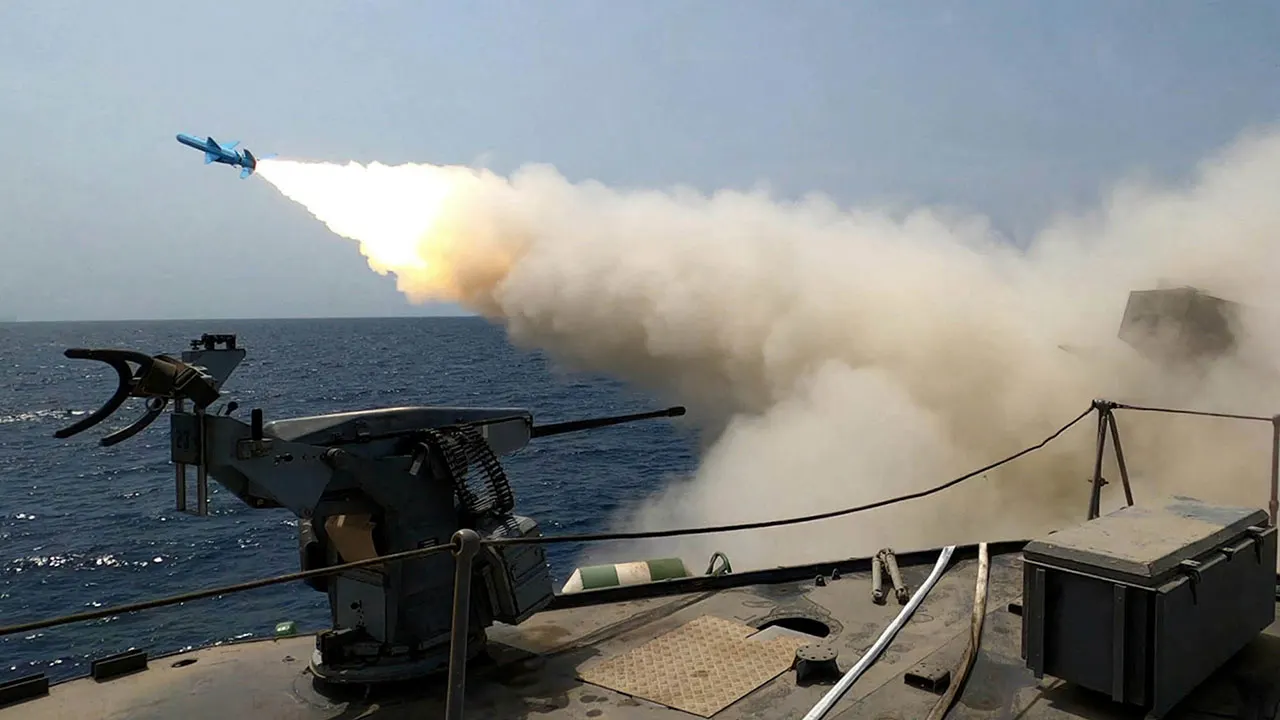
close Video US targets Iran's military sites, Pentagon mulls deploying more troops to Middle East Chief national security correspondent Jennifer Griffin provides details on President Donald Trump's efforts to negotiate peace with Iran. Former Ambassador-at-Large Nathan Sales joins 'The Faulkner Focus' to weigh in. NEWYou can now listen to Fox News articles! Hören Sie sich diesen Artikel an 7 Min Iran’s military is not designed to win a conventional war against the United States or Israel. It is designed to survive one, absorb damage and continue fighting over time, experts say. That strategy is reflected both in how the force is built and how it is performing now, after weeks of sustained U.S. and Israeli strikes. The scale of the campaign has been significant. More than 9,000 targets have been struck since the launch of Operation Epic Fury, according to a March 23, 2026, fact sheet from U.S. Central Command, alongside more than 9,000 combat flights, hitting missile sites, air defenses, Islamic Revolutionary Guard Corps command centers and weapons production facilities. NEXT MOVE ON Iran: SEIZE Kharg Island, SECURE URANIUM OR RISK GROUND WAR ESCALATION Iran’s military is not designed to win a conventional war against the United States or Israel: It is designed to survive one, experts say. (Iranian Army/WANA (West Asia News Agency)/Handout via Reuters) "We are targeting and eliminating Iran’s ballistic missile systems … destroying the Iranian Navy … and ensuring Iran cannot rapidly rebuild," Joint Chiefs of Staff Chairman Gen. Dan Caine said during a March Pentagon briefing. But analysts caution that the picture is more complex. "It’s a mixed bag," Nicholas Carl, a fellow at the conservative American Enterprise Institute think tank and assistant director of the Critical Threats Project, told Fox News Digital. "On one hand, (Iran’s military) is badly degraded across the board, but the regime still retains a significant amount of capability." INSIDE THE ISRAELI DRONE UNIT TAKING ON Iran AND Hezbollah At the heart of Iran’s military system is a deliberate dual structure: the conventional army, known as the Artesh, and the Islamic Revolutionary Guard Corps. (Majid Asgaripour/WANA (West Asia News Agency) Handout via Reuters) At the heart of Iran’s military system is a deliberate dual structure: the conventional army, known as the Artesh, and the Islamic Revolutionary Guard Corps, a parallel force created after the 1979 revolution to safeguard the regime. According to Carl, Supreme Leader Ali Khamenei has shaped the armed forces throughout decades around one central objective: preserving the Islamic Republic and exporting its revolutionary ideology. "You need to separate between the IRGC and the regular army," Middle East intelligence expert Danny Citrinowicz told Fox News Digital. "The IRGC gets all of the budgets — better salaries, better equipment, better everything." Carl describes the Islamic Revolutionary Guard Corps as a "deeply ideological praetorian guard," while the Artesh remains a more conventional force tasked with defending Iran’s borders. "The IRGC is probably the more dangerous of the two, but we cannot discount the threat that the regular military poses as well," Carl said. TRUMP’S Iran STRATEGY SHOWCASES ‘DOCTRINE OF UNPREDICTABILITY’ AMID STRIKE THREATS AND SUDDEN PAUSE A big banner depicting Iran's Supreme Leader Ayatollah Ali Khamenei is placed next to a ballistic missile in Baharestan Square in Tehran, Iran, in 2024. (Photo by Hossein Beris / Middle East Images / Middle East Images via AFP) (Photo by Hossein Beris/Middle East Images/AFP via Getty Images) Iran’s missile program remains the backbone of its military power, even after extensive strikes. The Islamic Revolutionary Guard Corps Aerospace Force has spent years building what Carl describes as the largest missile inventory in the Middle East. U.S. officials say those capabilities have been significantly reduced with recent strikes. "Iran’s ballistic missile shots fired are down 86% from the first day of fighting," Caine said in a Pentagon briefing earlier in March, adding that drone launches have dropped by roughly 73%. Secretary of War Pete Hegseth said in the same briefing that the campaign has sharply limited Iran’s ability to sustain attacks. "The enemy can no longer shoot the volume of missiles they once did, not even close," he said. But even U.S. officials acknowledge the threat persists. "Iran will still be able to shoot some missiles … and launch one-way attack drones," Hegseth said. "Iranian missile and drone fire has dropped precipitously … about 90% since the war began … but that number has been consistent for weeks," he said. "That means they still retain enough capability to sustain strikes across the region." "They suffered blows but still hold the ability and still have the capacity to launch missiles for weeks to come," he said. U.S. estimates cited by Carl suggest roughly a third of Iran’s missile capabilities remain active. "The regime still does have a significant capability to threaten targets across the region … especially as it demonstrates the ability to shoot beyond 2,000 kilometers," Carl said. WHY TRUMP, Iran SEEM LIGHT-YEARS APART ON ANY POSSIBLE DEAL TO END THE WAR The Iranian Revolutionary Guard's navy commander Alireza Tangsiri, who was killed by the Israelis on March 26, 2026, at an exhibition in the southern port city of Bandar Abbas, Iran, in 2024. (Iranian Presidency Office via AP) The Pentagon says it has made major gains against Iran’s naval forces. More than 140 Iranian vessels have been damaged or destroyed, according to U.S. Central Command. Caine said U.S. forces have "effectively neutralized" Iran’s major naval presence in the region. But analysts warn that Iran’s naval threat was never dependent on large ships. The Islamic Revolutionary Guard Corps Navy is built around "area denial capabilities," including fast attack craft, mines, missiles and drones designed to swarm adversaries and disrupt maritime movement. "They still have the capacity — speedboats, drones, surface-to-sea missiles — allowing them to block the Strait of Hormuz," Citrinowicz said. "It’s not technically accurate to say the Strait of Hormuz is closed … Iran is selectively denying access … firing at some ships while allowing others to pass," he said. "Iran has to do very, very little to achieve a meaningful effect." Hezbollah, Iran UNLEASH COORDINATED CLUSTER BOMB STRIKES ON Israel IN MAJOR ESCALATION A Fighter aircraft is seen at the first underground air force base, called "Eagle 44" at an undisclosed location in Iran, in this handout image obtained Feb. 7, 2023. (West Asia News Agency/Handout via REUTERS) U.S. officials say the campaign has achieved major progress in the air. "We will have complete control of Iranian skies, uncontested airspace," Hegseth said. Caine added that U.S. forces have already established "localized air superiority" and are expanding operations deeper into Iranian territory. But Iran’s air force was never the centerpiece of its strategy. Years of sanctions have left it reliant on aging aircraft and limited modernization, making it far less capable than its Western or regional adversaries. "There is definitely a setback … but Iran was never built on an air force," Citrinowicz said. Instead, Iran relies on missiles, drones and layered defenses. WHO ACTUALLY RUNS Iran RIGHT NOW? THE KEY POWER PLAYERS AS TRUMP CLAIMS TALKS TO 'TOP' OFFICIAL On the ground, Iran retains a key advantage: its forces have largely not been directly engaged. (Morteza Nikoubazl/Nur Photo via Getty Images) On the ground, Iran retains a key advantage: its forces have largely not been directly engaged. The Artesh ground forces, which include tens of brigades, are positioned primarily to defend Iran’s borders, according to Carl’s report. "The ground troops are still intact, nobody has invaded Iran," Citrinowicz said. He noted that ground forces are increasingly launching drones, signaling a broader shift in how Iran fights. Beyond its borders, Iran’s military power is extended through a network of proxy forces managed by the Islamic Revolutionary Guard Corps’ Quds Force. Carl said the Quds Force provides "leadership, materiel, intelligence, training and funds" to allied militias across the Middle East, including Hezbollah, Hamas and the Houthis. "The ‘Axis of Resistance’ is the central mechanism by which Iran can further regionalize the conflict … to endanger as many actors’ interests as possible," Carl said. US MOVES AIRBORNE TROOPS, MARINES AS Iran REJECTS CEASEFIRE, RAISING GROUND WAR POTENTIAL Iranian soldiers take part in a military parade during a ceremony marking the country's annual army day, April 17, 2024, in Tehran, Iran. (Getty Images) Iran’s military is also structured to confront internal threats, reinforcing its core purpose: regime survival. The result is a force built on redundancy, asymmetry and endurance. Even after weeks of sustained strikes, Iran retains enough capability to continue launching missiles, harassing global shipping and leveraging proxy forces across the region. It may be weakened, but it remains strategically dangerous. "We cannot discount the threat that the Iranian military poses," Carl said, "it remains a force capable of threatening regional and international security." Efrat Lachter is a foreign correspondent for Fox News Digital covering international affairs and the United Nations. Follow her on X @efratlachter. Stories can be sent to efrat.lachter@fox.com. Fox News' Antisemitism Exposed" newsletter brings you stories on the rising anti-Jewish prejudice across the U.S. and the world." By entering your email and clicking the Subscribe button, you agree to the Fox News and Terms of Use, and agree to receive content and promotional communications from Fox News. You understand that you can opt-out at any time. You've successfully subscribed to this newsletter!
SRCFox News - World
LANGEN
LEANCenter-Right
WORDS1 552
ENT11
SAT · 2026-03-28 · 10:00 GMTBRIEF NSR-2026-0328-40655
NSR-2026-0328-40655News Report·EN·National Security
Inside Iran’s military: missiles, militias and a force built for survival
According to experts, Iran's military strategy focuses on survival and sustained fighting rather than winning a conventional war. Despite significant U.S.
Efrat LachterFox News - WorldFiled 2026-03-28 · 10:00 GMTLean · Center-RightRead · 7 min
Fox News - WorldFIG 01
Reading time
7min
Word count
1 552words
Sources cited
3cited
Entities identified
11entities
Quality score
100%
§ 01
Briefing Summary
AI-generatedNEWSAR · AI
According to experts, Iran's military strategy focuses on survival and sustained fighting rather than winning a conventional war. Despite significant U.S. and Israeli strikes since the launch of Operation Epic Fury in March 2026, which targeted missile sites, air defenses, and IRGC command centers, Iran retains considerable military capability. The Iranian military has a dual structure: the conventional Artesh army and the Islamic Revolutionary Guard Corps (IRGC), which is better funded and ideologically driven. The IRGC is focused on preserving the Islamic Republic, while the Artesh defends Iran's borders, but both pose a threat. The U.S. objective is to eliminate Iran's ballistic missile systems, destroy the Iranian Navy, and prevent rapid rebuilding.
Confidence 0.90Sources 3Claims 5Entities 11
§ 02
Article analysis
Model · rule-basedFraming
National Security
Conflict
Tone
Mixed Tone
AI-assessed
CalmNeutralAlarmist
Factuality
0.70 / 1.00
Factual
LowHigh
Sources cited
3
Well sourced
FewMany
§ 03
Key claims
5 extracted01
We are targeting and eliminating Iran’s ballistic missile systems.
quoteJoint Chiefs of Staff Chairman Gen. Dan Caine
Confidence
1.00
02
More than 9,000 targets have been struck since the launch of Operation Epic Fury.
statisticU.S. Central Command
Confidence
1.00
03
Iran’s military is not designed to win a conventional war against the United States or Israel.
quoteexperts
Confidence
0.90
04
Iran’s ballistic missile shots fired are down 86% from the fi
statisticU.S. officials
Confidence
0.80
05
The IRGC gets all of the budgets — better salaries, better equipment, better everything.
quoteDanny Citrinowicz
Confidence
0.70
§ 04
Full report
7 min read · 1 552 words§ 05
Entities
11 identifiedKey playerOppositionContextPositiveNeutralNegative
Organizations4
Locations4
§ 06
Keywords & salience
9 termsiran's military
1.00
islamic revolutionary guard corps
0.90
military strategy
0.80
u.s. strikes
0.70
artesh
0.60
ballistic missile systems
0.60
military capabilities
0.60
conventional war
0.50
weapons production
0.40
§ 07
Topic connections
Interactive graph Network visualization showing 51 related topics
View Full Graph Person Organization Location Event|Click node to navigate|Edge numbers = shared articles