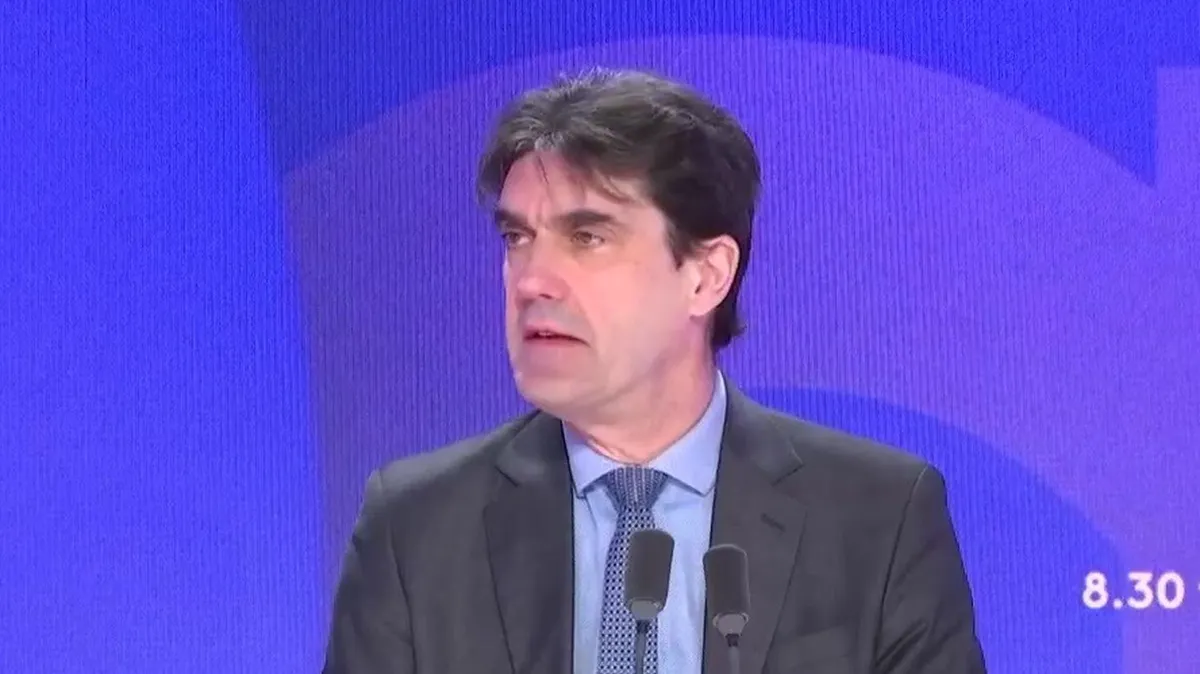
flux rss (Nouvelle fenêtre) David Rigoulet-Roze, chercheur à l'Institut Français d’Analyse Stratégique (IFAS), était l’invité du "8h30 franceinfo"”, samedi 28 mars 2026 Publié le 28/03/2026 11:53 Mis à jour le 28/03/2026 12:53 David Rigoulet-Roze, samedi 28 mars 2026 (FRANCEINFO/RADIO FRANCE) David Rigoulet-Roze, chercheur à l'Institut Français d'Analyse Stratégique (IFAS), était l'invité du "8h30 franceinfo", samedi 28 mars 2026. Il répondait aux questions d'Hadrien Bect et de Mathilde Siraud.La guerre au Moyen-Orient entre dans son deuxième mois. David Rigoulet-Roze, chercheur associé à l'IFAS, spécialiste du Moyen-Orient, rappelle que "le pentagone avait annoncé entre 4 et 5 semaines, mais on est encore dans la 4ème donc on n'est pas encore au de la planification initiale". Le secrétaire d'État américain Marco Rubi a déclaré qu'il s'attendait à ce que les objectifs de guerre de Washington en Iran soient atteints dans "les deux prochaines semaines". Mais pour David Rigoulet-Roze, "avec les nouvelles mesures, notamment d'envoi de troupes terrestres avec la perspective d'une nouvelle opération, il y a la possibilité d'aller bien au-delà des cinq semaines. Donc ce que dit Marco Rubio est destiné à rassurer les Américains qui ont des doutes et pour valider le discours qu'il n'y aura pas de guerre sans fin".La guerre au Moyen-Orient "terminée dans deux semaines" selon Marco Rubio ? David Rigoulet-Roze souligne que l'éventualité d'une intervention terrestre entraînerait les Etats-Unis beaucoup plus loin pic.twitter.com/gNzjARnypG— franceinfo (@franceinfo) March 28, 2026 M. Rubio a estimé que les États-Unis pouvaient encore atteindre leurs objectifs sans l'envoi de troupes au sol. Alors que, selon le Wall Street Journal et le site d'informations Axios, Washington envisage d'envoyer au moins 10 000 soldats supplémentaires dans la région. La République islamique a appelé les civils à se tenir à l'écart des forces américaines présentes au Moyen-Orient, et notamment d'éviter les hôtels de la région accueillant des militaires américains.Les rebelles Houthis du Yémen, alliés de l'Iran, ont revendiqué leur première attaque sur Israël depuis le début de la guerre au Moyen-Orient, quelques heures après que l'armée israélienne a annoncé avoir détecté un tir de missile depuis le Yémen. Pour le spécialiste du Moyen-Orient, "c'est un élargissement supplémentaire au niveau horizontal, qui était anticipé d'ailleurs puisqu'il y a eu des déclarations des Houthis qui disaient qui étaient disposé à rentrer en guerre". Les Houthis avaient effectivement menacé la veille de se joindre au conflit. Dans une déclaration vidéo publiée sur X, leur porte-parole Yahya Saree a déclaré que le mouvement avait mené sa "première opération" contre Israël et frappé des "sites militaires sensibles de l'ennemi" lors d'une attaque aux missiles balistiques. David Rigoulet-Roze estime que "s'il y a un problème sur le détroit Bab-el-Mandeb, ça devient extrêmement préoccupant au niveau global".Si les Houthis du Yemen entrent dans la guerre au Moyen-Orient, "c'est très préoccupant" parce que "cela élargit le conflit au niveau global" avec des conséquences sur l'approvisionnement énergétique mondial, estime David Rigoulet-Roze pic.twitter.com/grHOjFJ2If— franceinfo (@franceinfo) March 28, 2026 Le chercheur associé à l'IFAS rappelle que "les Houthis étaient déjà intervenus dans la guerre en soutient au Hamas, mais ils avaient cessé leurs tirs après des opérations militaires et un accord avec les américains". "Le fait de rentrer dans le conflit, ca l'élargit au niveau global", avec des conséquences sur l'approvisionnement énergétique mondial, estime David Rigoulet-Roze. Le pape Léon XIV appelle à la "paix" et au "partage" dans son allocution à Monaco "L'IA a un potentiel libérateur absolument incroyable !" Mission Artemis : un rover suisse bientôt sur la Lune Carburant : les mesures "ciblées" du gouvernement pour le transport, l'agriculture et la pêche Des animaux découpés vivants dans un abattoir en Martinique Guillaume Cizeron et Laurence Fournier Beaudry brillent et battent leur record sur la danse rythmique aux Mondiaux Allemagne : une baleine, échouée depuis plusieurs jours, enfin libérée Traversée des Alpes : le projet fou d'un champion hors normes Vols de carburant : les gendarmes lancent l'alerte "C’est la cour des miracles" : le sénateur Claude Malhuret charge de nouveau Donald Trump Guerre au Moyen-Orient : négociations sous les bombes Xavier Dupont de Ligonnès, caché dans le désert du Texas ? Meurtres au Portugal : l'inquiétant profil de Cédric Prizzon Attention aux mauvais conseils sur les réseaux sociaux sur les gestes à faire en cas d'infarctus Les réactions des Bleus après leur victoire sur le Brésil Il marque 106 points dans un match de basket, dont 33 paniers à 3 points Le Parlement européen approuve la création de "hubs de retour" pour migrants Guerre au Moyen-Orient : les quatre scénarios du Pentagone Comment les déclarations de Donald Trump influencent-elles le cours du pétrole ?
SRCFrance Info
LANGFR
LEANCenter
WORDS759
ENT10
SAT · 2026-03-28 · 11:53 GMTBRIEF NSR-2026-0328-40764
NSR-2026-0328-40764News Report·FR·Conflict
Guerre au Moyen-Orient : durée du conflit, risque d'élargissement des hostilités, évolution du régime iranien... L'analyse de David Rigoulet-Roze
Dans une interview accordée à franceinfo le 28 mars 2026, David Rigoulet-Roze, chercheur à l'IFAS, a analysé la guerre au Moyen-Orient, entrée dans son deuxième mois. Il a nuancé les propos du secrétaire d'État américain Marco Rubio, qui prévoyait une fin du conflit dans deux semaines, en soulignant que l'éventuelle intervention de troupes terrestres américaines pourrait prolonger la guerre au-delà des cinq semaines initialement prévues par le Pentagone.
franceinfoFrance InfoFiled 2026-03-28 · 11:53 GMTLean · CenterRead · 4 min
France InfoFIG 01
Reading time
4min
Word count
759words
Sources cited
4cited
Entities identified
10entities
Quality score
100%
§ 01
Briefing Summary
AI-generatedNEWSAR · AI
Dans une interview accordée à franceinfo le 28 mars 2026, David Rigoulet-Roze, chercheur à l'IFAS, a analysé la guerre au Moyen-Orient, entrée dans son deuxième mois. Il a nuancé les propos du secrétaire d'État américain Marco Rubio, qui prévoyait une fin du conflit dans deux semaines, en soulignant que l'éventuelle intervention de troupes terrestres américaines pourrait prolonger la guerre au-delà des cinq semaines initialement prévues par le Pentagone. Rigoulet-Roze a également évoqué la possibilité d'un élargissement du conflit, notamment avec la revendication par les rebelles Houthis du Yémen d'une première attaque sur Israël. Il a noté que cet élargissement horizontal était anticipé. L'Iran a appelé les civils à éviter les forces américaines au Moyen-Orient.
Confidence 0.90Sources 4Claims 5Entities 10
§ 02
Article analysis
Model · rule-basedFraming
Conflict
National Security
Tone
Measured
AI-assessed
CalmNeutralAlarmist
Factuality
0.60 / 1.00
Mixed
LowHigh
Sources cited
4
Well sourced
FewMany
§ 03
Key claims
5 extracted01
The Houthis claimed their first attack on Israel since the start of the war.
factual
Confidence
1.00
02
Washington is considering sending at least 10,000 additional soldiers to the region.
factualWall Street Journal and Axios
Confidence
1.00
03
Marco Rubio expects Washington's war aims in Iran to be achieved in the next two weeks.
quoteMarco Rubio
Confidence
1.00
04
The Pentagon had announced between 4 and 5 weeks for the conflict.
quoteDavid Rigoulet-Roze
Confidence
1.00
05
The war in the Middle East is entering its second month.
factual
Confidence
1.00
§ 04
Full report
4 min read · 759 words§ 05
Entities
10 identifiedKey playerOppositionContextPositiveNeutralNegative
Organizations2
§ 06
Keywords & salience
9 termsguerre au moyen-orient
1.00
david rigoulet-roze
0.90
iran
0.80
risque d'élargissement
0.70
troupes terrestres
0.60
marco rubio
0.60
houthis
0.50
yémen
0.40
israël
0.40
§ 07
Topic connections
Interactive graph No topic relationship data available yet. This graph will appear once topic relationships have been computed.