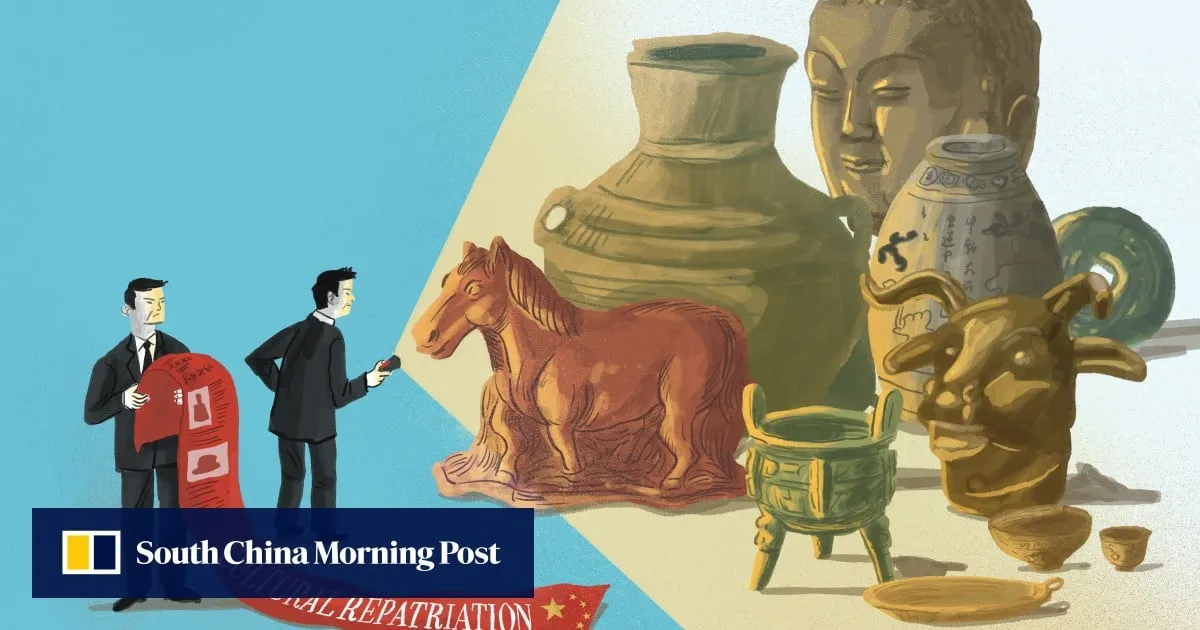
As one of the biggest targets of wartime looting in centuries past, China is now positioning itself as a global pioneer in repatriating lost cultural artefacts. In this article, the second in a two-part series, Xinlu Liang looks at how China is wielding law, diplomacy and a Global South coalition to rewrite the rules of restitution, filling a void left by a retreating US.In January, as the United States was withdrawing from a raft of heritage and science bodies around the world, China was testing a new international model for cultural repatriation.The effort was spearheaded by Chinese researchers and Japanese activists who came together in a lecture hall in Shanghai University to call for the return of a 1,300-year-old national treasure, the Tang Honglu Well Stele.The stele was stolen from China in wartime more than a century ago and, as the advocates made their case, officials from the China" class="entity-link entity-organization" data-entity-id="81207" data-entity-type="organization">National Cultural Heritage Administration of China watched on – the clearest signal yet of Beijing’s intention to press Tokyo on the issue.The demand for the stele’s return is grounded in extensive research, support in both countries and a fresh legal framework, marking a shift from the past when repatriation calls were largely made by lone voices outside officialdom with little professional documentation.The case reflects China’s efforts to become not just a petitioner but an ambitious rules maker in global heritage restitution through a sophisticated, multipronged combination of domestic legislation, bilateral agreements, law enforcement cooperation and Global South alliances.Yet, analysts caution, China’s ambitions may be hindered by oversimplified nationalist narratives, geopolitical tensions and the limitations of non-binding international conventions.
SRCSouth China Morning Post
LANGEN
LEANCenter-Right
WORDS266
ENT9
SAT · 2026-03-28 · 22:00 GMTBRIEF NSR-2026-0328-41322
NSR-2026-0328-41322Analysis·EN·Political Strategy
How China is stepping into the cultural repatriation void left by a retreating US
China is actively pursuing the repatriation of its stolen cultural artifacts, positioning itself as a leader in global heritage restitution. This effort involves leveraging domestic legislation, bilateral agreements, law enforcement cooperation, and alliances with Global South nations.
Xinlu LiangSouth China Morning PostFiled 2026-03-28 · 22:00 GMTLean · Center-RightRead · 2 min
South China Morning PostFIG 01
Reading time
2min
Word count
266words
Sources cited
1cited
Entities identified
9entities
Quality score
100%
§ 01
Briefing Summary
AI-generatedNEWSAR · AI
China is actively pursuing the repatriation of its stolen cultural artifacts, positioning itself as a leader in global heritage restitution. This effort involves leveraging domestic legislation, bilateral agreements, law enforcement cooperation, and alliances with Global South nations. A recent example is the demand for the return of the Tang Honglu Well Stele from Japan, supported by research, legal frameworks, and official backing. This marks a shift from past repatriation efforts, which were often less organized and lacked official support. As the U.S. withdraws from international heritage bodies, China aims to fill the void and rewrite the rules of restitution. However, analysts suggest that nationalist narratives and geopolitical tensions could hinder China's ambitions.
Confidence 0.90Sources 1Claims 5Entities 9
§ 02
Article analysis
Model · rule-basedFraming
Political Strategy
Diplomatic
Tone
Measured
AI-assessed
CalmNeutralAlarmist
Factuality
0.70 / 1.00
Factual
LowHigh
Sources cited
1
Limited
FewMany
§ 03
Key claims
5 extracted01
Chinese researchers and Japanese activists called for the return of the Tang Honglu Well Stele.
factual
Confidence
1.00
02
The US was withdrawing from heritage and science bodies.
factual
Confidence
1.00
03
The Tang Honglu Well Stele was stolen from China in wartime more than a century ago.
factual
Confidence
0.90
04
China is positioning itself as a global pioneer in repatriating lost cultural artefacts.
factual
Confidence
0.90
05
China's ambitions may be hindered by oversimplified nationalist narratives.
predictionanalysts
Confidence
0.60
§ 04
Full report
2 min read · 266 words§ 05
Entities
9 identifiedKey playerOppositionContextPositiveNeutralNegative
People1
Organizations2
§ 06
Keywords & salience
9 termscultural repatriation
1.00
china
0.90
heritage restitution
0.80
tang honglu well stele
0.70
global south
0.70
united states
0.60
wartime looting
0.60
cultural artefacts
0.50
international law
0.50
§ 07
Topic connections
Interactive graph Network visualization showing 51 related topics
View Full Graph Person Organization Location Event|Click node to navigate|Edge numbers = shared articles