Every violation of international law invites the next. From Afghanistan to Iran, and across Iraq, Libya, Syria, Ukraine, Gaza and Venezuela, the line between what is permitted and what is prohibited has been steadily blurred by the complicit inaction of the United Nations Security Council. Wielding the veto as both a shield and a weapon, its permanent members act without grounding in the UN Charter. They play with the fate of millions, leaving a trail of death and destruction.Until recently, there was at least an attempt to give interventions a veneer of legitimacy through UN endorsement. Today, the open exercise of power no longer even tries to keep up appearances. The guard rails of multilateral institutions are becoming too narrow to contain hegemonic rivalries.Without multilateralism, we risk replacing an imperfect system of collective security with the brutal reality of widespread insecurity. When all constraints on the use of force are removed, chaos prevails.The world is witnessing the highest number of armed conflicts since World War II. It is no coincidence that this is happening at a moment when democracy stands at a crossroads. Extremism is both the starting point and the end point of a vicious cycle. When governments allow themselves to be drawn into war by intolerance or the arrogance of power, they plant the seeds of resentment that yield more hatred and violence.02:14Iran conflict spreads to neighbouring countries
SRCSouth China Morning Post
LANGEN
LEANCenter-Right
WORDS230
ENT11
MON · 2026-03-30 · 02:30 GMTBRIEF NSR-2026-0330-42596
NSR-2026-0330-42596Opinion·EN·Political Strategy
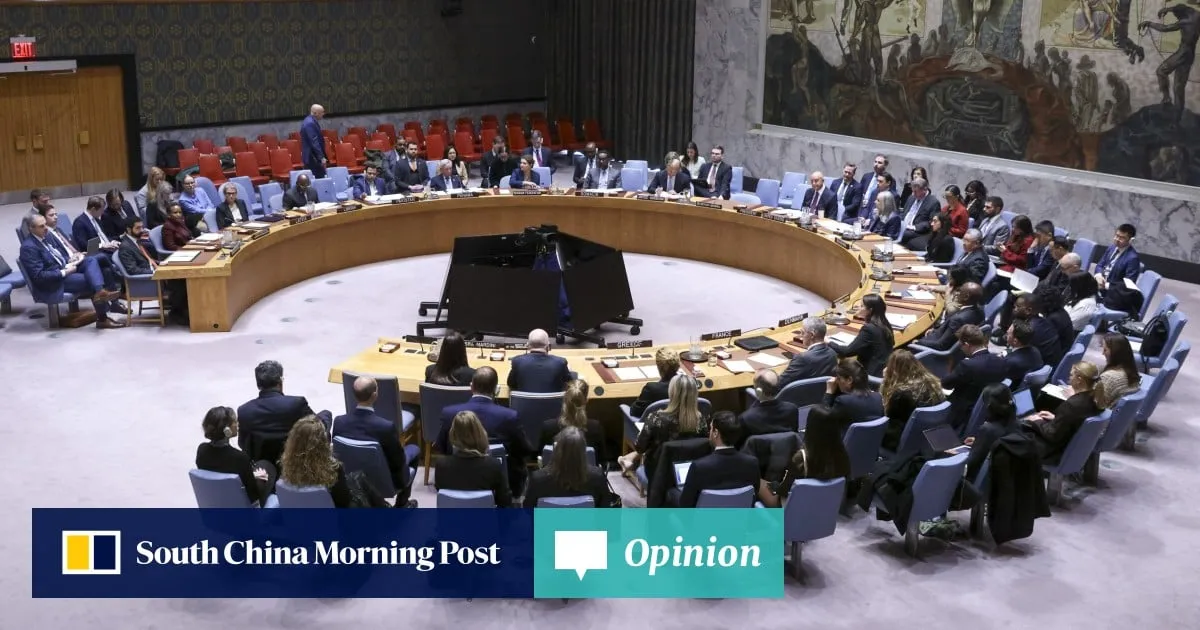
UN Security Council’s inaction is tearing the world apart
The article argues that the UN Security Council's inaction and misuse of veto power by its permanent members are eroding international law and contributing to global instability. It states that the council's failure to act on violations of international law in regions like Afghanistan, Iran, Ukraine, and Gaza has blurred the lines between permissible and prohibited actions.
Luiz Inacio Lula da SilvaSouth China Morning PostFiled 2026-03-30 · 02:30 GMTLean · Center-RightRead · 1 min
South China Morning PostFIG 01
Reading time
1min
Word count
230words
Sources cited
0cited
Entities identified
11entities
Quality score
100%
§ 01
Briefing Summary
AI-generatedNEWSAR · AI
The article argues that the UN Security Council's inaction and misuse of veto power by its permanent members are eroding international law and contributing to global instability. It states that the council's failure to act on violations of international law in regions like Afghanistan, Iran, Ukraine, and Gaza has blurred the lines between permissible and prohibited actions. This inaction, coupled with the open exercise of power by member states, undermines multilateral institutions and leads to a breakdown of collective security. The article connects this weakening of multilateralism to a rise in armed conflicts worldwide, reaching levels not seen since World War II, and suggests a link to the current challenges faced by democracy. The author warns that removing constraints on the use of force results in widespread insecurity and chaos.
Confidence 0.90Claims 5Entities 11
§ 02
Article analysis
Model · rule-basedFraming
Political Strategy
Conflict
Tone
Mixed Tone
AI-assessed
CalmNeutralAlarmist
Factuality
0.30 / 1.00
Opinion-Heavy
LowHigh
Sources cited
0
No named sources
FewMany
§ 03
Key claims
5 extracted01
The world is witnessing the highest number of armed conflicts since World War II.
factualnull
Confidence
0.80
02
Without multilateralism, we risk replacing an imperfect system of collective security with the brutal reality of widespread insecurity.
predictionnull
Confidence
0.70
03
The line between what is permitted and what is prohibited has been steadily blurred by the complicit inaction of the United Nations Security Council.
factualnull
Confidence
0.70
04
Permanent members act without grounding in the UN Charter.
factualnull
Confidence
0.60
05
Extremism is both the starting point and the end point of a vicious cycle.
factualnull
Confidence
0.50
§ 04
Full report
1 min read · 230 words§ 05
Entities
11 identifiedKey playerOppositionContextPositiveNeutralNegative
Organizations2
Locations8
§ 06
Keywords & salience
8 termsun security council
1.00
international law
0.80
multilateralism
0.70
collective security
0.60
armed conflict
0.60
political inaction
0.50
veto power
0.50
hegemonic rivalries
0.40
§ 07
Topic connections
Interactive graph Network visualization showing 51 related topics
View Full Graph Person Organization Location Event|Click node to navigate|Edge numbers = shared articles