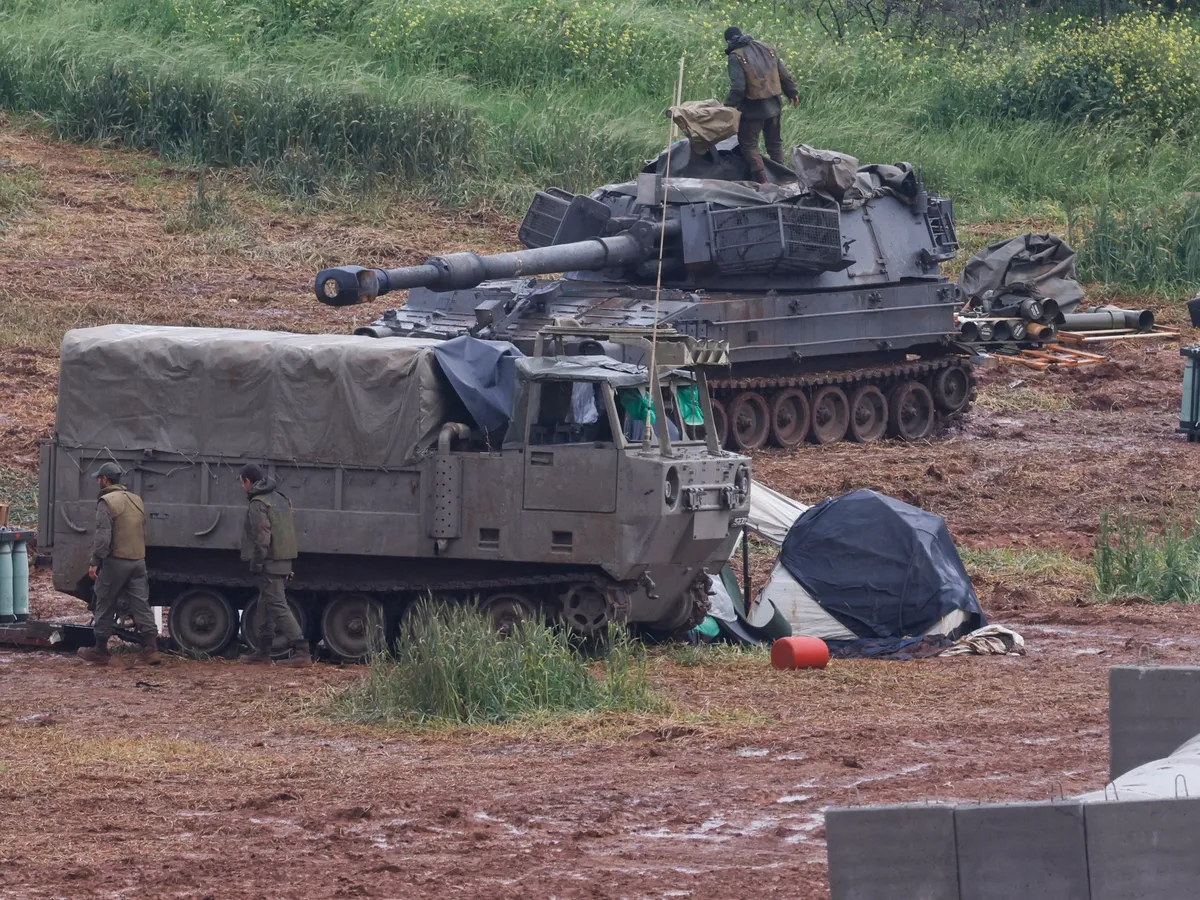
UNIFIL says it doesn’t know the origin of the projectile that killed the Indonesian peacekeeper amid ongoing fighting between Israel and Hezbollah.An Israeli soldier stands on a self-propelled Howitzer artillery gun positioned in the Upper Galilee in northern Israel near the border with southern Lebanon on March 29, 2026 [AFP]Published On 30 Mar 2026The Lebanon" class="entity-link entity-organization" data-entity-id="78696" data-entity-type="organization">United Nations Interim Force in Lebanon (UNIFIL) has confirmed one of its peacekeepers was killed in the country’s south as fighting between Israeli troops and the Hezbollah group intensifies amid Israel’s invasion.“A peacekeeper was tragically killed last night when a projectile exploded in a UNIFIL position near Adchit al Qusayr,” a UNIFIL statement said on Monday. “Another was critically injured.”Recommended Stories list of 3 itemslist 1 of 3Bloodshed in Lebanon: Three journalists, nine paramedics killed in one daylist 2 of 3Israeli footballer’s role in assault on southern Lebanon sparks outragelist 3 of 3Netanyahu orders military to expand invasion of southern Lebanonend of listIndonesia confirmed that one of its peacekeepers was killed and three others were wounded due to “indirect artillery fire”.The UNIFIL statement said they did not know the origin of the projectile but had launched an investigation. “No one should ever lose their life serving the cause of peace,” it added.UN Secretary-General Antonio Guterres called “on all to uphold their obligations under international law and to ensure the safety and security of UN personnel and property at all times”.UNIFIL has reported that its positions have been hit more than once since the start of the latest fighting on March 2.On March 7, three Ghanaian soldiers were wounded by gunfire in a border town in southern Lebanon.‘Control is going to be key’The US-Israel war on Iran spread to Lebanon after Iran-aligned Hezbollah fired rockets at Israel, following the assassination of Iran’s Supreme Leader Ayatollah Ali Khamenei on the first day of the war on February 28.Before that, Hezbollah had not attacked Israel since a ceasefire came into effect in November 2024, despite near-daily Israeli breaches of the deal.On Monday, the Israeli military said six soldiers were injured in three separate incidents, and three of them were seriously wounded.Israeli officials say their invasion of southern Lebanon intends to set up a security zone extending 30km (18.6 miles) from the Israeli border.Reporting from the Lebanese capital, Beirut, Al Jazeera’s Zeina Khodr said the Israeli military has shifted from “limited incursions” to a broad ground offensive in southern Lebanon, aiming to seize territory up to the Litani River.“Since last week, Israeli troops have advanced into several areas,” she said, noting the movement along the western coastal highway and about 8km [4.97 miles] south of Tyre, one of the main cities in southern Lebanon.“It’s still too early to say who will have the upper hand … but the word control is going to be key,” she said. “What Hezbollah will try to do is prevent the Israeli army from consolidating control, and that will be Hezbollah’s test.”Other attacksMeanwhile, a strike hit Beirut’s southern suburbs on Monday, the first Israeli attack since Friday. Live footage showed plumes of smoke rising from the area.The attack comes after the Israeli military warned of attacks on seven southern suburbs of the city, including Haret Hreik, Ghobeiry, Laylaki, Haddath and Burj al-Barajneh, claiming it was targeting Hezbollah military sites in the areas without providing any evidence.The Israeli military has carried out aerial and ground attacks across Lebanon while issuing mass forced displacement orders for residents in the south, including several Beirut suburbs.Smoke rises from Beirut’s southern suburbs following an Israeli attack [File: Adnan Abidi/Reuters]“Many will say there are no military targets left in this area,” Al Jazeera’s Khodr reported. “This is just about collective punishment and putting pressure on Hezbollah.”More than 1.2 million people have been forced out of their homes since the beginning of March, according to the UN, prompting concerns about a mounting humanitarian crisis.
SRCAl Jazeera
LANGEN
LEANCenter
WORDS642
ENT9
MON · 2026-03-30 · 08:54 GMTBRIEF NSR-2026-0330-43111
NSR-2026-0330-43111News Report·EN·Conflict
UN peacekeeper killed in southern Lebanon as Israeli invasion intensifies
A UN peacekeeper from Indonesia was killed and another critically injured in southern Lebanon on March 29, 2026, after a projectile exploded near Adchit al Qusayr. The incident occurred amid escalating fighting between Israeli troops and Hezbollah, following Israel's invasion of southern Lebanon.
Al Jazeera StaffAl JazeeraFiled 2026-03-30 · 08:54 GMTLean · CenterRead · 3 min
Al JazeeraFIG 01
Reading time
3min
Word count
642words
Sources cited
4cited
Entities identified
9entities
Quality score
100%
§ 01
Briefing Summary
AI-generatedNEWSAR · AI
A UN peacekeeper from Indonesia was killed and another critically injured in southern Lebanon on March 29, 2026, after a projectile exploded near Adchit al Qusayr. The incident occurred amid escalating fighting between Israeli troops and Hezbollah, following Israel's invasion of southern Lebanon. UNIFIL, the United Nations Interim Force in Lebanon, is investigating the origin of the projectile. UN Secretary-General Antonio Guterres urged all parties to ensure the safety of UN personnel. UNIFIL has reported multiple strikes on its positions since the renewed fighting began on March 2. The conflict intensified after Hezbollah fired rockets at Israel following the assassination of Iran's Supreme Leader in late February, prompting Israel to establish a security zone in southern Lebanon.
Confidence 0.90Sources 4Claims 5Entities 9
§ 02
Article analysis
Model · rule-basedFraming
Conflict
Human Interest
Tone
Mixed Tone
AI-assessed
CalmNeutralAlarmist
Factuality
0.80 / 1.00
Factual
LowHigh
Sources cited
4
Well sourced
FewMany
§ 03
Key claims
5 extracted01
UNIFIL doesn’t know the origin of the projectile that killed the peacekeeper.
factualUNIFIL
Confidence
1.00
02
A UNIFIL peacekeeper was killed in southern Lebanon.
factualUNIFIL
Confidence
1.00
03
Israeli officials say their invasion intends to set up a security zone extending 30km from the border.
factualIsraeli officials
Confidence
0.90
04
Fighting between Israeli troops and Hezbollah intensifies amid Israel’s invasion.
factualAl Jazeera
Confidence
0.90
05
The US-Israel war on Iran spread to Lebanon after Hezbollah fired rockets at Israel.
factualAl Jazeera
Confidence
0.80
§ 04
Full report
3 min read · 642 words§ 05
Entities
9 identifiedKey playerOppositionContextPositiveNeutralNegative
Organizations2
§ 06
Keywords & salience
9 termsun peacekeeper killed
1.00
southern lebanon
0.90
israeli invasion
0.90
hezbollah
0.80
unifil
0.80
fighting
0.70
projectile
0.60
artillery fire
0.50
international law
0.40
§ 07
Topic connections
Interactive graph No topic relationship data available yet. This graph will appear once topic relationships have been computed.