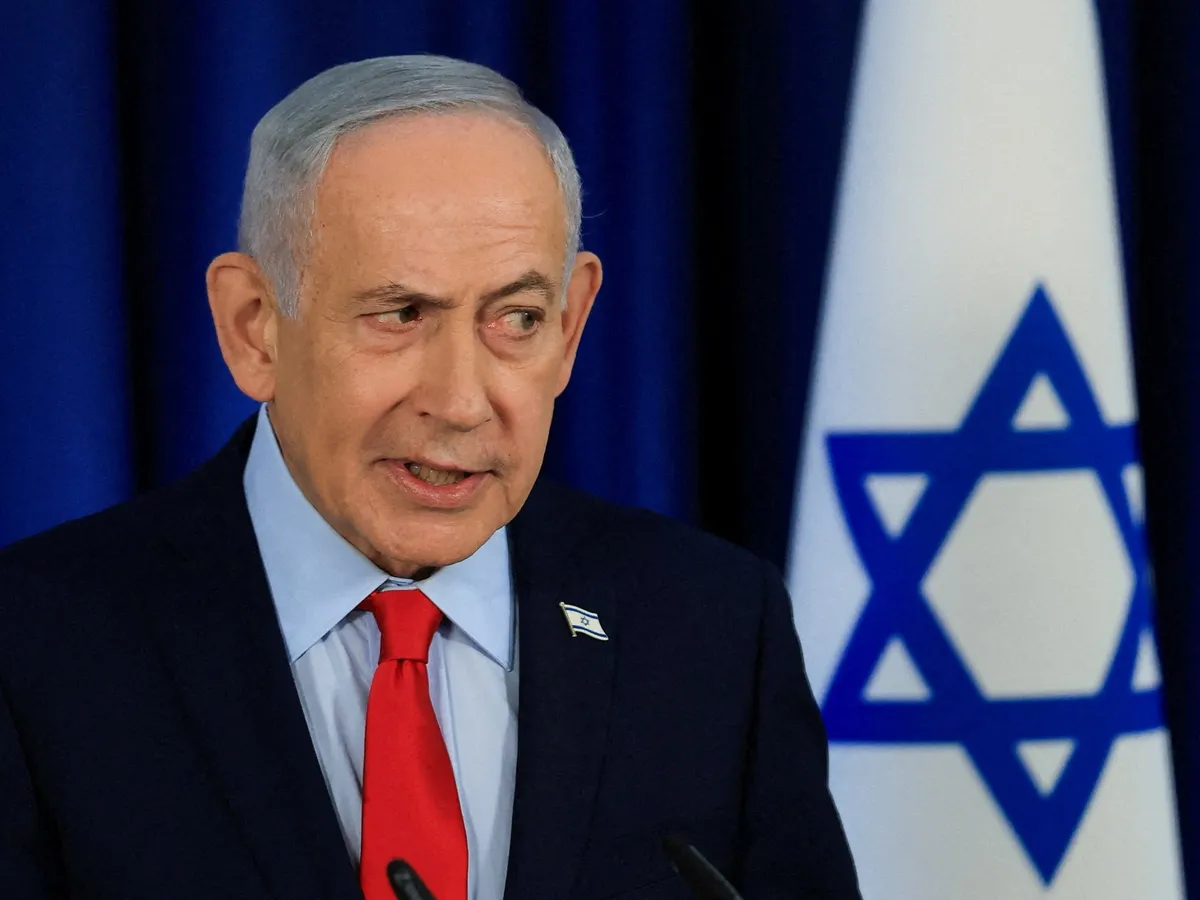
Like in other conflicts, Israel launched the war on Iran together with the US without a realistic political plan.Published On 30 Mar 2026Israeli Prime Minister Benjamin Netanyahu speaks during a news conference in Jerusalem on March 19, 2026 [Ronen Zvulun/Pool via Reuters]In recent days, alongside continued claims of successes in this war, a new tone is emerging in Israel’s media, piercing the Israeli sense of invincibility — the first hints of a narrative of defeat.Writing in Israel’s Yedioth Ahronoth newspaper on March 25, Yossi Yehoshua detailed tensions between Prime Minister Benjamin Netanyahu and Mossad chief David Barnea regarding the failure of plans to collapse the Iranian regime.Three days earlier, The New York Times had reported that in January, Barnea presented US officials with a plan to induce a successful insurrection after regime decapitation was carried out. The Mossad chief would not have taken such messages to Washington without the approval of his prime minister.The sense of crisis became more palpable when Israeli army chief Eyal Zamir warned the security cabinet that the military could “collapse in on itself”, particularly due to manpower shortages.When the political and security echelons begin playing the blame game in the midst of a war, it is never a good sign. This is not where Israel anticipated the conversation would be one month after launching a joint attack with the United States against Iran.When the war began, the prevailing sense in Israel was one of euphoria. Senior Israeli officials hailed the “unprecedented” and “historic” coordination with the US, including two meetings and 15 phone calls between Netanyahu and US President Donald Trump in the preceding two months.Together, the Israeli and US armies unleashed a campaign of heavy bombardment, assassinating leading political, religious and military figures, and damaging and destroying security infrastructure, military industrial sites and missile launchers, as well as civilian and governance buildings, including oil depots and gasfields.Iran has responded with daily strikes against Israeli targets. It is hard to know the extent of damage on the Israeli side, given the strict censorship.Certain strategic targets have been impacted in Israel, including the area of the nuclear reactor in Dimona, the Haifa oil refinery, and Ben Gurion airport. Beyond that, Israelis have spent four weeks running to bomb shelters and saferooms and have had to do so more frequently in recent days than in the early days of the war.The economy has had to significantly hunker down; schools and most businesses have been closed, despite efforts on a number of occasions to reopen. Israel is certainly shaken, but it is not collapsing.Simultaneously, among the public, the war remains very popular. The so-called Zionist opposition competes with the government in their enthusiasm for war and the extremity of measures being advocated.And yet, uncomfortable questions are increasingly starting to percolate: are some of Israel’s assumptions about what could be achieved in a war involving the US being upended? Can Iran’s “mosaic” strategy not only survive, but deliver greater endurance and impose significant costs?Judging by the nature of hits being absorbed by Israel, and the more impactful missiles being used, Iran’s capacity to continue retaliating has significantly exceeded expectations. Depletion of Israeli and US missile interceptor stocks is a growing concern. An additional front against Hezbollah in Lebanon has also opened for Israel.Questions are being asked in relation to that conflict as well. Israel assumed that Hezbollah had been dealt a devastating blow in 2024, posing only a residual threat. The extent to which Hezbollah has been able to counter Israel’s operations with its own missile salvoes and its local resistance to Israeli ground operations has generated a palpable sense of frustration on the Israeli side. Tearful appeals to the government by local leaders in northern Israel to salvage the situation have gone viral.Again, Israel’s capacity to destroy and do damage is unquestionable: one million Lebanese have been displaced, bridges linking the south of Lebanon to the rest of the country have been bombed out of use, and extensive damage has been wrought. But this is yet another military campaign with no clear endgame.And these military adventures have followed in quick succession an Israeli campaign of death and destruction in Gaza, after which Hamas is still standing. While Gaza has landed Israel’s prime minister with a war crimes arrest warrant from the International Criminal Court, and a case to answer at the International Court of Justice for Genocide Convention violations, it did not produce any political vision beyond more war and zero-sum thinking.The common denominator is not hard to spot — that Israel takes an exclusively military approach, devoid of any realistic accompanying political plan. So there is a Groundhog Day feel to all of this.Israel’s overreliance on its military and rejection of political plans have a rich history, but what we have witnessed in the post-2023 perpetual wars era is something qualitatively different. To understand that, one has to take a look at some of the changes taking place in Israel itself.Netanyahu’s talk of “total victory” can partly be understood in the context of how Israel has experienced total impunity — being able to get away with anything has instilled a sense that the most extreme solutions can be pursued. This has been accompanied by shifts in Israel’s society, polity and media. More religiously fundamentalist ideological political views resonate with significant elements of the public. Genocidal incitement proliferates in Israel’s media.There is, for instance, a greater prevalence of the religious settler class in the higher echelons of Israel’s military and other security agencies; some of its prominent members include David Zini, head of the Shin Bet, the internal security service; Avi Bluth the Israeli army’s Central Command chief; and Yoram Halevy at the Coordinator of Government Activities in the Territories (COGAT), which basically oversees Palestinian daily life.Crucially, these changes are increasingly shaping Israel’s national security thinking.A number of former military strategists close to centres of power have been advocating that Israel move from short wars premised on technological superiority to preparing for protracted conflicts that entail the permanent seizure of territory and destruction of the enemies’ “infrastructure and people”.The pursuit of a broadly defined “Greater Israel” project has become the default national security doctrine, including but not limited to the vanquishing and eradication of any Palestinian national collective, and the attempt to establish Israel as a dominant hard power hegemon in the region.Israel has been, and will continue to be, a major obstacle to bringing this war on Iran to an end. One should assume that Israel will continue to encourage and provoke escalation and to undermine any negotiation or ceasefire talks, including nudging the US towards ground operations.Israel’s interests are, therefore, diametrically opposed to those of parties seeking an end to this war and its risks.Meanwhile, the rollercoaster rhetoric of the American president does not broadcast strength. Nagging doubts are growing — questioning existing strategy and the overestimating of Israeli-US capabilities, while underestimating the Iranian side, or even core issues of competence regarding how the US administration functions.The problem for Israel is that the US can decide to pack up and leave, returning to its distant home, surrounded by Canadians, Mexicans, and fish, leaving Israel with no good options.The 1956 Suez Crisis, when, alongside Israel, the United Kingdom and France joined a Middle East war, is seen as a defining end-of-empire moment for those countries. Israel pulling the US into this war on Iran may be remembered in similar terms.
SRCAl Jazeera
LANGEN
LEANCenter
WORDS1 233
ENT12
MON · 2026-03-30 · 08:13 GMTBRIEF NSR-2026-0330-43113
NSR-2026-0330-43113Analysis·EN·Political Strategy
Did Israel miscalculate in launching the war on Iran?
Israeli Prime Minister Benjamin Netanyahu and Mossad chief David Barnea reportedly clashed over a failed plan to collapse the Iranian regime, according to Yedioth Ahronoth newspaper. In January, Barnea presented US officials with a plan for an insurrection after regime decapitation, but its approval was allegedly not secured by Netanyahu.
Daniel LevyAl JazeeraFiled 2026-03-30 · 08:13 GMTLean · CenterRead · 5 min
Al JazeeraFIG 01
Reading time
5min
Word count
1 233words
Sources cited
5cited
Entities identified
12entities
Quality score
100%
§ 01
Briefing Summary
AI-generatedNEWSAR · AI
Israeli Prime Minister Benjamin Netanyahu and Mossad chief David Barnea reportedly clashed over a failed plan to collapse the Iranian regime, according to Yedioth Ahronoth newspaper. In January, Barnea presented US officials with a plan for an insurrection after regime decapitation, but its approval was allegedly not secured by Netanyahu. Israeli army chief Eyal Zamir warned of potential military collapse due to manpower shortages. The war on Iran began one month ago, with Israel and the US conducting heavy bombardment and assassinations. Iran has responded with daily strikes against Israeli targets, causing damage to strategic sites such as Dimona's nuclear reactor and Haifa oil refinery. Israelis have been forced to frequently seek shelter in bomb shelters and saferooms due to ongoing attacks.
Confidence 0.90Sources 5Claims 5Entities 12
§ 02
Article analysis
Model · rule-basedFraming
Political Strategy
National Security
Tone
Mixed Tone
AI-assessed
CalmNeutralAlarmist
Factuality
0.40 / 1.00
Mixed
LowHigh
Sources cited
5
Well sourced
FewMany
§ 03
Key claims
5 extracted01
Israeli army chief Eyal Zamir warned the security cabinet that the military could “collapse in on itself”.
quoteEyal Zamir
Confidence
1.00
02
Iran has responded with daily strikes against Israeli targets.
factualnull
Confidence
0.90
03
Yossi Yehoshua detailed tensions between Netanyahu and Barnea regarding the failure of plans to collapse the Iranian regime.
factualYossi Yehoshua
Confidence
0.90
04
Barnea presented US officials with a plan to induce a successful insurrection after regime decapitation.
factualThe New York Times
Confidence
0.80
05
Israel launched the war on Iran together with the US without a realistic political plan.
factualnull
Confidence
0.70
§ 04
Full report
5 min read · 1 233 words§ 05
Entities
12 identifiedKey playerOppositionContextPositiveNeutralNegative
People5
§ 06
Keywords & salience
9 termsisrael-iran war
1.00
us involvement
0.70
military conflict
0.70
political plan
0.60
netanyahu
0.60
iranian regime
0.50
mossad
0.50
military strategy
0.50
military collapse
0.40
§ 07
Topic connections
Interactive graph Network visualization showing 51 related topics
View Full Graph Person Organization Location Event|Click node to navigate|Edge numbers = shared articles