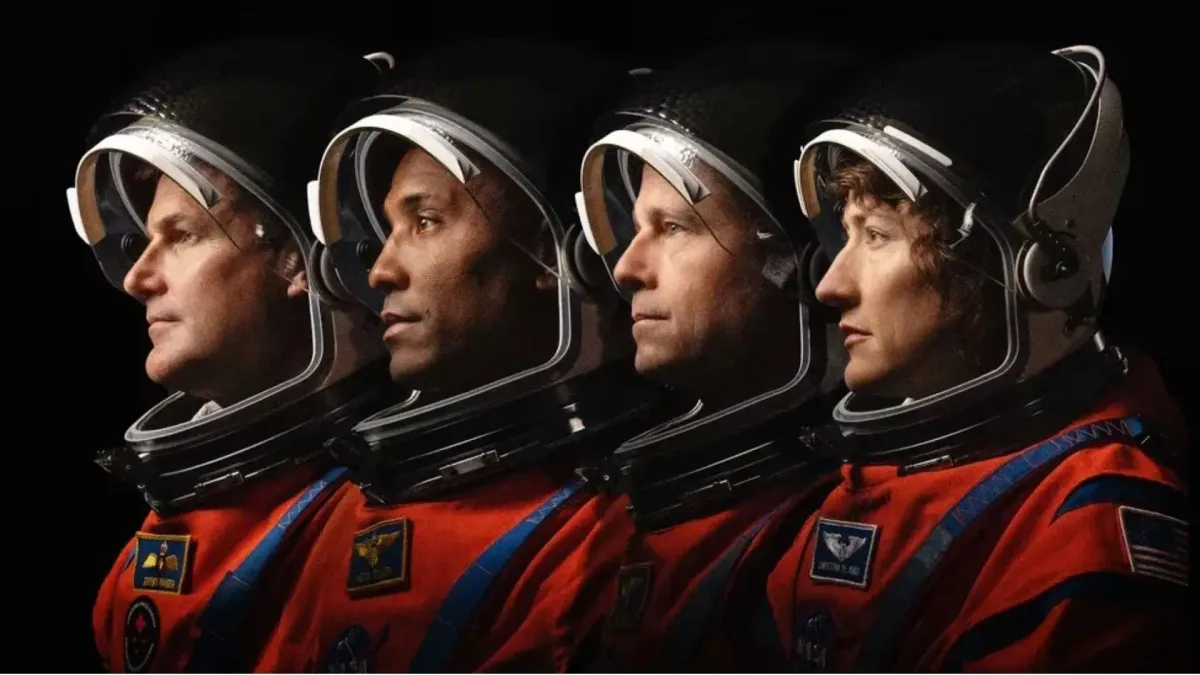
Contenido de Marca Contenido creado para una empresa, marca u organización que ha pagado su producción y publicación y que cuentan con su aprobación. La madrugada del 1 de abril la tripulación de Artemis II podrá rumbo a la Luna, la primera vez en medio siglo. Estas son todas las claves de la misión de la NASA rumbo al satélite de la Tierra en un viaje que durará 10 días. No ha sido un camino fácil y muchos impedimentos han ido posponiendo la fecha de lanzamiento. Pero todo apunta a que, por fin, en la madrugada de este miércoles, veremos al megacohete Space Launch System (SLS) despegar de la plataforma 39B del Centro Espacial Kennedy, en Florida (Estados Unidos).El SLS, el cohete más potente construido por la NASA y uno de los más grandes jamás desarrollados con sus aproximadamente 98 metros de altura —algo así como un edificio de unas 30 plantas—, no irá solo: en su parte superior irá la nave Orion, el vehículo en el que viajarán los astronautas de Artemis II. Orion está preparada para entrar en la atmósfera a unos 40.000 kilómetros por hora y su escudo térmico, el más grande jamás construido para una cápsula, está diseñado para soportar temperaturas cercanas a los 2.800 °C.Si todo sigue la actual planificación, la primera oportunidad de lanzamiento para Artemis II será el 1 de abril. La ventana de 120 minutos se abrirá a las 18:24 hora local de Florida, lo que en España se traduce en la madrugada del 2 de abril, a las 00:24 en la Península.En caso de que hubiera algún contratiempo, la siguiente oportunidad será el 2 de abril a las 19:22, es decir, la 01:22 de la madrugada del 3 de abril en España. Habría también posibles ventanas de lanzamiento durante los siguientes días (3, 4, 5 y 6 de abril).Radiografía de OrionEl principal protagonista de Artemis II es Orion, la nave que llevará que servirá como vehículo de exploración para transportar y abastecer a la tripulación y traerlos de vuelta a la Tierra sanos y salvos. La nave espacial Orion fue construida por la NASA y el contratista principal Lockheed Martin. Actualmente, es el único vehículo capaz de realizar vuelos tripulados al espacio profundo y regresar a la Tierra a alta velocidad desde las proximidades de la Luna, teniendo en cuenta que está diseñado específicamente para llevar astronautas en misiones al espacio profundo.Gracias a su infraestructura, Orion puede proporcionar protección contra la radiación solar, garantizar una entrada a alta velocidad en la atmósfera terrestre y otorgar tecnologías avanzadas para la comunicación y el soporte vital. Además, se compone de tres partes:Sistema de aborto de lanzamiento: Pone a salvo a la tripulación en caso de emergencia durante el lanzamiento o el ascenso a bordo del cohete SLS. Puede activarse en milisegundos para alejar el vehículo y posicionar el módulo de la tripulación para lograr un aterrizaje seguro.Módulo de tripulación: Es la parte presurizada de la nave espacial Orion, donde los astronautas vivirán y trabajarán durante su viaje a la Luna y de regreso a la Tierra. El módulo de tripulación puede alojar a cuatro tripulantes durante un máximo de 21 días y proporciona un hábitat seguro durante el lanzamiento, las operaciones en órbita, el aterrizaje y la recuperación.Módulo de servicio: Se trata del sistema que impulsa la nave Orion en el espacio porque es el responsable de las maniobras orbitales y el control de posición. Dicho componente está ubicado debajo del módulo de la tripulación, proporciona funciones críticas —como la propulsión, el control térmico y la energía eléctrica generada por los paneles solares— y otorga sistemas de soporte vital.Los astronautas: quiénes son los protagonistasChristina Hammock Koch (46 años): es ingeniera eléctrica en el Centro de vuelo espacial Goddard de la NASA. Visitó la Estación Espacial Internacional en 2019, en la primera caminata espacial en la que solo participaban mujeres. Jeremy Hansen (49 años): es londinense (de Ontario) y representa a la agencia de Canadá. Fue piloto de combate antes de unirse a la CSA y ha trabajado con la NASA en el entrenamiento de astronautas y operaciones de misión. Victor Glover (49 años): fue piloto en la primera misión tripulada de SpaceX Crew-1 con la NASA. Cuenta con más de 3.000 horas de vuelo en más de 40 aviones diferentes y se encargará de pilotar Orión en dirección a la órbita lunar. Reid Wiseman (49 años): será el comandante de la misión. Ha trabajado a bordo de la Estación Espacial Internacional como ingeniero de vuelo en 2014 y también estuvo al mando de la misión de investigación submarina NEEMO21.la primera mujer que viajará a la LunaLa astronauta nació en Grand Rapids (Míchigan, EEUU) el 29 de enero de 1979, por lo que tiene 44 años, y es astronauta e ingeniera estadounidense desde 2013. Está graduada por la Facultad de Ciencias y Matemáticas de Carolina del Norte y cuenta con dos licenciaturas, de Ingeniería Eléctrica y Física, por la Universidad Estatal de Carolina del Norte.De su experiencia dentro del desarrollo de instrumentos de ciencia espacial, destaca su trabajo como ingeniera eléctrica en el Laboratorio de Astrofísica de Alta Energía de la NASA y en el Centro de Vuelo Espacial Goggard. Durante su tiempo desarrollando herramientas para el estudio de la cosmología y la astrofísica, llegó a contribuir en la creación de instrumentos que estudian las partículas de radiación para misiones de la NASA, como Juno o las sondas Van Allen.La primera caminata espacial de mujeresKoch será la primera mujer en acercarse a la Luna, pero anteriormente ya protagonizó un hito esencial para la carrera de la mujer en el ámbito del espacio. El 14 de marzo de 2019, la astronauta viajó hasta la Estación Espacial Internacional a bordo de la cápsula rusa Soyuz MS-12, junto a Aleksey Ovchinin y Nick Hague.De Artemis II de la NASA a Chang'e-7 de China: todas las misiones a la Luna en los próximos añosDe producirse el lanzamiento con éxito, Reid Wiseman, Victor Glover, Christina Koch y el canadiense Jeremy Hansen viajarán a bordo del cohete Space Launch System (SLS, por sus siglas en inglés) y, después, serán impulsados hacia la Luna para tomar la maniobrabilidad de Orion. Además, si la misión Artemis II se completa con éxito, tras varias décadas sin misiones tripuladas más allá de la órbita terrestre, la NASA dará paso al resto de encomiendas del programa Artemis para sentar las bases de una presencia continua en la Luna.Sin embargo, la agencia estadounidense no está sola en esta carrera, debido a que China y Japón también avanzan con sus propios planes para explorar el satélite y, a largo plazo, establecer infraestructuras que les permitan consolidar su presencia en la superficie lunar.Tras Artemis II, la NASA continuará con las misiones de prueba para garantizar la seguridad y la integración de todos los componentes necesarios antes de un alunizaje humano, teniendo en cuenta que Artemis III ya no irá a la Luna y solo será un viaje en la órbita terrestre baja en 2027.Por lo tanto, el primer alunizaje tripulado bajo el programa Artemis está previsto para Artemis IV, con lanzamiento estimado para 2028. En esta misión, los astronautas se trasladarán desde Orion a un módulo de aterrizaje comercial y descenderán a la superficie lunar, probablemente en la región del polo sur, una zona de interés científico y estratégica para las futuras bases y misiones sostenidas.A partir de Artemis IV, la NASA planea continuar con vuelos anuales y gradualmente aumentar la duración de las estancias y los objetivos de exploración. La meta final es establecer una presencia humana sostenida en la Luna, creando la infraestructura y los sistemas necesarios para investigaciones científicas prolongadas y sirviendo como base para futuras misiones más profundas, incluyendo viajes a Marte.CRÉDITOSTextos Marta Gascón, Ana Higuera, Helena Tomás, Armando Hueso, Rocío Barrantes, Carolina Serrano y Verónica Jiménez. | Ilustración: Henar de Pedro,
SRC20 Minutos
LANGES
LEANCenter
WORDS1 308
ENT10
TUE · 2026-03-31 · 08:14 GMTBRIEF NSR-2026-0331-45361
NSR-2026-0331-45361News Report·ES·Technology
La humanidad vuelve a la Luna 50 años después: todas las claves de la Misión Artemis II
La misión Artemis II de la NASA, cuyo lanzamiento está previsto para el 1 de abril desde el Centro Espacial Kennedy en Florida, marcará el regreso de la humanidad a la Luna después de 50 años. La misión, con una duración de 10 días, utilizará el cohete Space Launch System (SLS), el más potente construido por la NASA, para enviar la nave Orion al espacio.
20minutos |20 MinutosFiled 2026-03-31 · 08:14 GMTLean · CenterRead · 6 min
20 MinutosFIG 01
Reading time
6min
Word count
1 308words
Sources cited
1cited
Entities identified
10entities
Quality score
100%
§ 01
Briefing Summary
AI-generatedNEWSAR · AI
La misión Artemis II de la NASA, cuyo lanzamiento está previsto para el 1 de abril desde el Centro Espacial Kennedy en Florida, marcará el regreso de la humanidad a la Luna después de 50 años. La misión, con una duración de 10 días, utilizará el cohete Space Launch System (SLS), el más potente construido por la NASA, para enviar la nave Orion al espacio. Orion, construida por la NASA y Lockheed Martin, es la nave espacial diseñada para transportar y proteger a la tripulación en misiones al espacio profundo y traerlos de vuelta a la Tierra. La nave está equipada con un escudo térmico capaz de soportar altas temperaturas durante la reentrada a la atmósfera terrestre. En caso de retrasos, hay ventanas de lanzamiento alternativas programadas para los días siguientes.
Confidence 0.90Sources 1Claims 5Entities 10
§ 02
Article analysis
Model · rule-basedFraming
Technology
Human Interest
Tone
Measured
AI-assessed
CalmNeutralAlarmist
Factuality
0.80 / 1.00
Factual
LowHigh
Sources cited
1
Limited
FewMany
§ 03
Key claims
5 extracted01
Orion's heat shield is designed to withstand temperatures near 2,800 °C.
factualnull
Confidence
1.00
02
The Orion spacecraft will carry the Artemis II astronauts.
factualnull
Confidence
1.00
03
The mission will use the Space Launch System (SLS), NASA's most powerful rocket.
factualnull
Confidence
1.00
04
Orion is the only vehicle capable of manned deep space flights and returning from the Moon at high speed.
factualnull
Confidence
0.90
05
Artemis II's launch is scheduled for April 1st, marking humanity's return to the Moon after 50 years.
factualnull
Confidence
0.90
§ 04
Full report
6 min read · 1 308 words§ 05
Entities
10 identifiedKey playerOppositionContextPositiveNeutralNegative
Organizations4
Locations5
§ 06
Keywords & salience
10 termsmisión artemis ii
1.00
luna
0.90
nasa
0.80
nave orion
0.70
space launch system (sls)
0.70
exploración espacial
0.60
vuelos tripulados
0.60
lanzamiento
0.50
cohete
0.50
espacio profundo
0.40
§ 07
Topic connections
Interactive graph Network visualization showing 25 related topics
View Full Graph Person Organization Location Event|Click node to navigate|Edge numbers = shared articles