1 hour agoLina SinjabMiddle East correspondent in BeirutGetty ImagesStrikes on the Lebanese capital of Beirut have continued this weekIsrael has intensified its attacks on Lebanon this week, hitting areas outside of Hezbollah's control on Tuesday.Strikes without warning hit a vehicle north of Beirut and the Jnah neighbourhood in the heart of the capital. Attacks also continued in the city's southern suburbs and the country's south, both where Hezbollah has a strong presence.A building was destroyed on the road to Beirut's airport after an evacuation order, and in the south, a strike hit a health facility, killing a paramedic, according to Lebanon's health ministry.Israel's military said it had hit Hezbollah infrastructure in Beirut and killed a senior commander and another senior figure from the Iran-backed armed group.Hezbollah joined the ongoing regional war on 2 March, sending missiles towards Israel, after the US and Israel attacked the armed group's ally Iran on 28 February.Israeli attacks have kept bombarding Lebanon as its troops have moved into the country's south.On Tuesday, a vehicle was targeted in the Mansourieh area, a predominantly Christian residential neighbourhood north of Beirut.Meanwhile, the Jnah neighbourhood in the heart of the capital was attacked after midnight. The Lebanese health ministry said the Al-Zahraa Hospital had received and treated "a number of those injured in the air strike".Hassan Jalwan, who lives near Jnah, told AFP he heard several "big explosions" overnight. "Nobody knows what's happening," he said, adding that "displaced people have been sleeping in the open" in the area.The Dahieh neighbourhood to the south of Beirut, where Hezbollah has a strong presence, continues to be a target. A building was destroyed on Tuesday in Ghobeiry on the road to the airport following an evacuation order.Also on Tuesday, Lebanon's health ministry said at least seven people had been killed by Israeli strikes in the country's south, including the paramedic.The number of health workers who have been killed since the start of the war has now reached 53.Earlier, the Lebanese army cleared its last positions in the south, pulling out from Ain Ibel and Rmeish villages a day after an army checkpoint was hit and a soldier was killed by an Israeli air strike, according to the Lebanese Armed Forces. The Israeli military has not appeared to have commented yet on the reported death.However, some residents of the villages refuse to leave.In the predominantly Christian village of Rmeish, Father Najib Al Amil appeared in a video on social media, where he said: "There is grass and soil. We rely on God and will stay in our village. We either all die together and lose our land or live and our villages will live with us."KAWNAT HAJU / AFP via Getty ImagesA photograph shows the aftermath of an Israeli strike in the area of Aamriyeh, south of Tyre in southern LebanonIsrael has announced its decision to control large swathes of land in southern Lebanon - up to the Litani River, about 30km from the border with Israel - to create a buffer security zone.Israeli Defence Minister Israel Katz said Israel would keep security control over the territory even after the end of the current war against Hezbollah. The plan has drawn criticism from the UN.Hundreds of thousands of people have been forced to leave the south, but there are still tens of thousands who have refused to go.Supply lines to the south have been cut by Israel targeting bridges and infrastructure, making villages in the south uninhabitable.Katz said more than 600,000 displaced Lebanese residents would be "completely prohibited" from returning to that area until the safety of residents of northern Israel was guaranteed.The Israeli defence minister also said all houses in villages near the border in Lebanon will be destroyed "according to the model of Rafah and Beit Hanoun in Gaza".In total, 1,268 people in Lebanon have been killed since the beginning of the attacks, the country's health ministry said on Tuesday.More than one million people have been displaced, the UN reported.This is critical time for Lebanon and the residents of the south. Many see Israel's strategy in the south mimicking that of Gaza - destruction, depopulation and occupation.The government said earlier that this constitutes a violation of the country's sovereignty.South Lebanon previously lived under Israeli occupation for nearly 18 years, between 1982 and 2000.Some Lebanese have lived the displacement and loss of land generation after generation. Many in Lebanon believe that Israel is more powerful than Hezbollah and capable of destroying the south with its advanced missiles and drones. At the same time, if Israel is to stay in the south, Hezbollah is more powerful on the ground and can engage in a guerrilla war to wear out the Israelis and prevent them from staying put. In short, for the hundreds of thousands who have been forced out of their homes, this war is not ending anytime soon.
SRCBBC News - World
LANGEN
LEANCenter
WORDS806
ENT8
WED · 2026-04-01 · 10:33 GMTBRIEF NSR-2026-0401-47133
NSR-2026-0401-47133News Report·EN·Conflict
Israel intensifies Lebanon attacks and hits areas not in Hezbollah's control
Israel has intensified its attacks on Lebanon this week, striking areas beyond Hezbollah's control, including a residential neighborhood north of Beirut and the Jnah neighborhood in the capital. The Israeli military claims it targeted Hezbollah infrastructure and killed senior commanders in Beirut.
BBC News - WorldFiled 2026-04-01 · 10:33 GMTLean · CenterRead · 4 min
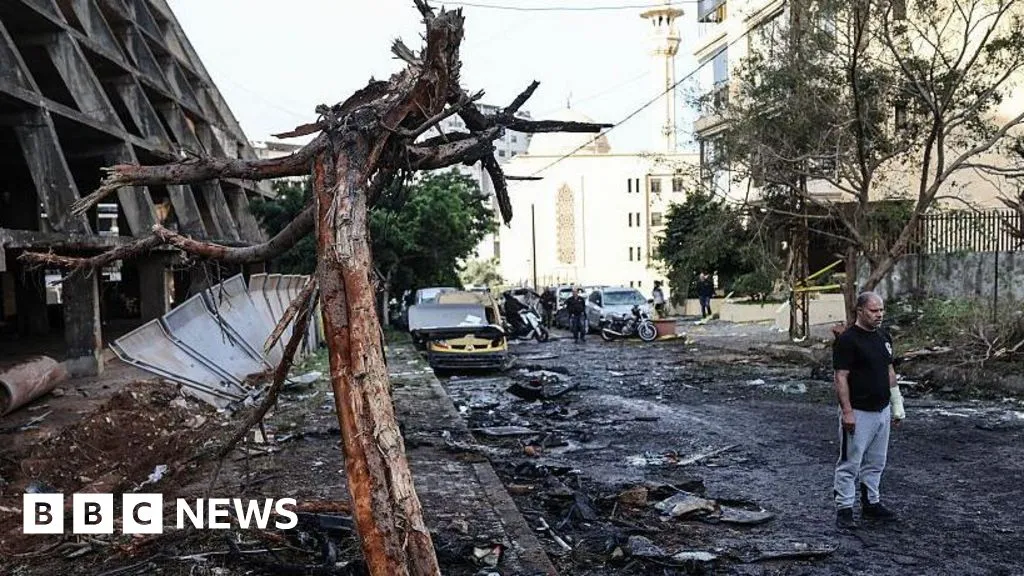
BBC News - WorldFIG 01
Reading time
4min
Word count
806words
Sources cited
6cited
Entities identified
8entities
Quality score
100%
§ 01
Briefing Summary
AI-generatedNEWSAR · AI
Israel has intensified its attacks on Lebanon this week, striking areas beyond Hezbollah's control, including a residential neighborhood north of Beirut and the Jnah neighborhood in the capital. The Israeli military claims it targeted Hezbollah infrastructure and killed senior commanders in Beirut. Strikes also continued in Hezbollah strongholds in southern Beirut and southern Lebanon. A health facility in the south was hit, killing a paramedic, and a building near Beirut's airport was destroyed after evacuation. These attacks follow Hezbollah's involvement in the regional conflict since March 2, after attacks on its ally Iran. The Lebanese army has withdrawn from some southern positions after an Israeli strike killed a soldier.
Confidence 0.90Sources 6Claims 5Entities 8
§ 02
Article analysis
Model · rule-basedFraming
Conflict
Human Interest
Tone
Mixed Tone
AI-assessed
CalmNeutralAlarmist
Factuality
0.80 / 1.00
Factual
LowHigh
Sources cited
6
Well sourced
FewMany
§ 03
Key claims
5 extracted01
The Lebanese health ministry said at least seven people had been killed by Israeli strikes in the country's south, including the paramedic.
factualLebanese health ministry
Confidence
0.90
02
Hezbollah joined the ongoing regional war on 2 March, sending missiles towards Israel.
factualArticle
Confidence
0.90
03
A strike hit a health facility, killing a paramedic.
factualLebanon's health ministry
Confidence
0.90
04
Israel has intensified its attacks on Lebanon this week, hitting areas outside of Hezbollah's control on Tuesday.
factualArticle
Confidence
0.90
05
Israel's military said it had hit Hezbollah infrastructure in Beirut and killed a senior commander.
factualIsrael's military
Confidence
0.80
§ 04
Full report
4 min read · 806 words§ 05
Entities
8 identifiedKey playerOppositionContextPositiveNeutralNegative
Organizations3
§ 06
Keywords & salience
10 termslebanon
0.90
israel
0.90
attacks
0.80
hezbollah
0.80
air strikes
0.70
beirut
0.70
health ministry
0.60
regional war
0.50
paramedic
0.40
infrastructure
0.40
§ 07
Topic connections
Interactive graph Network visualization showing 51 related topics
View Full Graph Person Organization Location Event|Click node to navigate|Edge numbers = shared articles