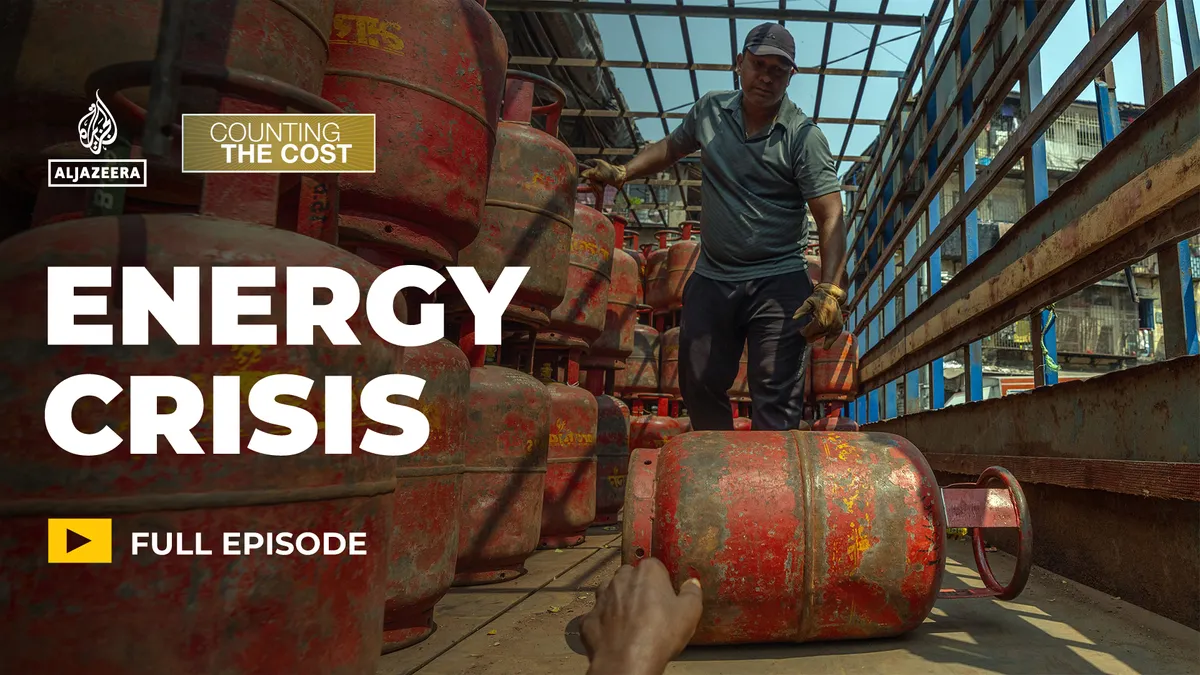
Counting the CostThe Middle East conflict has cut off 20 percent of the world’s fuel supply. Countries are scrambling for alternatives.The disruption in the Strait of Hormuz has cut access to one-fifth of the world’s oil and gas supply, leaving many countries scrambling for alternatives.So what can they rely on to make up for the shortfall in a quick time?Many Asian countries are turning to coal, reopening shuttered plants and expanding production.Policymakers say immediate energy needs supplant environmental concerns.Others are hoping to turn to renewables. Solar power is now the cheapest form of electricity in many parts of the world. But renewables, especially wind, have faced hostility from the Trump administration.Published On 1 Apr 2026
SRCAl Jazeera
LANGEN
LEANCenter
WORDS115
ENT5
WED · 2026-04-01 · 15:45 GMTBRIEF NSR-2026-0401-47789
NSR-2026-0401-47789News Report·EN·Economic Impact
What can nations do to make up for the ongoing energy shortfall?
Due to a Middle East conflict disrupting access through the Strait of Hormuz, 20% of the world's oil and gas supply has been cut off as of April 1, 2026. This disruption has forced nations to seek immediate alternatives to address the energy shortfall.
Al JazeeraFiled 2026-04-01 · 15:45 GMTLean · CenterRead · 1 min
Al JazeeraFIG 01
Reading time
1min
Word count
115words
Sources cited
0cited
Entities identified
5entities
Quality score
100%
§ 01
Briefing Summary
AI-generatedNEWSAR · AI
Due to a Middle East conflict disrupting access through the Strait of Hormuz, 20% of the world's oil and gas supply has been cut off as of April 1, 2026. This disruption has forced nations to seek immediate alternatives to address the energy shortfall. Many Asian countries are responding by increasing coal production, including reopening closed plants, prioritizing immediate energy needs over environmental concerns. Other nations are considering renewable energy sources, particularly solar power, which has become a cost-effective option in many regions. However, the expansion of renewables like wind power faces political challenges in some areas.
Confidence 0.85Claims 5Entities 5
§ 02
Article analysis
Model · rule-basedFraming
Economic Impact
Environmental
Tone
Mixed Tone
AI-assessed
CalmNeutralAlarmist
Factuality
0.60 / 1.00
Mixed
LowHigh
Sources cited
0
No named sources
FewMany
§ 03
Key claims
5 extracted01
The disruption in the Strait of Hormuz has cut access to one-fifth of the world’s oil and gas supply.
statistic
Confidence
0.90
02
The Middle East conflict has cut off 20 percent of the world’s fuel supply.
statistic
Confidence
0.90
03
Solar power is now the cheapest form of electricity in many parts of the world.
factual
Confidence
0.80
04
Policymakers say immediate energy needs supplant environmental concerns.
quote
Confidence
0.80
05
Many Asian countries are turning to coal, reopening shuttered plants and expanding production.
factual
Confidence
0.70
§ 04
Full report
1 min read · 115 words§ 05
Entities
5 identifiedKey playerOppositionContextPositiveNeutralNegative
Organizations1
§ 06
Keywords & salience
8 termsenergy shortfall
1.00
fuel supply
0.80
alternatives
0.70
coal
0.60
renewables
0.60
energy needs
0.50
solar power
0.50
environmental concerns
0.40
§ 07
Topic connections
Interactive graph Network visualization showing 51 related topics
View Full Graph Person Organization Location Event|Click node to navigate|Edge numbers = shared articles