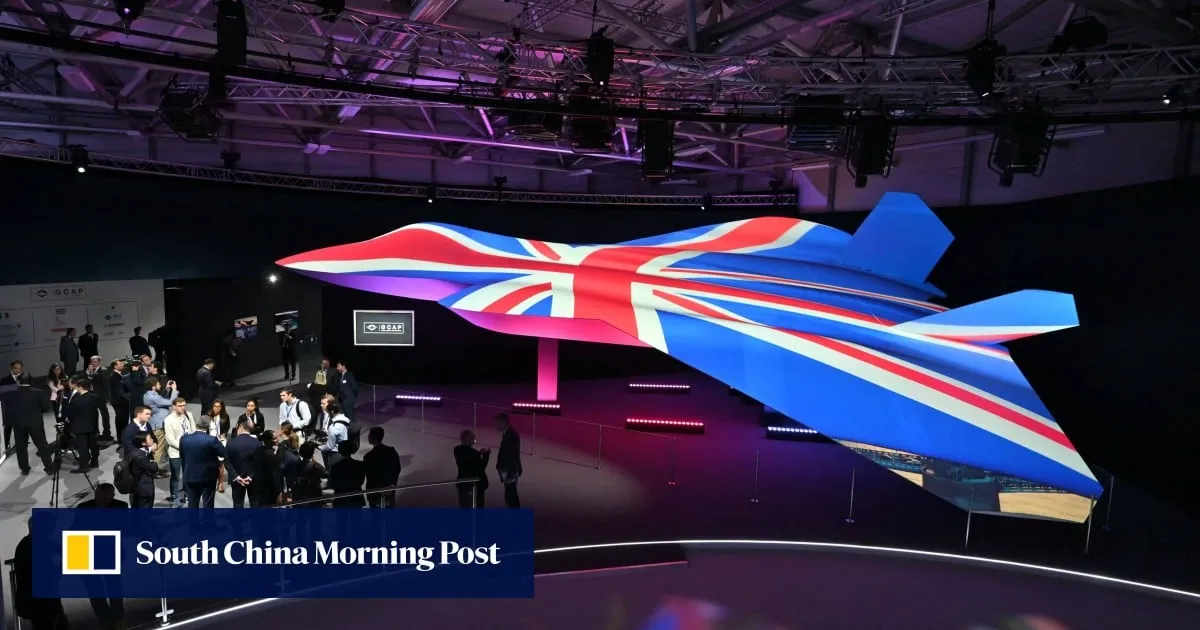
Japan could get a boost in its push for a next-generation fighter jet if Canada joins a multinational consortium backing the aircraft’s development, as Tokyo aims to narrow the gap with China’s fast-modernising air force.The Canadian government said it intended to take part in the Global Combat Air Programme (GCAP), currently involving Japan, the United Kingdom and Italy, the Asahi newspaper reported on Tuesday. Japan is planning to replace its ageing F-2 fleet with a sixth-generation stealth fighter dubbed the Tempest.According to the report, Canada is not planning to get involved in development but would consider the aircraft’s suitability for its defence needs, including for purchase.Set to be formalised at a meeting of the defence ministers of the four nations in the UK as early as July, the move signals Ottawa’s aim to diversify from US military equipment for its defence needs, at a time when its ties with Washington are strained.Canada’s involvement was discussed when Prime Minister Mark Carney visited Japan in March for talks aimed at enhancing the Trans-Pacific Partnership.Under the partnership, Japan, Canada and nine other members pledge to lower trade barriers and increase the flow of goods among them. In 2017, US President Donald Trump removed the US as a member but said in the following year that Washington might rejoin.
SRCSouth China Morning Post
LANGEN
LEANCenter-Right
WORDS215
ENT12
THU · 2026-04-02 · 00:00 GMTBRIEF NSR-2026-0402-48314
NSR-2026-0402-48314News Report·EN·National Security
Why Japan’s advanced fighter project may get Canadian tailwinds
Japan's next-generation fighter jet project, the Tempest, may receive a boost if Canada joins the Global Combat Air Programme (GCAP) alongside Japan, the UK, and Italy. While not planning to participate in development, Canada is considering the aircraft for its defense needs, potentially diversifying from US military equipment due to strained relations with Washington.
Julian RyallSouth China Morning PostFiled 2026-04-02 · 00:00 GMTLean · Center-RightRead · 1 min
South China Morning PostFIG 01
Reading time
1min
Word count
215words
Sources cited
1cited
Entities identified
12entities
Quality score
100%
§ 01
Briefing Summary
AI-generatedNEWSAR · AI
Japan's next-generation fighter jet project, the Tempest, may receive a boost if Canada joins the Global Combat Air Programme (GCAP) alongside Japan, the UK, and Italy. While not planning to participate in development, Canada is considering the aircraft for its defense needs, potentially diversifying from US military equipment due to strained relations with Washington. The potential partnership was discussed during Prime Minister Carney's visit to Japan in March, aiming to enhance the Trans-Pacific Partnership. Formalization of Canada's involvement could occur as early as July at a meeting of defense ministers. Japan aims to narrow the gap with China's rapidly modernizing air force by replacing its aging F-2 fleet with the sixth-generation stealth fighter.
Confidence 0.90Sources 1Claims 5Entities 12
§ 02
Article analysis
Model · rule-basedFraming
National Security
Political Strategy
Tone
Measured
AI-assessed
CalmNeutralAlarmist
Factuality
0.80 / 1.00
Factual
LowHigh
Sources cited
1
Limited
FewMany
§ 03
Key claims
5 extracted01
Canada's involvement was discussed when Prime Minister Mark Carney visited Japan in March.
factual
Confidence
1.00
02
Canada is not planning to get involved in development but would consider the aircraft’s suitability for its defence needs.
factual
Confidence
1.00
03
Japan is planning to replace its ageing F-2 fleet with a sixth-generation stealth fighter dubbed the Tempest.
factual
Confidence
1.00
04
The Canadian government said it intended to take part in the Global Combat Air Programme (GCAP).
factualCanadian government
Confidence
1.00
05
Japan could get a boost in its push for a next-generation fighter jet if Canada joins a multinational consortium.
prediction
Confidence
0.70
§ 04
Full report
1 min read · 215 words§ 05
Entities
12 identifiedKey playerOppositionContextPositiveNeutralNegative
Locations6
§ 06
Keywords & salience
9 termsfighter jet
0.90
next-generation fighter
0.80
japan
0.80
canada
0.70
global combat air programme
0.70
defence
0.60
air force
0.50
military equipment
0.50
tempest
0.40
§ 07
Topic connections
Interactive graph Network visualization showing 51 related topics
View Full Graph Person Organization Location Event|Click node to navigate|Edge numbers = shared articles