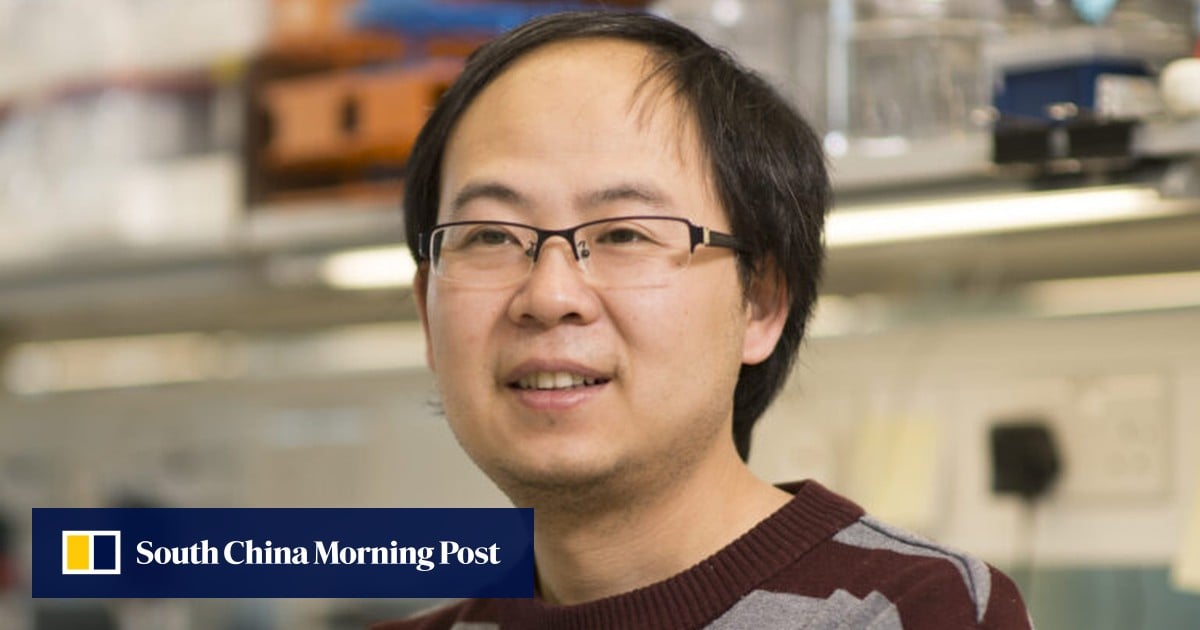
For Zhang Kai, a pioneering scientist who is building an ultra-large-scale cellular structure group data bank with unprecedented precision, returning home to China was the natural choice to fulfil his ambition.“In the United States, it is almost impossible for a Chinese scholar to take the lead on this project,” Zhang said during a March 26 interview with China Science Daily, the official newspaper of the Chinese Academy of Sciences (CAS), the country’s most prestigious research institution.On January 12, Zhang resigned from his tenure-track position at Yale University and officially joined the School of Life Sciences and Medicine at the University of Science and Technology of China (USTC) in Hefei, Anhui province.A month later, a paper for which he was the corresponding author was published in the prestigious journal Nature. It reported a breakthrough in his research field: high-resolution electron microscopy imaging and analysis technology.Zhang Kai’s research looks at the structure of mitochondria, often called the powerhouse of the cell. Photo: ShutterstockThis research is widely seen as essential for understanding life, developing new diagnostic and therapeutic technologies, and improving health management.
SRCSouth China Morning Post
LANGEN
LEANCenter-Right
WORDS180
ENT9
THU · 2026-04-02 · 04:00 GMTBRIEF NSR-2026-0402-48544
NSR-2026-0402-48544News Report·EN·Human Interest
‘Impossible for Chinese’: Yale scientist Zhang Kai leaves US to break racial ceiling
Yale scientist Zhang Kai resigned his tenure-track position in January to join the University of Science and Technology of China (USTC). Zhang, a pioneer in building an ultra-large-scale cellular structure data bank, stated that he felt it was "impossible for a Chinese scholar to take the lead" on such a project in the United States.
Shi HuangSouth China Morning PostFiled 2026-04-02 · 04:00 GMTLean · Center-RightRead · 1 min
South China Morning PostFIG 01
Reading time
1min
Word count
180words
Sources cited
1cited
Entities identified
9entities
Quality score
100%
§ 01
Briefing Summary
AI-generatedNEWSAR · AI
Yale scientist Zhang Kai resigned his tenure-track position in January to join the University of Science and Technology of China (USTC). Zhang, a pioneer in building an ultra-large-scale cellular structure data bank, stated that he felt it was "impossible for a Chinese scholar to take the lead" on such a project in the United States. He officially joined USTC's School of Life Sciences and Medicine in Hefei, Anhui province. A month later, a paper for which he was the corresponding author was published in Nature, detailing a breakthrough in high-resolution electron microscopy imaging and analysis technology. His research focuses on the structure of mitochondria and is considered essential for advancements in understanding life, developing new technologies, and improving health management.
Confidence 0.90Sources 1Claims 5Entities 9
§ 02
Article analysis
Model · rule-basedFraming
Human Interest
Technology
Tone
Mixed Tone
AI-assessed
CalmNeutralAlarmist
Factuality
0.70 / 1.00
Factual
LowHigh
Sources cited
1
Limited
FewMany
§ 03
Key claims
5 extracted01
Zhang Kai is building an ultra-large-scale cellular structure group data bank.
factualnull
Confidence
1.00
02
A paper for which he was the corresponding author was published in Nature.
factualnull
Confidence
1.00
03
Zhang Kai said it is almost impossible for a Chinese scholar to take the lead on this project in the US.
quoteZhang Kai
Confidence
1.00
04
Zhang Kai joined the University of Science and Technology of China (USTC).
factualnull
Confidence
1.00
05
Zhang Kai resigned from his tenure-track position at Yale University.
factualnull
Confidence
1.00
§ 04
Full report
1 min read · 180 words§ 05
Entities
9 identifiedKey playerOppositionContextPositiveNeutralNegative
Organizations4
§ 06
Keywords & salience
10 termszhang kai
1.00
china
0.80
scientific research
0.80
racial ceiling
0.70
cellular structure
0.70
united states
0.60
electron microscopy
0.60
university of science and technology of china
0.50
yale university
0.50
mitochondria
0.40
§ 07
Topic connections
Interactive graph No topic relationship data available yet. This graph will appear once topic relationships have been computed.