30 minutes agoAmir AzimiBBC Persian editorGetty ImagesSupreme Leader Ayatollah Ali Khamenei was killed at the beginning of the US-Israel war against Iran, launched on 28 FebruaryDonald Trump's prime-time Wednesday evening address on the war with Iran was intended to project control, but it also laid bare a central contradiction.He declared Iran's military capabilities - its navy, air force, missile programme and nuclear enrichment infrastructure - largely destroyed, presenting the conflict as nearing its end. Yet he coupled that with threats of further escalation in the coming weeks. The result is a message that cannot quite decide what it is: victory declared, but not secured.The rhetoric sharpened further with his warning that Iran would be bombed "back to the stone ages, where they belong".That remark has had a tangible effect inside Iran, fuelling anger across social media - including among those opposition supporters who had previously viewed Trump as a potential agent of change. Rather than encouraging internal pressure on the system, for some it has reinforced a sense of a country under siege.Trump has also doubled down on the claim that "regime change" has effectively already taken place in Iran with the assassination of Supreme Leader Ayatollah Ali Khamenei along with many other top officials and commanders, producing what he called a "less radical and much more reasonable" leadership. There is little evidence to support this.Power in Tehran remains structurally unchanged. Authority still flows from the supreme leader's office, though how much direct control is exercised in practice, particularly under current conditions, is less clear. But there has been no institutional rupture, no ideological shift. Masoud Pezeshkian remains president. Mohammad Bagher Ghalibaf still leads parliament. Abbas Araghchi continues to shape foreign policy. Commanders and many officials killed in strikes have been replaced by figures from the same ideological ranks who are, if anything, more hardened by wartime conditions.This appears more like regime resilience than regime change. That resilience is not accidental. Iran's war aim is not victory in the conventional sense, but endurance.Getty ImagesCrowds pictured at the funeral of Alireza Tangsiri, head of the Islamic Revolutionary Guards Corps (IRGC) navy, in Tehran on WednesdayFor years, Tehran has operated on a simple premise: survival against a superior military power constitutes success. In its enduring confrontation with Israel and the US, Tehran has always believed that conflict with one would draw in the other."Still standing" is not a fallback outcome; it is the objective. One month into the war, the Islamic Republic's command structures still function, its state apparatus holds, and its deterrent, though degraded, is not broken.By that measure, Iran's position remains significant. It retains leverage over critical energy routes, particularly the Strait of Hormuz, through which roughly a fifth of global oil supply passes. That alone gives Tehran disproportionate disruptive capacity, even under sustained attack.For Washington, this creates a dilemma. If the US disengages now, it risks validating Iran's core lesson: endurance works. If it continues, it faces mounting costs with no clear path to decisive victory.Trump's speech reflects that bind. By claiming success while continuing the war, he is attempting to reconcile two competing imperatives: demonstrating strength while avoiding prolonged entanglement.Against this backdrop, Pezeshkian's assertion shortly before Trump's speech that Iran has the "necessary will" to end the war reads as calculated signalling rather than concession.His open letter to the American public, posted on social media on Wednesday, questioned whether "America First" was being served and whether the US was acting as a proxy for Israel. It was aimed squarely at domestic US audiences already uneasy with the conflict - an attempt to widen political pressure in Washington without altering Iran's negotiating position.Iran's red lines for ending the war appear unchanged. They are:Regime survival and sovereigntyCredible guarantees against future US and Israeli strikesMeaningful, enforceable sanctions reliefRetention of deterrence capabilitiesSo far, there is no sign that Iran is willing to compromise on these demands.That could yet change as the US-Israeli bombing continues; there is no doubt that it is having a significant effect on Iran's military capabilities and on its economy, which was already in freefall before the war began. If the regime survives the war, it will have to rebuild a country reeling from these crises.But survival would have a deeper consequence: deterrence itself. For years, the implicit threat of a large-scale US or Israeli attack acted as a constraint on Iran. If it emerges intact after direct confrontation, the credibility of future threats diminishes.That shift is already shaping regional calculations. Some Arab states, initially opposed to the war, are now reportedly urging Trump to see it through rather than risk leaving behind a more confident Iran. From their perspective, an inconclusive end may prove more destabilising than the conflict itself. They, more than Washington, will bear the consequences, they fear.The United States is therefore caught in a familiar but acute dilemma. Leaving risks validating Iran's model of endurance. Staying risks deeper entanglement in a war with no clear endpoint.So far, a new Iran has not emerged. If that is still the case when the war ends, the question will be whether Washington can align its claims of success with a reality in which the adversary it sought to transform remains, fundamentally, the same.
SRCBBC News - World
LANGEN
LEANCenter
WORDS865
ENT12
THU · 2026-04-02 · 13:45 GMTBRIEF NSR-2026-0402-49207
NSR-2026-0402-49207Analysis·EN·Political Strategy
Iran's focus on survival means same regime still firmly in place
Following a US-Israel war against Iran that began on February 28th, former President Trump declared Iran's military capabilities largely destroyed, while simultaneously threatening further escalation. Despite Trump's claim of effective "regime change" following the assassination of Supreme Leader Ayatollah Ali Khamenei, power structures in Tehran remain largely intact.
BBC News - WorldFiled 2026-04-02 · 13:45 GMTLean · CenterRead · 4 min
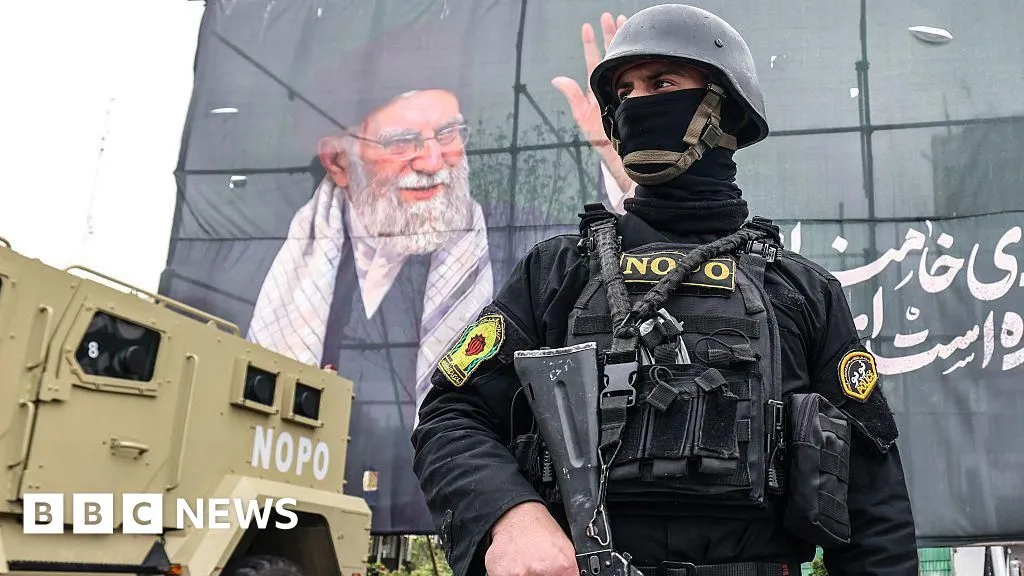
BBC News - WorldFIG 01
Reading time
4min
Word count
865words
Sources cited
1cited
Entities identified
12entities
Quality score
100%
§ 01
Briefing Summary
AI-generatedNEWSAR · AI
Following a US-Israel war against Iran that began on February 28th, former President Trump declared Iran's military capabilities largely destroyed, while simultaneously threatening further escalation. Despite Trump's claim of effective "regime change" following the assassination of Supreme Leader Ayatollah Ali Khamenei, power structures in Tehran remain largely intact. Key figures like President Masoud Pezeshkian, Parliament leader Mohammad Bagher Ghalibaf, and foreign policy leader Abbas Araghchi remain in their positions. While some commanders were killed, they have been replaced by figures from similar ideological backgrounds. Iran's primary objective in the conflict appears to be survival, and the current situation reflects regime resilience rather than a fundamental shift in power or ideology.
Confidence 0.90Sources 1Claims 5Entities 12
§ 02
Article analysis
Model · rule-basedFraming
Political Strategy
National Security
Tone
Measured
AI-assessed
CalmNeutralAlarmist
Factuality
0.60 / 1.00
Mixed
LowHigh
Sources cited
1
Limited
FewMany
§ 03
Key claims
5 extracted01
Mohammad Bagher Ghalibaf still leads parliament.
factual
Confidence
1.00
02
Masoud Pezeshkian remains president.
factual
Confidence
1.00
03
Trump claimed 'regime change' has effectively already taken place in Iran with the assassination of Supreme Leader Ayatollah Ali Khamenei.
quoteDonald Trump
Confidence
0.90
04
Donald Trump declared Iran's military capabilities largely destroyed.
quoteDonald Trump
Confidence
0.90
05
Iran's war aim is not victory in the conventional sense, but endurance.
factual
Confidence
0.80
§ 04
Full report
4 min read · 865 words§ 05
Entities
12 identifiedKey playerOppositionContextPositiveNeutralNegative
People7
Organizations1
§ 06
Keywords & salience
10 termsiran
1.00
regime resilience
0.90
survival
0.80
us-iran war
0.70
regime change
0.70
military capabilities
0.60
political leadership
0.50
ideological shift
0.50
donald trump
0.40
escalation
0.40
§ 07
Topic connections
Interactive graph Network visualization showing 51 related topics
View Full Graph Person Organization Location Event|Click node to navigate|Edge numbers = shared articles