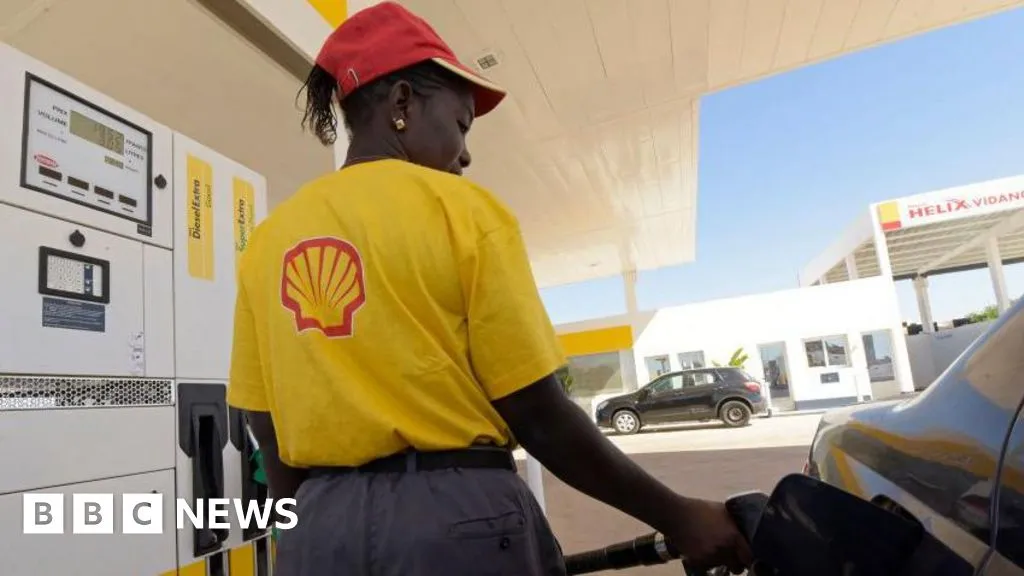
2 hours agoDamian ZaneAFP via Getty ImagesThe global increase in the price of fuel is putting pressure on the finances of the Senegalese governmentGovernment ministers in Senegal have been banned from all non-essential foreign travel following the rise in the price of oil resulting from the conflict in Iran, the prime minister has announced.Speaking at a youth rally on Friday, Ousmane Sonko said that the current cost of a barrel of oil was approaching double what had been budgeted for.Sonko has postponed his own trips to Niger, Spain and France as part of the restrictions. He said that the mines minister would announce further measures to curb government spending in the coming week.Senegal's move is the latest response from the continent to the oil price rise, which has seen countries reducing fuel levies and rationing electricity.In his speech to young people, the prime minister said he did not want to "frighten" his audience or put pressure on them. Instead, he wanted to give them a "sense of this world, which is a difficult world", but added that though things were hard the Senegalese were resilient.Despite a fledgling oil and gas industry, Senegal relies heavily on importing fuel.Last year, the International Monetary Fund described the economy as "robust" with a growth rate of almost 8% and low inflation.But its public debt – standing at more than 130% of the total annual size of the economy - is high. Sonko, installed as prime minister two years ago, blamed the previous government for saddling his administration with the debt, which he said had made the current situation of dealing with the price of oil even more difficult.Elsewhere on the continent, this week South Africa's government responded to the rising oil price by reducing the tax it charges on petrol in an effort to limit the increase of the cost of fuel at the pumps.Fuel shortages in Ethiopia have forced some government institutions to send employees on annual leave. South Sudan has started to ration electricity in its capital, Juba, while Zimbabwe is increasing the ethanol content in its petrol.The effective closure of the Strait of Hormuz in the Persian Gulf as a result of the US-Israeli war on Iran has also led to a restriction of the supply of fertiliser to the rest of the world. An estimated 30% of this essential farming input goes through the Gulf.Humanitarian organisation the International Rescue Committee warned on Wednesday that this was a "food security timebomb", particularly for East Africa which relies on fertiliser imports from the Middle East.More on the Iran war's impact on global fuel from the BBC:Getty Images/BBCBBC Africa podcasts
SRCBBC News - World
LANGEN
LEANCenter
WORDS437
ENT12
SAT · 2026-04-04 · 10:15 GMTBRIEF NSR-2026-0404-52149
NSR-2026-0404-52149News Report·EN·Economic Impact
Senegal bans ministers from foreign travel as oil price rise bites
Senegal has banned non-essential foreign travel for government ministers due to rising oil prices stemming from global conflict. Prime Minister Ousmane Sonko announced the measure, citing that oil prices are nearing double the budgeted amount and postponed his own trips.
BBC News - WorldFiled 2026-04-04 · 10:15 GMTLean · CenterRead · 2 min
BBC News - WorldFIG 01
Reading time
2min
Word count
437words
Sources cited
3cited
Entities identified
12entities
Quality score
100%
§ 01
Briefing Summary
AI-generatedNEWSAR · AI
Senegal has banned non-essential foreign travel for government ministers due to rising oil prices stemming from global conflict. Prime Minister Ousmane Sonko announced the measure, citing that oil prices are nearing double the budgeted amount and postponed his own trips. The mines minister will announce further cost-cutting measures. This action is part of a broader trend in Africa, where countries are responding to rising fuel costs by reducing levies and rationing resources. Senegal, despite its own oil and gas industry, relies on fuel imports and faces high public debt. Other African nations are also taking measures, including South Africa reducing petrol taxes, Ethiopia implementing leave for government employees, South Sudan rationing electricity, and Zimbabwe increasing ethanol content in petrol. The conflict has also restricted fertilizer supply, raising food security concerns.
Confidence 0.90Sources 3Claims 5Entities 12
§ 02
Article analysis
Model · rule-basedFraming
Economic Impact
Political Strategy
Tone
Measured
AI-assessed
CalmNeutralAlarmist
Factuality
0.80 / 1.00
Factual
LowHigh
Sources cited
3
Well sourced
FewMany
§ 03
Key claims
5 extracted01
An estimated 30% of essential farming input goes through the Gulf.
statisticArticle
Confidence
1.00
02
Senegal's public debt is more than 130% of the total annual size of the economy.
statisticArticle
Confidence
1.00
03
The current cost of a barrel of oil was approaching double what had been budgeted for.
factualOusmane Sonko
Confidence
1.00
04
Senegal bans ministers from non-essential foreign travel due to rising oil prices.
factualArticle
Confidence
1.00
05
The effective closure of the Strait of Hormuz has led to a restriction of the supply of fertiliser.
factualArticle
Confidence
0.90
§ 04
Full report
2 min read · 437 words§ 05
Entities
12 identifiedKey playerOppositionContextPositiveNeutralNegative
Organizations2
§ 06
Keywords & salience
9 termsoil price rise
1.00
senegal
0.90
foreign travel ban
0.80
government spending
0.70
public debt
0.60
economic pressure
0.60
fuel shortages
0.50
fuel levies
0.50
food security
0.40
§ 07
Topic connections
Interactive graph Network visualization showing 29 related topics
View Full Graph Person Organization Location Event|Click node to navigate|Edge numbers = shared articles