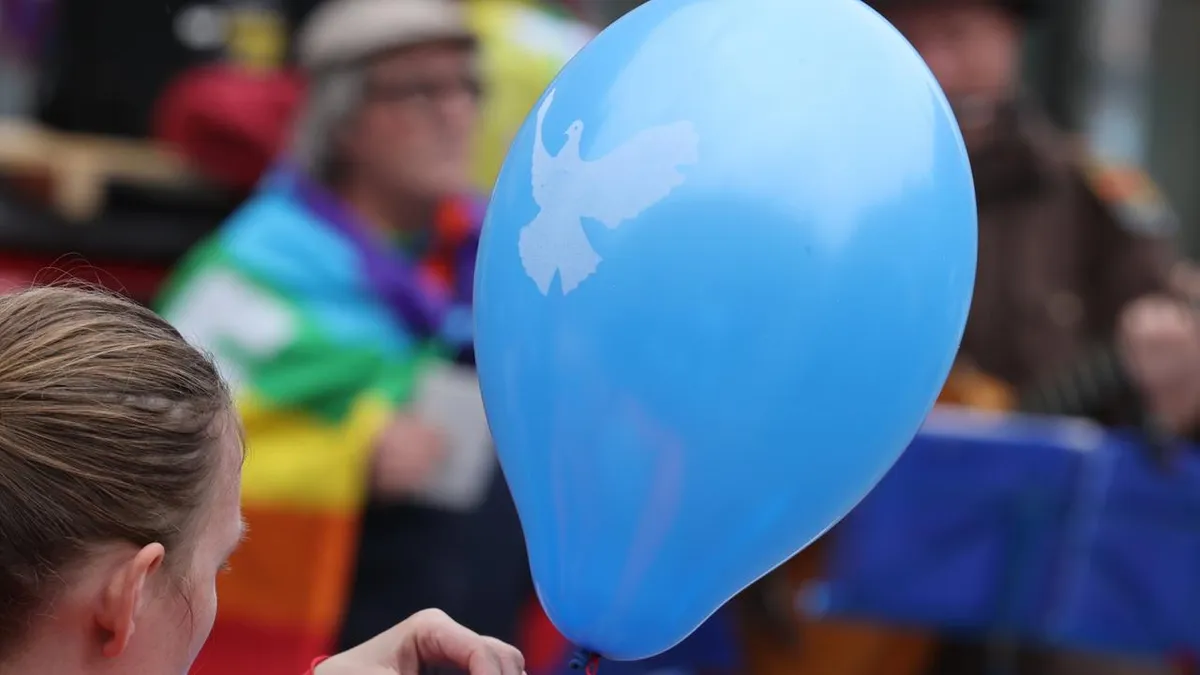
interview Stand: 04.04.2026 • 12:15 Uhr Welche Bedeutung haben die Ostermärsche noch? Friedensforscher Tobias Debiel erklärt, wie sich die Demonstrationen heute zusammensetzen und warum es nicht mehr gelingt, so viele Menschen wie früher zu mobilisieren. tagesschau.de: Herr Debiel, was waren die inhaltlichen Schwerpunkte der Ostermärsche in den vergangenen Jahrzehnten? Tobias Debiel: Die Ostermärsche begannen in Deutschland 1960. Da war die sogenannte Anti-Atomtodbewegung zentral, also der Widerstand gegen die atomare Aufrüstung. Das ist bis heute ein Dauerthema. Dann ist ganz wichtig, dass Ende der 70er-, Anfang der 80er-Jahre die Debatte um die Mittelstreckenraketen dazu kam. Im Fokus stand die Stationierung amerikanischer Mittelstreckenraketen in Deutschland. In den letzten Jahren steht der Ukraine-Krieg im Vordergrund. Zur Person Tobias Debiel ist Politikwissenschaftler und Professor für Internationale Beziehungen und Entwicklungspolitik an der Universität Essen-Duisburg. Er ist zudem stellvertretender Direktor am Institut für Entwicklung und Frieden (INEF). tagesschau.de: In den 1980er-Jahren gab es eine enorme Mobilisierung bei den Ostermärschen. Hunderttausende Demonstrierende sind auf die Straßen gegangen. Wie hat man das damals geschafft? Debiel: In den beginnenden 80er-Jahren waren zwischen 1981 und 1983 in Bonn immer Hunderttausende auf der Straße. Das ist eine sehr große Zahl. Die Einigkeit bestand hier vor allem in einer Forderung, wir wollen keine US-Mittelstreckenraketen in Europa. Die Angst vor einer nuklearen Eskalation hat dazu geführt, dass man ein breites Bündnis geschaffen hat und das Bündnis ging über den engeren Pazifismus hinaus. Das Bündnis hat die Kirchen sehr breit mitgenommen. Es hat die Grünen, Teile der SPD mitgenommen und man hat es geschafft, Prominente zu mobilisieren, also Petra Kelly, Gert Bastian, auch Willy Brandt oder Heinrich Böll waren auf den großen Demonstrationen. Die Teilnehmenden waren auch sehr gemischt in den Generationen. Vor diesem Hintergrund war die Mobilisierung natürlich sehr groß. In den 1980er-Jahren gab es eine große Mobilisierung - wie hier bei einem Ostermarsch in Oberhausen. "Dauerthema bleibt der Widerstand gegen Militarisierung" tagesschau.de: Welche Themen stehen dieses Jahr im Fokus der Ostermärsche? Debiel: Es geht um den Völkerrechtsbruch beim russischen Überfall auf die Ukraine, beim Iran-Krieg und auch beim Gaza-Israel Konflikt. Dauerthema bleibt der Widerstand gegen Militarisierung, Aufrüstung und die Wehrpflicht. Es geht auch um die Forderung, keine Mittelstreckenwaffen, keine atomaren Mittelstreckenwaffen in Europa zu stationieren. Das sind die zentralen Forderungen, die sich in den verschiedenen Aufrufen widerspiegeln. tagesschau.de: Über die vergangenen Jahrzehnte protestierten immer weniger Menschen auf den Ostermärschen. Wir sprechen jetzt über mehrere Zehntausende statt Hunderttausende Demonstrierende. Warum klappt es, trotz der angespannten aktuellen geopolitischen Lage nicht mehr die Menschen in diesen Dimensionen für die Ostermärsche zu mobilisieren? Debiel: Die Aufrufe sind zum Teil sehr einseitig. Es wird zum Beispiel in vielen Aufrufen nicht explizit benannt, dass Russland die Ukraine überfallen hat, Russland wird nicht als Aggressor benannt. Man spricht nur allgemein vom Ukraine-Krieg oder Krieg in der Ukraine oder im Gaza-Krieg wird nur Israel angeprangert, nicht aber die Hamas. Zudem ist die Bewegung alt geworden. Der Anteil der über 65-jährigen und auch der über 40-jährigen ist sehr, sehr hoch. Es fehlt dieses Gemeinschaftserlebnis. Junge Leute gehen ungern auf eine Demo mit Omas und Opas. Hinzu kommt Prominente aus Kultur, Gesellschaft und Politik nehmen heute nicht mehr in dem Maße teil, wie dies Anfang der 80er Jahre der Fall war. "Klassische Art der Demonstration für die Jugend weniger reizvoll" tagesschau.de: Welche konkreten Hinweise gibt es bezüglich der Altersstruktur bei den Ostermärschen? Debiel: Es gibt eine Studie, die hat den Ostermarsch in Bielefeld 2022 abgedeckt. Die ist nicht repräsentativ, aber gibt Hinweise. Man fand heraus, dass nur 20 Prozent der Demonstrierenden unter 40 Jahren waren und 40 Prozent waren über 65. Das mag sich heute hier und da geändert haben. Da mag es regional Unterschiede geben, aber das ist ein relativ deutliches Ergebnis. tagesschau.de: Warum gelingt es nicht noch mehr junge Menschen für die Ostermärsche zu mobilisieren? Debiel: Neben den schon genannten inhaltlichen Gründen haben es junge Menschen in den vergangenen Jahren selbst in die eigene Hand genommen, ihre Proteste zu organisieren. Das ist bei der "Fridays for Future"-Klimabewegung sehr deutlich gewesen und das war auch bei den Schülerstreiks gegen die Wehrpflicht deutlich. Da gibt es kreative Formen, da gibt es Sit-Ins, da gibt es Blockaden etc. Die klassische Art der Demonstration mit älteren Menschen ist da für die Jugend weniger reizvoll. Es geht auch darum, sich auf einer Demo gut aufgehoben zu fühlen, sich mit Gleichgesinnten und Gleichaltrigen verbunden zu fühlen und das ist bei den Ostermärschen relativ schwierig. Die jungen Menschen sind zwar zum Teil auch bei den Organisationen vertreten, aber nicht so stark, dass man dort wirklich den Akzent setzen könnte. Fehlt der Nachwuchs? Teilnehmende an einem Ostermarsch in Hamburg im vergangenen Jahr. tagesschau.de: Welche Rolle spielen Ostermärsche Ihrer Meinung nach heute noch? Debiel: Sie spielen eine große Rolle durch ihre Konstanz und dadurch, dass sie regional verteilt und organisiert sind. In den jeweiligen Städten und Landkreisen haben sie eine hohe Bedeutung. Es gibt eine große politische Vielfalt. Man findet auf der einen Seite einige sehr einseitige Aufrufe, wenn eher orthodoxe Kräfte mit verkrusteten Meinungen das Sagen haben, aber man findet auch viele, die ausgewogen sind. Wenn es um die Anzahl der Demonstrierenden geht, muss ich ansonsten sagen, mehr mobilisiert wurde beispielsweise in Demonstrationen gegen Rechtsextremismus. Mehr mobilisiert wurde auch zum Teil bei Klimaprotesten. Das Gespräch führte Susett Kleine, rbb. Für die schriftliche Fassung wurde es leicht angepasst.
SRCTagesschau (ARD)
LANGDE
LEANCenter
WORDS879
ENT12
SAT · 2026-04-04 · 10:15 GMTBRIEF NSR-2026-0404-52202
NSR-2026-0404-52202Analysis·DE·Political Strategy
Ostermärsche im Wandel: "Die Bewegung ist alt geworden"
Der Artikel vom 04.04.2026 auf tagesschau.de thematisiert die veränderte Bedeutung der Ostermärsche. Friedensforscher Tobias Debiel erklärt im Interview, dass die Ostermärsche in Deutschland 1960 begannen, wobei der Widerstand gegen atomare Aufrüstung ein zentrales Thema war.
Tagesschau (ARD)Filed 2026-04-04 · 10:15 GMTLean · CenterRead · 4 min
Tagesschau (ARD)FIG 01
Reading time
4min
Word count
879words
Sources cited
1cited
Entities identified
12entities
Quality score
100%
§ 01
Briefing Summary
AI-generatedNEWSAR · AI
Der Artikel vom 04.04.2026 auf tagesschau.de thematisiert die veränderte Bedeutung der Ostermärsche. Friedensforscher Tobias Debiel erklärt im Interview, dass die Ostermärsche in Deutschland 1960 begannen, wobei der Widerstand gegen atomare Aufrüstung ein zentrales Thema war. In den 1980er Jahren mobilisierten die Märsche Hunderttausende gegen die Stationierung von US-Mittelstreckenraketen. Aktuell stehen der Ukraine-Krieg, der Iran-Krieg und der Gaza-Israel-Konflikt im Fokus, wobei der Widerstand gegen Militarisierung ein Dauerthema bleibt. Debiel erläutert, dass die Mobilisierung in den 80ern durch ein breites Bündnis verschiedener gesellschaftlicher Gruppen und die Angst vor nuklearer Eskalation gelang.
Confidence 0.90Sources 1Claims 5Entities 12
§ 02
Article analysis
Model · rule-basedFraming
Political Strategy
Conflict
Tone
Measured
AI-assessed
CalmNeutralAlarmist
Factuality
0.70 / 1.00
Factual
LowHigh
Sources cited
1
Limited
FewMany
§ 03
Key claims
5 extracted01
A key demand is no medium-range weapons, no nuclear medium-range weapons, to be stationed in Europe.
quoteTobias Debiel
Confidence
1.00
02
In the early 1980s, hundreds of thousands of people took to the streets in Bonn.
factualTobias Debiel
Confidence
1.00
03
The 'Anti-Atomtod' movement, the resistance against nuclear armament, was central to the Easter Marches starting in 1960.
factualTobias Debiel
Confidence
1.00
04
Current Easter Marches focus on the violation of international law in Ukraine, Iran, and Gaza-Israel conflict.
factualTobias Debiel
Confidence
0.90
05
The Ukraine war is at the forefront of the Easter Marches in recent years.
factualTobias Debiel
Confidence
0.90
§ 04
Full report
4 min read · 879 words§ 05
Entities
12 identifiedKey playerOppositionContextPositiveNeutralNegative
People5
Locations5
§ 06
Keywords & salience
10 termsostermärsche
1.00
friedensbewegung
0.80
atomare aufrüstung
0.70
mittelstreckenraketen
0.70
ukraine-krieg
0.60
mobilisierung
0.60
militarisierung
0.50
nukleare eskalation
0.50
pazifismus
0.50
völkerrechtsbruch
0.40
§ 07
Topic connections
Interactive graph No topic relationship data available yet. This graph will appear once topic relationships have been computed.