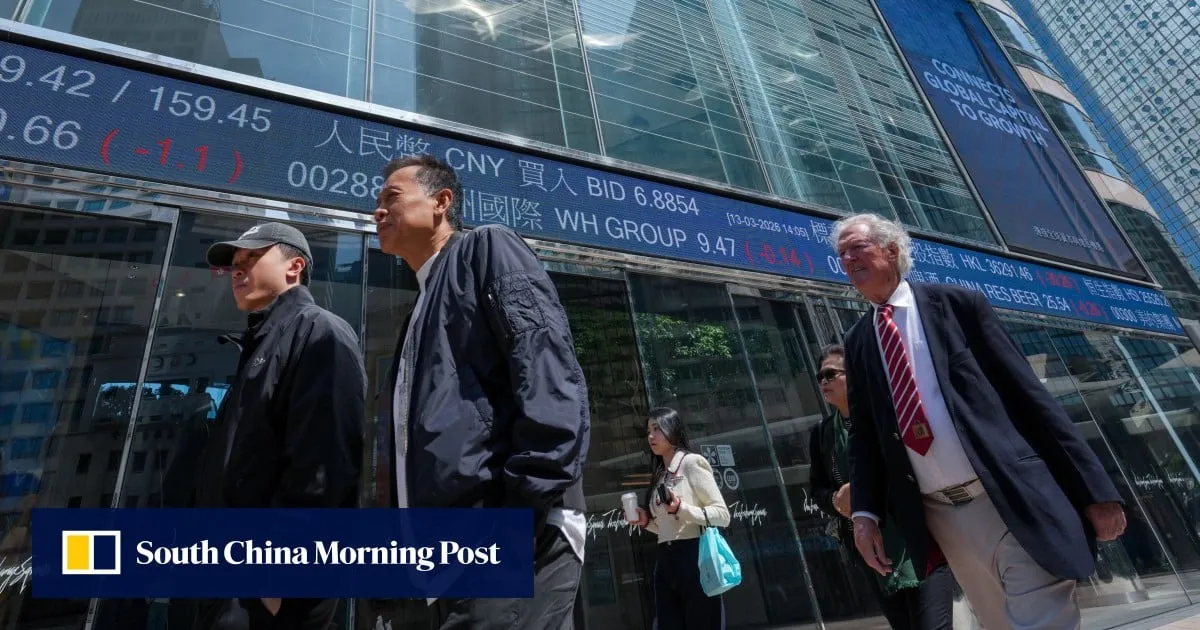
Hong Kong’s economy showed resilience in the first quarter of 2026 amid a more volatile stock market, even though the conflict in the Middle East continued to fuel market jitters, the city’s finance chief has said.In a review of the city’s economic health in the first three months of this year, Financial Secretary Paul Chan Mo-po on Sunday attributed Hong Kong’s performance to the steady growth of mainland China’s economy, with the city leveraging the situation to establish itself as a global hi-tech financing hub.The minister said the geopolitical landscape had proved to be complex and fast-changing during the first quarter, as uncertainty related to the United States-Israel attack on Iran continued to cloud the stock market.Hong Kong and other global cities reliant on oil imports are contending with the war’s impact on fuel prices, with airlines already passing extra costs onto travellers through fuel surcharges.Meanwhile, Chan’s review did not address whether Hong Kong would be able to meet its full-year growth forecast of between 2.5 and 3.5 per cent. The minister shared the prediction in his budget speech in late February, just before the conflict began.The minister said on Sunday that trading remained active despite the Hang Seng benchmark index falling by about 2 per cent so far this year, with the average daily turnover for the first two months exceeding HK$260 billion, a 17 per cent increase year on year.
SRCSouth China Morning Post
LANGEN
LEANCenter-Right
WORDS232
ENT8
SUN · 2026-04-05 · 05:51 GMTBRIEF NSR-2026-0405-52882
NSR-2026-0405-52882News Report·EN·Economic Impact
Hong Kong economy showed resilience in first quarter of 2026, Paul Chan says
In the first quarter of 2026, Hong Kong's economy demonstrated resilience despite a volatile stock market and ongoing geopolitical tensions, according to Financial Secretary Paul Chan Mo-po. Chan attributed this performance to mainland China's economic growth, which Hong Kong is leveraging to become a global hi-tech financing hub.
Emily HungSouth China Morning PostFiled 2026-04-05 · 05:51 GMTLean · Center-RightRead · 1 min
South China Morning PostFIG 01
Reading time
1min
Word count
232words
Sources cited
1cited
Entities identified
8entities
Quality score
100%
§ 01
Briefing Summary
AI-generatedNEWSAR · AI
In the first quarter of 2026, Hong Kong's economy demonstrated resilience despite a volatile stock market and ongoing geopolitical tensions, according to Financial Secretary Paul Chan Mo-po. Chan attributed this performance to mainland China's economic growth, which Hong Kong is leveraging to become a global hi-tech financing hub. While the US-Israel attack on Iran created uncertainty, trading activity remained high, with average daily turnover increasing by 17% compared to the previous year. The Hang Seng index experienced a slight decline, but the impact of rising fuel prices due to the Middle East conflict is being felt by airlines and travelers. Chan's review did not address whether Hong Kong would meet its full-year growth forecast of 2.5 to 3.5 percent.
Confidence 0.90Sources 1Claims 5Entities 8
§ 02
Article analysis
Model · rule-basedFraming
Economic Impact
Conflict
Tone
Measured
AI-assessed
CalmNeutralAlarmist
Factuality
0.70 / 1.00
Factual
LowHigh
Sources cited
1
Limited
FewMany
§ 03
Key claims
5 extracted01
Average daily turnover for the first two months exceeded HK$260 billion, a 17 per cent increase year on year.
statisticnull
Confidence
1.00
02
The Hang Seng benchmark index fell by about 2 per cent so far this year.
statisticnull
Confidence
0.90
03
Hong Kong’s economy showed resilience in the first quarter of 2026.
factualPaul Chan
Confidence
0.80
04
Hong Kong's performance is attributed to the steady growth of mainland China’s economy.
factualPaul Chan
Confidence
0.70
05
Uncertainty related to the United States-Israel attack on Iran continued to cloud the stock market.
factualPaul Chan
Confidence
0.60
§ 04
Full report
1 min read · 232 words§ 05
Entities
8 identifiedKey playerOppositionContextPositiveNeutralNegative
Organizations1
§ 06
Keywords & salience
10 termshong kong economy
0.90
first quarter 2026
0.80
economic resilience
0.70
stock market
0.60
economic growth forecast
0.60
hi-tech financing hub
0.60
mainland china
0.50
geopolitical landscape
0.50
fuel prices
0.50
market jitters
0.40
§ 07
Topic connections
Interactive graph Network visualization showing 51 related topics
View Full Graph Person Organization Location Event|Click node to navigate|Edge numbers = shared articles