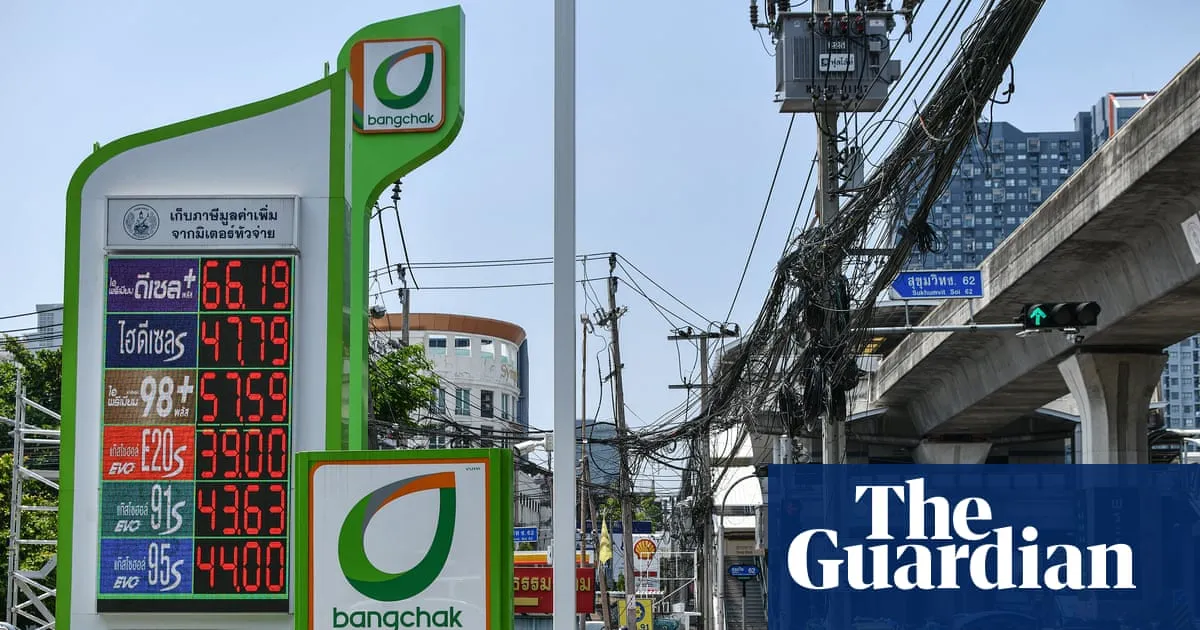
Thailand’s prime minister, Anutin Charnvirakul, has called on the public to conserve energy, urging work-from-home measures and carpooling, as he warned of the impact of the conflict in the Middle East.In a statement posted on social media, Anutin said Thailand was exposed to the crisis because of its reliance on imported oil and gas, and the country could not be complacent.“I also request the cooperation of all citizens and the private sector to conserve energy in the same way, whether it’s through WFH (work from home) or WFA (work from anywhere), reducing the use of personal cars and switching to public transportation, carpooling, and using electricity responsibly,” he said.“Although Thailand has high oil reserves compared to other countries, we remain vulnerable as a country that imports a large volume of oil,” he added. “We cannot remain complacent and manage our oil resources as we have done in the past.”He said further measures may be announced and the government promised to do everything in its power to shield the public from the crisis.Across Asia, governments have taken steps to try to conserve energy, with countries such as Sri Lanka and the Philippines introducing four-day weeks for many public-sector staff, and Vietnam calling for employees to work from home.The Thai Government had already suspended most overseas trips for its workers, and instructed officials to wear short-sleeved shirts without ties, except during ceremonies, to reduce the need for air conditioning.The Thai commerce ministry has announced it will tighten crude palm oil exports and control bottled palm oil prices, starting from Tuesday, to protect domestic supplies as demand for biodiesel increases.Diesel prices in Thailand rose above 50 baht (about £1.15) a litre this weekend, up from about 30 baht a litre in late February. The soaring energy costs have caused misery for farmers as well as the transport and travel sector, which is gearing up for Songkran, Thailand’s traditional new year holiday.People often travel back to their home provinces for the holiday, which is also a draw for tourists who take part in water fights in the streets. However, some tourism businesses fear this year’s festivities will be quieter due to the rising cost of flights and disruption to aviation.On Monday, Indonesia announced a 28 percentage point rise in the surcharge on jet fuel and said it would allow airlines to raise domestic ticket prices by up to 13%.
SRCThe Guardian - World News
LANGEN
LEANCenter-Left
WORDS395
ENT10
MON · 2026-04-06 · 11:29 GMTBRIEF NSR-2026-0406-54639
NSR-2026-0406-54639News Report·EN·Economic Impact
Thailand PM calls for energy saving as Middle East conflict drives price surge
Thailand's Prime Minister Anutin Charnvirakul is urging citizens and the private sector to conserve energy due to the impact of the Middle East conflict on global oil prices. Thailand, reliant on imported oil and gas, is vulnerable to the crisis.
Rebecca Ratcliffe in BangkokThe Guardian - World NewsFiled 2026-04-06 · 11:29 GMTLean · Center-LeftRead · 2 min
The Guardian - World NewsFIG 01
Reading time
2min
Word count
395words
Sources cited
1cited
Entities identified
10entities
Quality score
100%
§ 01
Briefing Summary
AI-generatedNEWSAR · AI
Thailand's Prime Minister Anutin Charnvirakul is urging citizens and the private sector to conserve energy due to the impact of the Middle East conflict on global oil prices. Thailand, reliant on imported oil and gas, is vulnerable to the crisis. The government is requesting measures like work-from-home arrangements, reduced personal car use, and responsible electricity consumption. The commerce ministry will also tighten crude palm oil exports and control bottled palm oil prices to protect domestic supplies. Rising diesel prices, now above 50 baht a litre, are impacting farmers, transportation, and tourism, potentially affecting the upcoming Songkran holiday. Other Asian countries, like Sri Lanka, the Philippines, and Vietnam, have also implemented energy-saving measures, while Indonesia has raised jet fuel surcharges and allowed airlines to increase ticket prices.
Confidence 0.90Sources 1Claims 5Entities 10
§ 02
Article analysis
Model · rule-basedFraming
Economic Impact
Political Strategy
Tone
Measured
AI-assessed
CalmNeutralAlarmist
Factuality
0.80 / 1.00
Factual
LowHigh
Sources cited
1
Limited
FewMany
§ 03
Key claims
5 extracted01
Indonesia announced a 28 percentage point rise in the surcharge on jet fuel.
factualArticle's own claim
Confidence
1.00
02
The Thai commerce ministry will tighten crude palm oil exports and control bottled palm oil prices, starting from Tuesday.
factualArticle's own claim
Confidence
1.00
03
Diesel prices in Thailand rose above 50 baht a litre this weekend, up from about 30 baht a litre in late February.
statisticArticle's own claim
Confidence
1.00
04
Thailand is exposed to the crisis because of its reliance on imported oil and gas.
quoteAnutin Charnvirakul
Confidence
1.00
05
Thailand’s prime minister has called on the public to conserve energy due to the Middle East conflict's impact on energy prices.
factualArticle's own claim
Confidence
1.00
§ 04
Full report
2 min read · 395 words§ 05
Entities
10 identifiedKey playerOppositionContextPositiveNeutralNegative
Organizations2
Locations6
Events1
§ 06
Keywords & salience
9 termsenergy saving
0.90
oil prices
0.80
middle east conflict
0.70
energy conservation
0.70
imported oil and gas
0.70
work from home
0.60
tourism
0.50
public transportation
0.50
fuel surcharge
0.40
§ 07
Topic connections
Interactive graph Network visualization showing 51 related topics
View Full Graph Person Organization Location Event|Click node to navigate|Edge numbers = shared articles