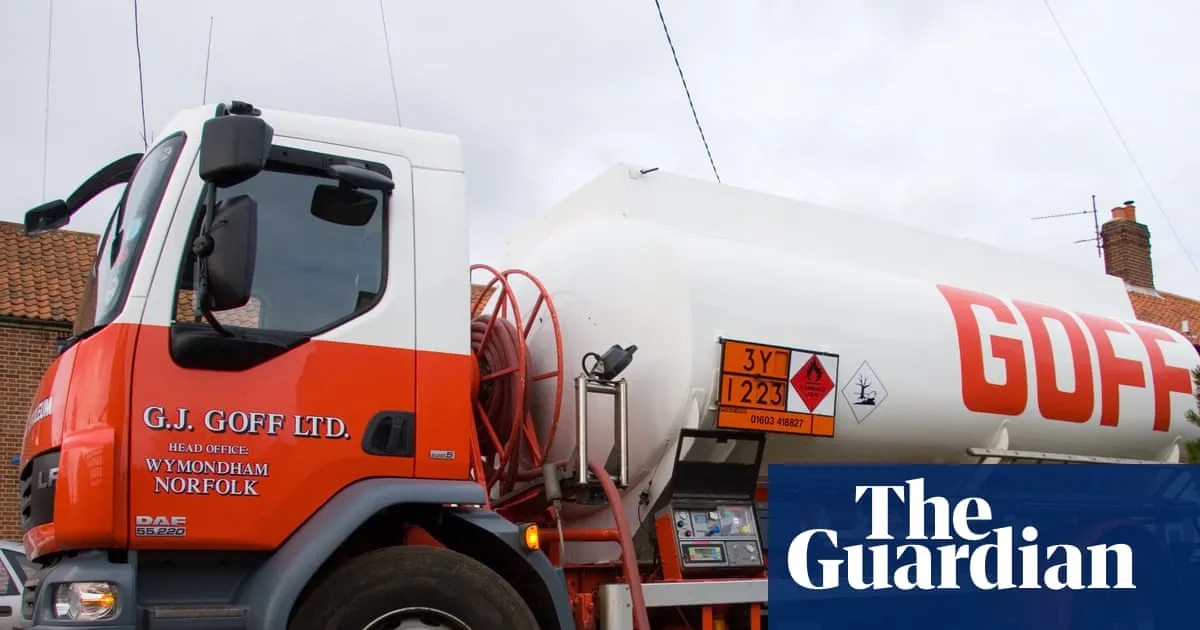
Thousands of independent businesses across the UK are braced for their energy bills to more than double owing to the sharp rise in heating oil costs as the war in Iran pushed Europe’s fuel market prices to fresh record highs.About 7% of all small and medium-sized companies warm their properties and provide hot water using heating oil, which in some cases has more than doubled in recent weeks.Companies in rural areas are often not connected to the gas grid, meaning they have an even greater reliance on heating oil, which is a form of kerosene linked to the cost of jet fuel. It is used by about 17% of rural small and medium-sized enterprises (SMEs), according to the Federation of Small Businesses (FSB).The trade association has heard from members who have already begun rationing their fuel use to cope with the sharp rise in prices over recent weeks.Anthony Jenkins, the owner of a hotel and restaurant in North Yorkshire, said his heating oil supplier had charged 54.9p a litre in January but had asked for 129p in late March.“Many rural businesses, including ours, need to rely on heating oil, but the price increases have been extraordinary. Our supplier refused to give us a firm quote for over a week after we booked a delivery, and told us the day before that it would be 116% higher than before the crisis,” Jenkins said.“We took only half what we usually do, and we’ve asked our guests to help us to keep costs down by turning down their radiators if they are too warm rather than opening a window. They have all been happy to help because they are paying higher prices to fill up their cars, so they understand.”Jenkins said he hoped to rely more on solar heating for hot water as the days become longer and brighter to avoid inflating his £3,000-a-year heating oil bill. “Luckily, we fixed our electricity contract a few days into the conflict, but even then, deals were disappearing from the market,” he said.The FSB, which represents about 200,000 businesses and sole traders, has called on the UK’s competition watchdog to include the SME sector in its investigation into the heating oil market as the global energy supply shock fuelled record high prices on Europe’s diesel and jet fuel wholesale markets.North-west European jet fuel and diesel prices surpassed $1,900 (£1,434) and $1,600 a tonne respectively on Thursday, jumping to fresh all-time highs as market participants braced for a further escalation in the Middle East conflict over the long Easter weekend, according to market intelligence firm Argus.The trade association is also on alert for signs that rogue energy brokers may be able to take advantage of the market crisis to push small companies into signing up to long-term deals on bad terms.Tina McKenzie, the policy chair of the FSB, said: “Many thousands of small businesses use a broker to find an energy contract, but this is an area where we think stricter rules are needed.”Small companies do not benefit from the government’s cap on energy prices or other consumer protections available to household energy customers, “even though they are far more akin to households than to their larger peers”, McKenzie said.“Business energy customers are nervous, and the situation is rapidly evolving, meaning conditions are ripe for rogue brokers to take advantage of customers’ stress and lack of information.”Though proposals have been put forward to strengthen the protection small businesses receive against rogue energy brokers, including closer scrutiny by the energy industry regulator Ofgem, they will not come into effect until new legislation is passed.An Ofgem spokesperson said the regulator had written to non-domestic suppliers and brokers to “remind them to treat their customers fairly, and to prioritise transparent pricing and good consumer outcomes”.“We understand that the volatility we are seeing in the market as a result of the conflict in the Middle East is concerning for businesses,” the spokesperson said.“We expect businesses, particularly smaller organisations, to be properly supported as they navigate challenging market conditions.”
SRCThe Guardian - World News
LANGEN
LEANCenter-Left
WORDS667
ENT8
MON · 2026-04-06 · 10:00 GMTBRIEF NSR-2026-0406-54642
NSR-2026-0406-54642News Report·EN·Economic Impact
Small UK firms’ energy bills set to more than double due to Iran war
Thousands of small and medium-sized UK businesses, particularly in rural areas, face a doubling of energy bills due to rising heating oil costs. The price surge is attributed to the war in Iran, which has driven European fuel market prices to record highs.
Jillian AmbroseThe Guardian - World NewsFiled 2026-04-06 · 10:00 GMTLean · Center-LeftRead · 3 min
The Guardian - World NewsFIG 01
Reading time
3min
Word count
667words
Sources cited
4cited
Entities identified
8entities
Quality score
75%
§ 01
Briefing Summary
AI-generatedNEWSAR · AI
Thousands of small and medium-sized UK businesses, particularly in rural areas, face a doubling of energy bills due to rising heating oil costs. The price surge is attributed to the war in Iran, which has driven European fuel market prices to record highs. Approximately 7% of SMEs rely on heating oil, a kerosene form linked to jet fuel costs, for heating and hot water. The Federation of Small Businesses (FSB) reports members are rationing fuel and is urging the UK's competition watchdog to investigate the heating oil market. Businesses are seeking ways to mitigate costs, such as relying on solar heating. Wholesale jet fuel and diesel prices in Europe have reached all-time highs due to the conflict.
Confidence 0.90Sources 4Claims 5Entities 8
§ 02
Article analysis
Model · rule-basedFraming
Economic Impact
Conflict
Tone
Mixed Tone
AI-assessed
CalmNeutralAlarmist
Factuality
0.80 / 1.00
Factual
LowHigh
Sources cited
4
Well sourced
FewMany
§ 03
Key claims
5 extracted01
North-west European jet fuel and diesel prices surpassed $1,900 and $1,600 a tonne respectively on Thursday.
factualArgus
Confidence
1.00
02
Heating oil supplier charged 54.9p a litre in January but asked for 129p in late March.
quoteAnthony Jenkins
Confidence
1.00
03
17% of rural SMEs rely on heating oil.
statisticFederation of Small Businesses (FSB)
Confidence
1.00
04
About 7% of all small and medium-sized companies warm their properties using heating oil.
statistic
Confidence
1.00
05
Small UK firms' energy bills are set to more than double due to the war in Iran.
prediction
Confidence
0.70
§ 04
Full report
3 min read · 667 words§ 05
Entities
8 identifiedKey playerOppositionContextPositiveNeutralNegative
Organizations2