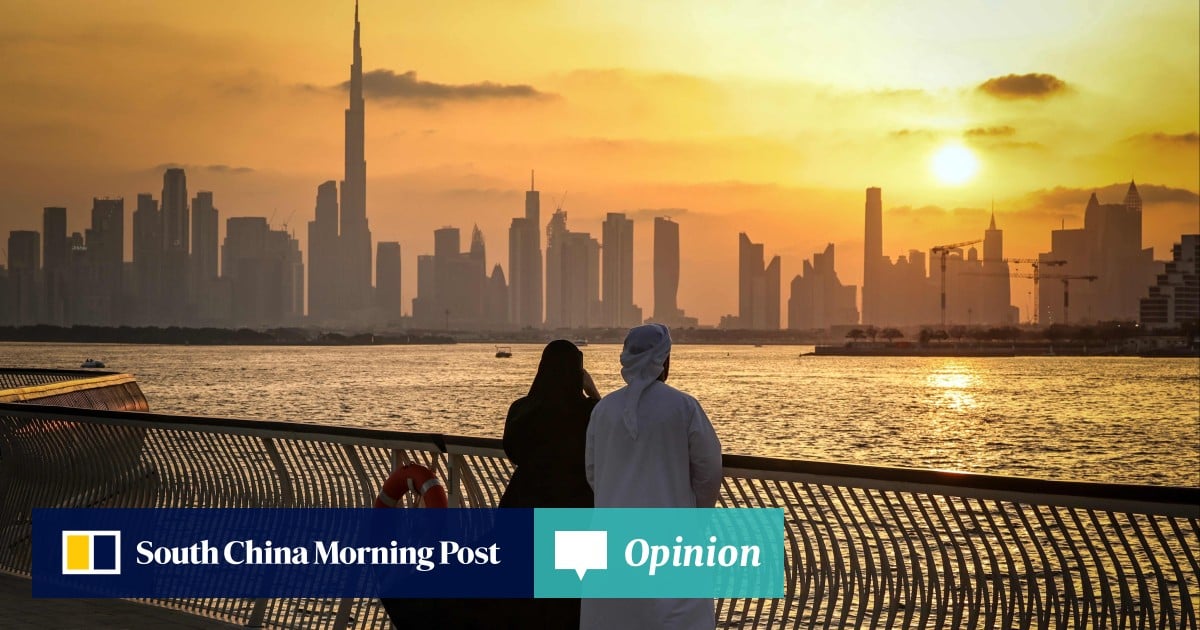
The Strait of Hormuz blockage is being felt far and wide. While the world struggles with higher pump prices, key energy exporters such as the Emirates" class="entity-link entity-location" data-entity-id="413" data-entity-type="location">United Arab Emirates (UAE) and Qatar face severe economic setbacks. In Gulf states serving as air hubs, expats and affluent locals are scrambling for the exit.The discovery of oil transformed Arabian deserts into rich petro-states. Knowing this wealth would not flow forever, the states leveraged their strategic locations to become air traffic hubs. Emirates and Etihad have emerged as major carriers; Doha’s airport facilities are deemed more impressive than Singapore’s; Qatar-airways" class="entity-link entity-organization" data-entity-id="9734" data-entity-type="organization">Qatar Airways is named the world’s best airline on several rankings, beating Cathay Pacific and Singapore-airlines" class="entity-link entity-organization" data-entity-id="45386" data-entity-type="organization">Singapore Airlines.Dubai is now among the world’s top 10 container ports – the only one outside East and Southeast Asia. In comparison, Hong Kong has long lost its leading port position, having evolved in its distinctive role within the integrated system of the Greater Bay Area.Before Art Basel Hong Kong last month, the inaugural Art Basel Qatar was held in early February in Doha. Dubai hotels arguably offer greater luxuries than those in East Asia. Dubai properties attracted East Asian buyers from Shanghai to Singapore. Hong Kong’s low taxation is outmatched by Dubai’s zero taxation.But the appeal of living no-tax in glamour all comes to naught when there are missiles and drones flying over you – which may land on you at any time.The Arabian Peninsula is rich in oil but poor in water. The arid land is not endowed with adequate water resources to sustain the international population its modern economies depend upon.If Iran hits the Gulf’s desalination facilities, living in a luxury flat offers little comfort. With the UAE’s survival at stake, the mirage lifts – and we see clearly how fragile the greatest success story in the Middle East always has been.
SRCSouth China Morning Post
LANGEN
LEANCenter-Right
WORDS305
ENT12
TUE · 2026-04-07 · 08:30 GMTBRIEF NSR-2026-0407-56062
NSR-2026-0407-56062Analysis·EN·Economic Impact
For Gulf states, geography is both a generous and treacherous patron
The article discusses how the Gulf states' geography presents both opportunities and vulnerabilities. The discovery of oil and strategic location allowed countries like the UAE and Qatar to become major air traffic hubs and economic powerhouses, with Dubai emerging as a leading container port and attracting international investment.
Winston MokSouth China Morning PostFiled 2026-04-07 · 08:30 GMTLean · Center-RightRead · 2 min
South China Morning PostFIG 01
Reading time
2min
Word count
305words
Sources cited
0cited
Entities identified
12entities
Quality score
100%
§ 01
Briefing Summary
AI-generatedNEWSAR · AI
The article discusses how the Gulf states' geography presents both opportunities and vulnerabilities. The discovery of oil and strategic location allowed countries like the UAE and Qatar to become major air traffic hubs and economic powerhouses, with Dubai emerging as a leading container port and attracting international investment. However, the region's reliance on the Strait of Hormuz for oil exports and limited water resources make it susceptible to economic disruption and potential conflict. Threats to desalination facilities and the risk of regional instability undermine the appeal of the Gulf states' luxurious lifestyle and zero taxation, highlighting the fragility of their economic success. The article suggests that geopolitical tensions and resource scarcity pose significant challenges to the long-term stability of the region.
Confidence 0.90Claims 5Entities 12
§ 02
Article analysis
Model · rule-basedFraming
Economic Impact
National Security
Tone
Mixed Tone
AI-assessed
CalmNeutralAlarmist
Factuality
0.60 / 1.00
Mixed
LowHigh
Sources cited
0
No named sources
FewMany
§ 03
Key claims
5 extracted01
Dubai is now among the world’s top 10 container ports.
factual
Confidence
1.00
02
The Arabian Peninsula is rich in oil but poor in water.
factual
Confidence
0.90
03
Gulf states leveraged their strategic locations to become air traffic hubs.
factual
Confidence
0.90
04
The Strait of Hormuz blockage is being felt far and wide, leading to higher pump prices and economic setbacks for UAE and Qatar.
factual
Confidence
0.80
05
If Iran hits the Gulf’s desalination facilities, living in a luxury flat offers little comfort.
prediction
Confidence
0.60
§ 04
Full report
2 min read · 305 words§ 05
Entities
12 identifiedKey playerOppositionContextPositiveNeutralNegative
Organizations4
§ 06
Keywords & salience
10 termsgulf states
1.00
strait of hormuz
0.70
economic setbacks
0.70
fragile success
0.60
desalination facilities
0.60
air traffic hubs
0.60
oil wealth
0.60
water resources
0.50
strategic locations
0.50
zero taxation
0.40
§ 07
Topic connections
Interactive graph Network visualization showing 51 related topics
View Full Graph Person Organization Location Event|Click node to navigate|Edge numbers = shared articles