5 hours agoJonathan Head,BangkokandKoh Ewe,SingaporeAFP via Getty ImagesTo Lam has secured enough backing to give him both the presidency and the top job in Vietnam's communist partyVietnam's communist-dominated general assembly has elected To Lam, the party leader, to be the country's president and head of state, an unusual concentration of power in one person. He was elected unanimously by the 500 seat assembly which started sitting on Monday, following the Communist Party Congress in January, which makes all the big decisions about the country's future direction.This makes To Lam the most powerful leader in Vietnam in recent decades.To Lam rose over the last decade by serving as the powerful Minister for Public Security, enforcing a nationwide anti-corruption drive which saw many of his potential rivals disgraced and purged.In 2024, he took over the jobs of both general secretary of the communist party and president temporarily, after the resignation of then-president Vo Van Thuong and the death of party boss Nguyen Phu Trong.There is reported to be opposition, especially within the military, to To Lam keeping these two top jobs after the party congress.The Vietnam" class="entity-link entity-organization" data-entity-id="12806" data-entity-type="organization">Communist Party of Vietnam has always preferred collective leadership shared among the four most senior national positions, now expanded to five, known as the "five pillars".However, To Lam has now secured enough backing to take the two top jobs for the next five years, inviting comparisons with China, where President Xi Jinping has also concentrated power in his hands.Xi congratulated To Lam in January, when he successfully retained his job as secretary general of Vietnam's communist party. Xi said at the time that he would work with To Lam to "carry forward the traditional friendship" between the two socialist neighbours.There is historical anti-Chinese sentiment expressed by the Vietnamese population, but relations between the two communist parties are close.Compared to China, however, the communist party's central committee plays a stronger role in checking the power of its secretary general, Carl Thayer, Emeritus Professor at the University of New South Wales, told the BBC."To Lam is the first among equals, but he's also answerable to the Politburo," he said, pointing to other senior figures in the 19-member committee."There's still a balance. But To Lam has shown that he can work collectively and build coalitions," he added.The real test of To Lam's leadership, though, will be whether he can meet the breathtakingly ambitious growth targets he has set his government, at a time when the global economic outlook is so unsettled.To Lam has already announced a programme of sweeping reforms to help Vietnam reach the goal of being an upper income country within the next two decades.He has set a target of keeping annual economic growth at more than 10%, and containing corruption, building on the "blazing furnace" campaign started by his predecessor that has disciplined and dismissed tens of thousands of officials.
SRCBBC News - World
LANGEN
LEANCenter
WORDS473
ENT9
TUE · 2026-04-07 · 10:59 GMTBRIEF NSR-2026-0407-56718
NSR-2026-0407-56718News Report·EN·Political Strategy
Vietnam's leader To Lam strengthens power in unanimous assembly vote
To Lam was unanimously elected as Vietnam's president by the communist-dominated general assembly, consolidating power in one person. This follows his temporary assumption of both the presidency and the general secretary role after resignations and deaths earlier in 2024.
BBC News - WorldFiled 2026-04-07 · 10:59 GMTLean · CenterRead · 2 min
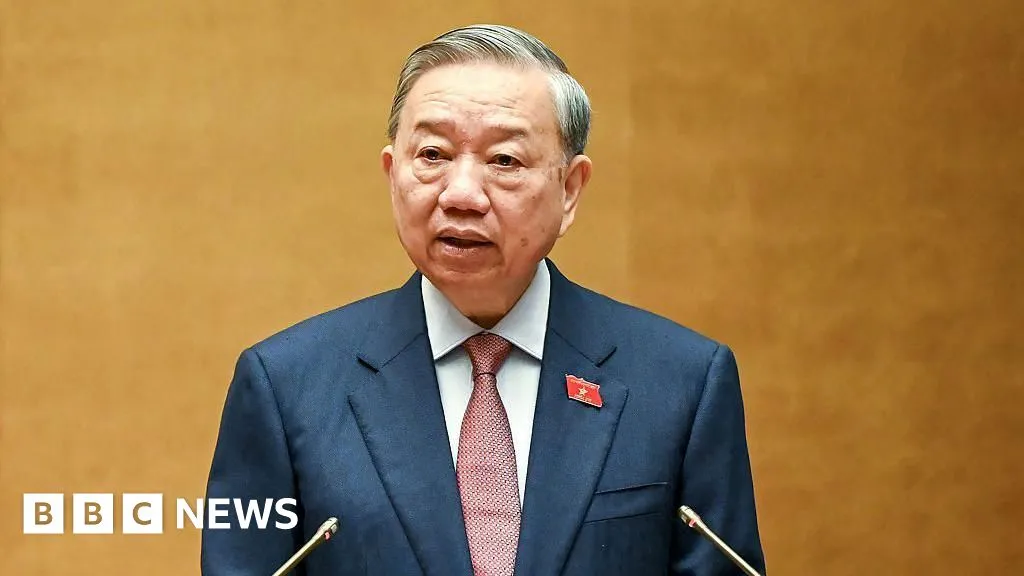
BBC News - WorldFIG 01
Reading time
2min
Word count
473words
Sources cited
1cited
Entities identified
9entities
Quality score
100%
§ 01
Briefing Summary
AI-generatedNEWSAR · AI
To Lam was unanimously elected as Vietnam's president by the communist-dominated general assembly, consolidating power in one person. This follows his temporary assumption of both the presidency and the general secretary role after resignations and deaths earlier in 2024. His rise stems from his role as Minister for Public Security, where he led an anti-corruption drive. The move marks a departure from Vietnam's traditional collective leadership model, raising comparisons to China's centralized power structure under Xi Jinping. While historical anti-Chinese sentiment exists among the Vietnamese population, relations between the two communist parties remain close. Despite this consolidation, analysts suggest that the Communist Party's central committee and Politburo will still provide checks on To Lam's power.
Confidence 0.90Sources 1Claims 5Entities 9
§ 02
Article analysis
Model · rule-basedFraming
Political Strategy
Conflict
Tone
Measured
AI-assessed
CalmNeutralAlarmist
Factuality
0.70 / 1.00
Factual
LowHigh
Sources cited
1
Limited
FewMany
§ 03
Key claims
5 extracted01
To Lam is the first among equals, but he's also answerable to the Politburo.
quoteCarl Thayer, Emeritus Professor at the University of New South Wales
Confidence
1.00
02
To Lam has set a target of keeping annual economic growth at more than 10%.
factual
Confidence
1.00
03
To Lam served as the Minister for Public Security, enforcing a nationwide anti-corruption drive.
factual
Confidence
1.00
04
To Lam was elected unanimously by the 500 seat assembly to be the country's president and head of state.
factual
Confidence
1.00
05
There is reported to be opposition, especially within the military, to To Lam keeping these two top jobs.
factual
Confidence
0.80
§ 04
Full report
2 min read · 473 words§ 05
Entities
9 identifiedKey playerOppositionContextPositiveNeutralNegative
People5
Organizations2
§ 06
Keywords & salience
9 termsto lam
1.00
power consolidation
0.90
vietnam
0.90
communist party
0.80
political leadership
0.70
anti-corruption drive
0.60
collective leadership
0.60
xi jinping
0.50
political stability
0.40
§ 07
Topic connections
Interactive graph No topic relationship data available yet. This graph will appear once topic relationships have been computed.