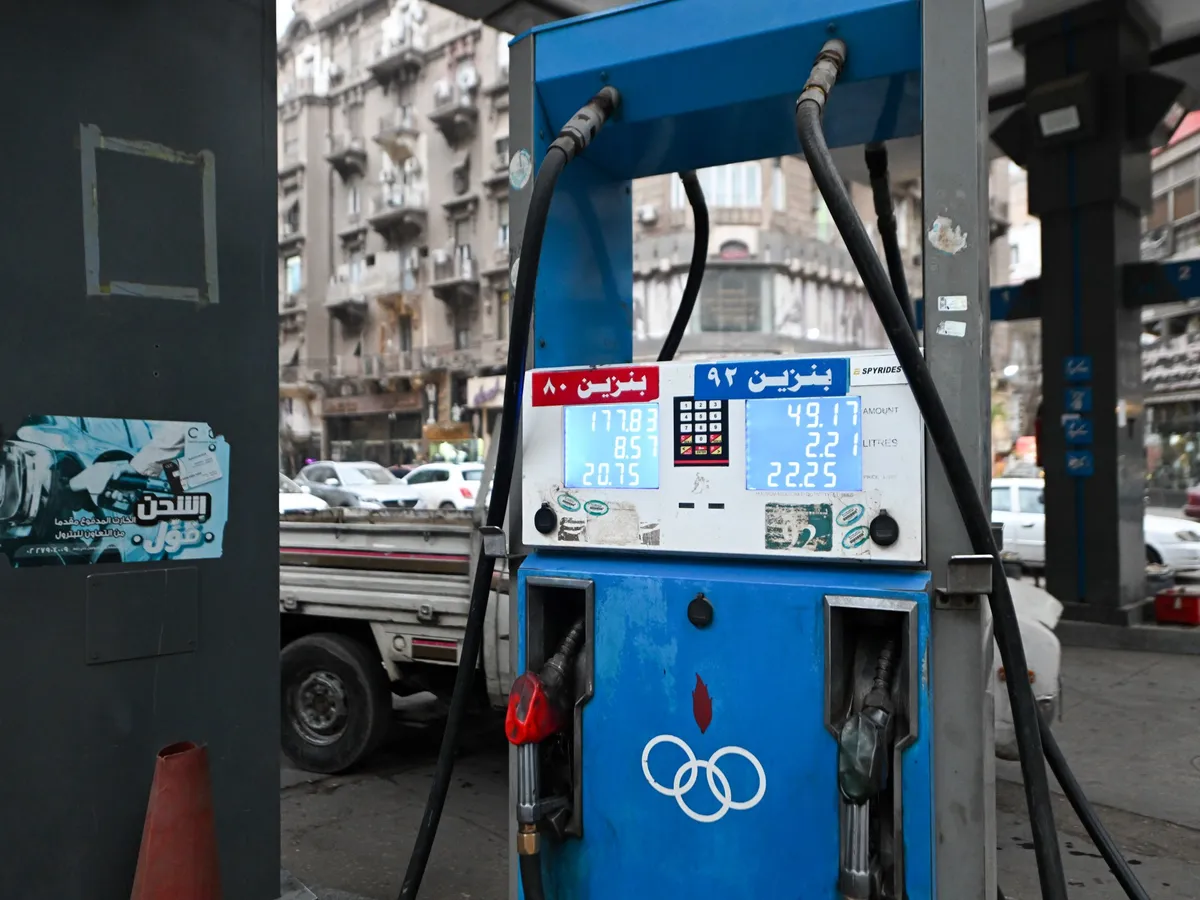
EXPLAINEREgypt is one of the countries implementing energy conservation measures amid the Iran-war" class="entity-link entity-event" data-entity-id="38748" data-entity-type="event">Iran war.A view of a petrol pump screen display as customers refuel vehicles at a petrol station on April 1, 2026 in Cairo, Egypt [Sayed Hassan/Getty Images]Published On 7 Apr 2026The US-Israel war on Iran has sparked a global fuel crisis as thousands of tankers carrying crucial deliveries of oil and liquefied natural gas (LNG) remain stranded on either side of the Strait of Hormuz, currently under a blockade imposed by Iran.On Saturday, Egypt’s government said it is among the “best-performing” countries in tackling the crisis because of the measures it has implemented to save on fuel.Here is what we know about the steps Egypt is taking and whether other countries are doing the same.Why has the Iran-war" class="entity-link entity-event" data-entity-id="38748" data-entity-type="event">Iran war caused an energy crisis?Pressure on oil and gas markets is mounting due to the almost complete halt to shipping through the Strait of Hormuz as well as air strikes on and around key energy facilities in the Gulf as the United States-Israel war on Iran enters its sixth week.One-fifth of the world’s oil and LNG is shipped from producers in the Gulf through the Strait of Hormuz in peacetime. This is the only route from the Gulf to the open ocean.On March 2, two days after the US and Israel began strikes on Iran, Ebrahim Jabari, a senior adviser to the commander in chief of Iran’s Islamic Revolutionary Guard Corps (IRGC), announced that the strait was “closed”. If any vessels tried to pass through, he said, the IRGC and the navy would “set those ships ablaze”. Since then, traffic through the strait, carrying cargoes including 20 million barrels of oil each day, has plunged by more than 95 percent.Now, Tehran is allowing just a handful of tankers through after reaching agreements with some countries to do so.Besides this, energy infrastructure in the Middle East has suffered damage over the course of the war.On March 24, QatarEnergy declared force majeure on some of its long-term LNG supply contracts after an Iranian attack on Qatar’s Ras Laffan LNG facility – the largest in the world – wiped out about 17 percent of the country’s LNG export capacity, causing an estimated $20bn in lost annual revenue and threatening supplies to Europe and Asia.All of this disruption has sent energy prices soaring. On Tuesday, global oil benchmark Brent crude was around $109 per barrel, compared to around $65 per barrel right before the war started.How is Egypt tackling the energy crisis?Egypt’s Petroleum Ministry has announced rises in fuel prices ranging from 14 percent to 30 percent.On March 28, Egyptian Prime Minister Mostafa Madbouly’s office told a press conference that the country’s energy import bill had increased from $1.2bn in January to $2.5bn in March.Egypt is both one of the region’s largest energy importers and among its most heavily indebted economies. While domestic gas and oil account for the majority of its total energy supply, the country still relies on imported fuels, especially refined oil products and some natural gas, from Israel and the Gulf states.Madbouly announced measures Egypt is taking to mitigate this and preserve state energy resources. From March 28, shops, malls and restaurants are closing at 9pm (19:00 GMT) every day for one month, except Thursdays and Fridays. On Thursdays and Fridays, the closing time will be 10pm (20:00 GMT). Fuel allocations for government vehicles will be reduced by 30 percent. Street lighting and street lighting will be cut by 50 percent. From April 1, eligible employees will work remotely on Sundays, the first day of the working week. Some essential services, such as pharmacies, grocery stores and tourist facilities, will be exempted from this. Which other countries have introduced energy conservation measures?Besides Egypt, other countries are also taking steps to save energy.Last week, Malaysia ordered civil servants to work from home to save energy in government offices.In mid-March, it was revealed that government offices in the Philippines had moved to a four-day work week, officials in Thailand and Vietnam were being encouraged to work from home and limit travel, and Myanmar’s government had imposed alternating driving days.Pakistan, which imports about 80 percent of its energy from the Gulf, announced on Monday of this week that markets and shopping malls would close at 8pm (15:00 GMT) across the country, except in Sindh province. The government’s statement added that food outlets would close at 10pm (17:00 GMT), which is also when marriage ceremonies at private properties and houses must end.Bangladesh has reduced working hours for government and private workers and banking services hours in a bid to conserve electricity.In Sri Lanka and Slovenia, authorities have introduced fuel rationing and purchase limits to manage shortages and soaring costs.
SRCAl Jazeera
LANGEN
LEANCenter
WORDS785
ENT12
TUE · 2026-04-07 · 15:05 GMTBRIEF NSR-2026-0407-56801
NSR-2026-0407-56801News Report·EN·Economic Impact
From 9pm shutdowns to remote work: Egypt cuts fuel amid power crisis
Due to the US-Israel war on Iran in April 2026, a global fuel crisis has emerged, primarily caused by the blockade of the Strait of Hormuz, a crucial route for oil and LNG shipments from the Gulf. This blockade, along with attacks on energy infrastructure like Qatar's Ras Laffan LNG facility, has drastically reduced energy supplies and increased prices.
Sarah ShamimAl JazeeraFiled 2026-04-07 · 15:05 GMTLean · CenterRead · 4 min
Al JazeeraFIG 01
Reading time
4min
Word count
785words
Sources cited
3cited
Entities identified
12entities
Quality score
100%
§ 01
Briefing Summary
AI-generatedNEWSAR · AI
Due to the US-Israel war on Iran in April 2026, a global fuel crisis has emerged, primarily caused by the blockade of the Strait of Hormuz, a crucial route for oil and LNG shipments from the Gulf. This blockade, along with attacks on energy infrastructure like Qatar's Ras Laffan LNG facility, has drastically reduced energy supplies and increased prices. Egypt is implementing energy conservation measures, including 9 pm shutdowns and promoting remote work, to mitigate the crisis's impact. The Egyptian government claims these measures have made it one of the "best-performing" countries in tackling the crisis. The war has disrupted global energy markets, with oil prices soaring to around $109 per barrel.
Confidence 0.90Sources 3Claims 5Entities 12
§ 02
Article analysis
Model · rule-basedFraming
Economic Impact
Conflict
Tone
Mixed Tone
AI-assessed
CalmNeutralAlarmist
Factuality
0.70 / 1.00
Factual
LowHigh
Sources cited
3
Well sourced
FewMany
§ 03
Key claims
5 extracted01
Egypt’s energy import bill had increased from $1.2bn in January to $2.5bn in March.
statisticMostafa Madbouly’s office
Confidence
1.00
02
QatarEnergy declared force majeure on some of its long-term LNG supply contracts after an Iranian attack.
factual
Confidence
1.00
03
One-fifth of the world’s oil and LNG is shipped from producers in the Gulf through the Strait of Hormuz in peacetime.
factual
Confidence
1.00
04
Traffic through the strait, carrying cargoes including 20 million barrels of oil each day, has plunged by more than 95 percent.
statistic
Confidence
0.90
05
The US-Israel war on Iran has sparked a global fuel crisis.
factual
Confidence
0.90
§ 04
Full report
4 min read · 785 words§ 05
Entities
12 identifiedKey playerOppositionContextPositiveNeutralNegative
Locations8
§ 06
Keywords & salience
9 termsenergy crisis
1.00
fuel crisis
0.90
egypt
0.80
iran war
0.80
strait of hormuz
0.70
lng
0.60
oil prices
0.60
supply disruption
0.50
energy conservation
0.50
§ 07
Topic connections
Interactive graph Network visualization showing 51 related topics
View Full Graph Person Organization Location Event|Click node to navigate|Edge numbers = shared articles