1 hour agoKelly Ng,Singapore,Khashayar Joneidi,BBC Persian, WashingtonandDaniel De Simone,JerusalemGetty ImagesThe provisional truce comes more than a month after the US and Israel launched coordinated attacks on IranIran and the US have agreed to a conditional two-week ceasefire, during which shipping traffic will be allowed through the Strait of Hormuz.This comes more than a month after the US and Israel launched co-ordinated attacks on Iran, and hours after US President Donald Trump threatened "a whole civilisation will die tonight" if Iran did not reopen the Strait.Pakistan's Prime Minister Shehbaz Sharif, who has been mediating negotiations, said early on Wednesday that the ceasefire was effective immediately. Here's what we know so far about the deal.What have the US and Iran each said?Trump said he'd agreed to "suspend the bombing and attack of Iran for a period of two weeks" if Tehran agrees to reopen the Strait of Hormuz, a vital shipping route for oil and other exports from the Gulf.In a post on Truth Social, Trump said he agreed to the provisional ceasefire because "we have already met and exceeded all Military objectives".This comes after he earlier warned the US could take Iran out "in one night" and that a "whole civilisation will die tonight, never to be brought back again" - threats that drew condemnation from the United Nations chief and the Pope.Iran agreed to allow vessels through the Hormuz Strait for two weeks, with their passage co-ordinated by the Iranian military.The country has also issued a 10-point plan, which includes, among other things, the complete cessation of war in Iran, Iraq, Lebanon and Yemen; "full commitment" to lifting sanctions on Iran; the release of Iranian funds and frozen assets held by the US; and a "full payment of compensation for reconstruction costs" to Iran.It also says, "Iran fully commits to not seeking possession of any nuclear weapons"."Iran's victory in the field would also be consolidated in political negotiations," Tehran's Supreme National Security Council said in a statement.According to Sharif, the ceasefire will also take effect in Lebanon, where Israel says it has been fighting the Iran-backed militant group Hezbollah.There is no indication from Israel that it has agreed to halt its operations in Lebanon, or elsewhere.What has Israel said?Sirens sounded in Israel shortly after Trump's announcement, with the Israel-defense-forces" class="entity-link entity-organization" data-entity-id="391" data-entity-type="organization">Israel Defense Forces saying they were intercepting missiles launched from Iran.Several loud booms were heard in Jerusalem late Tuesday night.A few hours after the ceasefire was announced by Trump, Israeli Prime Minister Benjamin Netanyahu said: "Israel supports President Trump's decision to suspend strikes against Iran for two weeks subject to Iran immediately opening the straits and stopping all attacks on the US, Israel and countries in the region."The statement added that the "ceasefire does not include Lebanon", where Israel has ground troops.It is unclear how involved Netanyahu was in Trump's decision-making.What is next?Pakistan, which has been mediating the negotiations, has invited the delegations to meet in Islamabad on Friday "to further negotiate for a conclusive agreement to settle all disputes".White House press secretary Karoline Leavitt acknowledged ongoing discussions about in-person talks, but said "nothing is final until announced by the President or the White House".Already, the two countries appear to have contradicting positions on what this ceasefire entails. And Iran and the US have held two rounds of talks in the past year. Both times saw military tensions escalate in the middle of negotiations.
SRCBBC News - World
LANGEN
LEANCenter
WORDS562
ENT12
WED · 2026-04-08 · 02:58 GMTBRIEF NSR-2026-0408-57526
NSR-2026-0408-57526News Report·EN·Diplomatic
What we know about the two-week ceasefire between the US and Iran
The US and Iran have agreed to a conditional two-week ceasefire, mediated by Pakistan's Prime Minister Shehbaz Sharif, effective immediately. The agreement allows shipping traffic through the Strait of Hormuz, a vital route for oil exports.
BBC News - WorldFiled 2026-04-08 · 02:58 GMTLean · CenterRead · 3 min
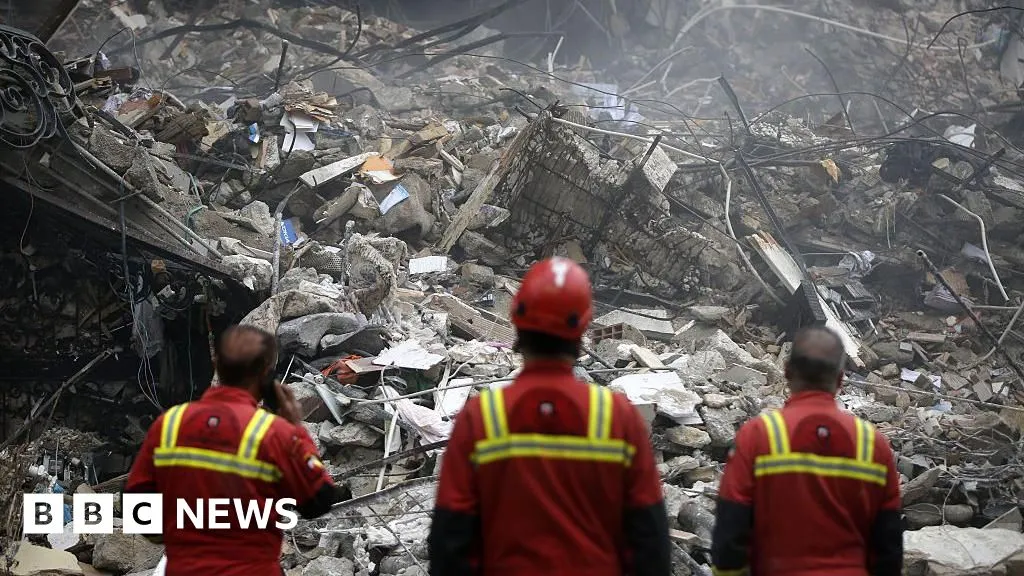
BBC News - WorldFIG 01
Reading time
3min
Word count
562words
Sources cited
5cited
Entities identified
12entities
Quality score
100%
§ 01
Briefing Summary
AI-generatedNEWSAR · AI
The US and Iran have agreed to a conditional two-week ceasefire, mediated by Pakistan's Prime Minister Shehbaz Sharif, effective immediately. The agreement allows shipping traffic through the Strait of Hormuz, a vital route for oil exports. This follows coordinated attacks on Iran by the US and Israel, and threats from President Trump if the Strait remained closed. In exchange for reopening the Strait, Trump agreed to suspend attacks on Iran, claiming military objectives were met. Iran issued a 10-point plan including a complete cessation of war in multiple countries, lifting sanctions, releasing frozen assets, and compensation for reconstruction. While the ceasefire is said to extend to Lebanon, there is no confirmation of Israel halting operations there.
Confidence 0.90Sources 5Claims 5Entities 12
§ 02
Article analysis
Model · rule-basedFraming
Diplomatic
Conflict
Tone
Mixed Tone
AI-assessed
CalmNeutralAlarmist
Factuality
0.80 / 1.00
Factual
LowHigh
Sources cited
5
Well sourced
FewMany
§ 03
Key claims
5 extracted01
Netanyahu said: "Israel supports President Trump's decision to suspend strikes against Iran for two weeks subject to Iran immediately opening the straits..."
quoteBenjamin Netanyahu
Confidence
1.00
02
Trump said he'd agreed to "suspend the bombing and attack of Iran for a period of two weeks" if Tehran agrees to reopen the Strait of Hormuz.
quoteDonald Trump
Confidence
1.00
03
Pakistan's Prime Minister Shehbaz Sharif said the ceasefire was effective immediately.
quoteShehbaz Sharif
Confidence
1.00
04
Iran agreed to allow vessels through the Hormuz Strait for two weeks, with their passage co-ordinated by the Iranian military.
factual
Confidence
0.90
05
Iran and the US have agreed to a conditional two-week ceasefire, during which shipping traffic will be allowed through the Strait of Hormuz.
factual
Confidence
0.90
§ 04
Full report
3 min read · 562 words§ 05
Entities
12 identifiedKey playerOppositionContextPositiveNeutralNegative
§ 06
Keywords & salience
7 termsceasefire
1.00
us iran relations
0.90
strait of hormuz
0.80
negotiations
0.60
sanctions
0.50
military objectives
0.40
israel
0.40
§ 07
Topic connections
Interactive graph Network visualization showing 51 related topics
View Full Graph Person Organization Location Event|Click node to navigate|Edge numbers = shared articles