Netanyahu authorizes direct talks with Lebanon in potential boost to ceasefire efforts 1 of 7 | Israeli strikes hit busy commercial and residential areas in central Beirut without warning on Wednesday, hours after a ceasefire was announced in the U.S.-Israeli war with Iran. Lebanon said at least 182 people were killed and hundreds were wounded, making it the deadliest day in the latest Israel-Hezbollah war. (AP video by Malak Harb) 2 of 7 | The attacks in Lebanon came hours after a ceasefire was announced in the U.S.-Israeli war with Iran. Lebanon said at least 182 people were killed and hundreds were wounded, making it the deadliest day in the latest Israel-Hezbollah war. (AP video shot by Fadi Tawil and Mahommad Anouti) 3 of 7 | A government supporter weeps during a mourning ceremony marking the 40th day since the death of Iranian Supreme Leader Ayatollah Ali Khamenei, who was killed in the U.S. and Israel strikes in Tehran, Iran, Thursday, April 9, 2026. (AP Photo/Vahid Salemi) 4 of 7 | A man gathers his belongings from his home, which has been destroyed in an Israeli airstrike a day earlier in Beirut, Lebanon, Thursday, April 9, 2026. (AP Photo/Emilio Morenatti) 5 of 7 | Lebanese civil defense workers search for victims in the rubble of a building destroyed in an Israeli airstrike a day earlier in central Beirut, Lebanon, Thursday, April 9, 2026. (AP Photo/Hassan Ammar) 6 of 7 | Lebanese civil defense workers inspect the rubble at the site of a building destroyed in an Israeli airstrike a day earlier in Beirut, Lebanon, Thursday, April 9, 2026. (AP Photo/Hussein Malla) 7 of 7 | Men inspect the damage to their home destroyed in an Israeli airstrike a day earlier in Beirut, Lebanon, Thursday, April 9, 2026. (AP Photo/Emilio Morenatti) 1 of 7 Israeli strikes hit busy commercial and residential areas in central Beirut without warning on Wednesday, hours after a ceasefire was announced in the U.S.-Israeli war with Iran. Lebanon said at least 182 people were killed and hundreds were wounded, making it the deadliest day in the latest Israel-Hezbollah war. (AP video by Malak Harb) Add AP News on Google Add AP News as your preferred source to see more of our stories on Google. 2 of 7 The attacks in Lebanon came hours after a ceasefire was announced in the U.S.-Israeli war with Iran. Lebanon said at least 182 people were killed and hundreds were wounded, making it the deadliest day in the latest Israel-Hezbollah war. (AP video shot by Fadi Tawil and Mahommad Anouti) Add AP News on Google Add AP News as your preferred source to see more of our stories on Google. 3 of 7 A government supporter weeps during a mourning ceremony marking the 40th day since the death of Iranian Supreme Leader Ayatollah Ali Khamenei, who was killed in the U.S. and Israel strikes in Tehran, Iran, Thursday, April 9, 2026. (AP Photo/Vahid Salemi) Add AP News on Google Add AP News as your preferred source to see more of our stories on Google. 4 of 7 A man gathers his belongings from his home, which has been destroyed in an Israeli airstrike a day earlier in Beirut, Lebanon, Thursday, April 9, 2026. (AP Photo/Emilio Morenatti) Add AP News on Google Add AP News as your preferred source to see more of our stories on Google. 5 of 7 Lebanese civil defense workers search for victims in the rubble of a building destroyed in an Israeli airstrike a day earlier in central Beirut, Lebanon, Thursday, April 9, 2026. (AP Photo/Hassan Ammar) Add AP News on Google Add AP News as your preferred source to see more of our stories on Google. 6 of 7 Lebanese civil defense workers inspect the rubble at the site of a building destroyed in an Israeli airstrike a day earlier in Beirut, Lebanon, Thursday, April 9, 2026. (AP Photo/Hussein Malla) Add AP News on Google Add AP News as your preferred source to see more of our stories on Google. 7 of 7 Men inspect the damage to their home destroyed in an Israeli airstrike a day earlier in Beirut, Lebanon, Thursday, April 9, 2026. (AP Photo/Emilio Morenatti) Add AP News on Google Add AP News as your preferred source to see more of our stories on Google. Updated [hour]:[minute] [AMPM] [timezone], [monthFull] [day], [year] DUBAI, United Arab Emirates (AP) — In a potential boost to Middle East ceasefire efforts, Israeli Prime Minister Benjamin Netanyahu said Thursday that he has authorized direct negotiations with Lebanon “as soon as possible” aimed at disarming Iranian-backed Hezbollah militants and establishing relations between the neighbors.Israel and Lebanon have technically been at war since Israel was established in 1948, and Netanyahu later stressed that there was no ceasefire between them. In a video statement, he said Israel will keep striking Hezbollah until security is restored in northern Israel.There was no immediate response from Lebanon. But Israel-Lebanon negotiations were expected to begin next week at the State Department in Washington, according to a U.S. official and a person familiar with the plans, who spoke on condition of anonymity due to the delicacy of the matter. The prospect of talks appeared to bolster the tentative ceasefire in the Iran war that has staggered under the weight of Israel’s bombardment of Beirut, Tehran’s continued chokehold on the Strait of Hormuz and uncertainty over whether talks can find common ground.However later Thursday, U.S. President Donald Trump appeared to cast doubt on the effectiveness of the ceasefire, writing on his social media platform: “Iran is doing a very poor job, dishonorable some would say, of allowing Oil to go through the Strait of Hormuz.” “That is not the agreement we have!” Trump wrote of the trickle of ships Iran has allowed to pass through the crucial waterway.Meanwhile, Kuwait accused Iran and its proxies of launching drone attacks targeting it on Thursday despite the ceasefire, as Saudi Arabia said recent attacks damaged a key pipeline in the kingdom. The accusation from Kuwait’s Foreign Ministry put new pressure on the ceasefire ahead of planned talks between the U.S. and Iran this weekend. Saudi Arabia’s state-run Saudi Press Agency, quoting an anonymous official, said its crucial East-West pipeline, which carries oil out to the Red Sea and avoids the Strait of Hormuz, was damaged in the recent attacks.Iran’s paramilitary Revolutionary Guard denied launching attacks on Persian Gulf states after Kuwait’s announcement.Such an assault would mirror the continuing pressure campaign Tehran is waging on the U.S. and its allies, particularly amid efforts to secure a ceasefire between Israel and Hezbollah.Israel’s announcement of negotiations with Lebanon comes amid disagreement over whether the ceasefire deal included a pause in fighting between Israel and Hezbollah, and a day after Israel pounded Beirut with airstrikes, the deadliest day in Lebanon since the war began Feb. 28.The launch of direct peace talks between the neighboring nations is a significant achievement, though reaching an agreement will be difficult after decades of hostilities, Hezbollah’s continued presence and longstanding disagreements over the countries’ shared land border.The talks in Washington are expected to be handled on the American side by the U.S. ambassador to Lebanon, Michel Issa, and on the Israeli side by the Israeli ambassador to the U.S., Yechiel Leiter, according to the person familiar with the planning.It was not immediately clear who would represent Lebanon. The timing and location of the talks was first reported by Axios. Pressure on ceasefire continuesAfter declaring victory with the ceasefire announcement, both Iran and the U.S. have appeared to apply pressure on each other. Semiofficial news agencies in Iran suggested forces have mined the Strait of Hormuz, a crucial waterway for oil that Tehran has closed. Trump warned that U.S. forces would hit Iran harder than before if it did not fulfill the agreement.Underlining Iran’s continued control of the strait, a Botswana-flagged liquified natural gas tanker attempted to travel out of the Persian Gulf via a route ordered by the Revolutionary Guard, but suddenly turned around and headed back early Friday, ship-tracking data showed.Questions also remained over what will happen to Iran’s stockpile of enriched uranium at the heart of tensions, how and when normal traffic will resume through the strait, and what happens to Iran’s ability to launch future missile attacks and support armed proxies in the region. AP AUDIO: Ceasefire in the Iran war teeters with disagreements over Lebanon and the Strait of Hormuz In an interview with Sky News; British Foreign Secretary Yvette Cooper says the U.S.-Israel-Iran war ceasefire must stick and the Strait of Hormuz must reopen. Israel vows to continue striking Hezbollah in Lebanon Iran’s parliament speaker, Mohammad Bagher Qalibaf, warned in a social media post Thursday that continued Israeli attacks on Hezbollah in Lebanon would bring “explicit costs and STRONG responses.” Qalibaf has been discussed as a possible negotiator who could meet U.S. Vice President JD Vance this weekend in Islamabad. The White House has said Vance would lead the delegation for talks starting Saturday.Iran had said Israel’s ongoing attacks on Hezbollah were violating the ceasefire agreement. Netanyahu and Trump have said they were not.Trump said Thursday that he has asked Netanyahu to dial back the strikes in Lebanon. Lebanon’s health ministry said more than 300 people were killed and more than 1,100 wounded Wednesday by Israeli strikes on central Beirut and other areas of Lebanon that Israel said targeted Hezbollah, which joined the war in support of Tehran.Early Friday morning, Israel’s military said it struck approximately 10 launchers in Lebanon that had fired rockets toward northern Israel on Thursday.Israel also said Thursday it killed Ali Yusuf Harshi, an aide to Hezbollah leader Naim Kassem. There was no Hezbollah comment.Threat of mines looms over the straitFour tankers and three bulk carriers crossed through the strait Thursday, bringing the total number of ships passing through since the ceasefire to at least 12, according to the data firm Kpler. Semiofficial news agencies in Iran published a chart Thursday suggesting the country’s paramilitary Revolutionary Guard put sea mines into the Strait of Hormuz during the war — a message that may be intended to pressure the U.S.The chart, released by the ISNA news agency and Tasnim, showed a large circle marked “danger zone” in Farsi over the route ships take through the strait, through which 20% of all traded oil and natural gas once passed.The head of the United Arab Emirates’ major oil company, Sultan al-Jaber, said some 230 ships loaded with oil were waiting to get through the strait and must be allowed “to navigate this corridor without condition.”The strait’s de facto closure has caused oil prices to skyrocket — affecting the cost of gasoline, food and other basics far beyond the Middle East. The spot price of Brent crude, the international standard, was around $98 Thursday, up about 35% since the war began.Fate of Iran’s enriched uranium remains a questionThe fate of Iran’s missile and nuclear programs — which the U.S. and Israel sought to eliminate in going to war — was unclear. The U.S. insists Iran must never be able to build nuclear weapons and wants to remove Tehran’s stockpile of highly enriched uranium, which could be used to build them. Iran insists its program is peaceful.Trump said Wednesday that the U.S. would work with Iran to remove the uranium, buried in last year’s U.S. and Israeli strikes on Iran’s nuclear facilities, though Tehran did not confirm that. In one version of the ceasefire deal that Iran published, it said it would be allowed to continue enrichment.The chief of Iran’s nuclear agency, Mohammad Eslami, said Thursday that protecting Tehran’s right to enrich uranium is “necessary” for any ceasefire talks.___Corder reported from The Hague, Netherlands. Becatoros reported from Athens, Greece. Associated Press writers Chan Ho-him in Hong Kong, Zeke Miller, Matthew Lee and Will Weissert in Washington, Hannah Schoenbaum in Salt Lake City and Kareem Chehayeb and Hussein Malla in Beirut contributed to this report. Gambrell is the news director for the Gulf and Iran for The Associated Press. He has reported from each of the Gulf Cooperation Council countries, Iran and other locations across the world since joining the AP in 2006. Becatoros oversees coverage of southeast Europe for The Associated Press, with frequent assignments to the Middle East and Afghanistan. Based in Athens, Greece, she has worked around the world, including covering war in the Balkans, Iraq, Afghanistan and Ukraine. Corder is a reporter in the Netherlands who covers international courts in The Hague, Dutch politics, news and sport. He has worked at The AP for more than 30 years, including seven years in Australia covering the Asia-Pacific region.
SRCAssociated Press (AP)
LANGSCO
LEANCenter
WORDS2 104
ENT8
THU · 2026-04-09 · 04:23 GMTBRIEF NSR-2026-0409-59654
NSR-2026-0409-59654News Report·SCO·Conflict
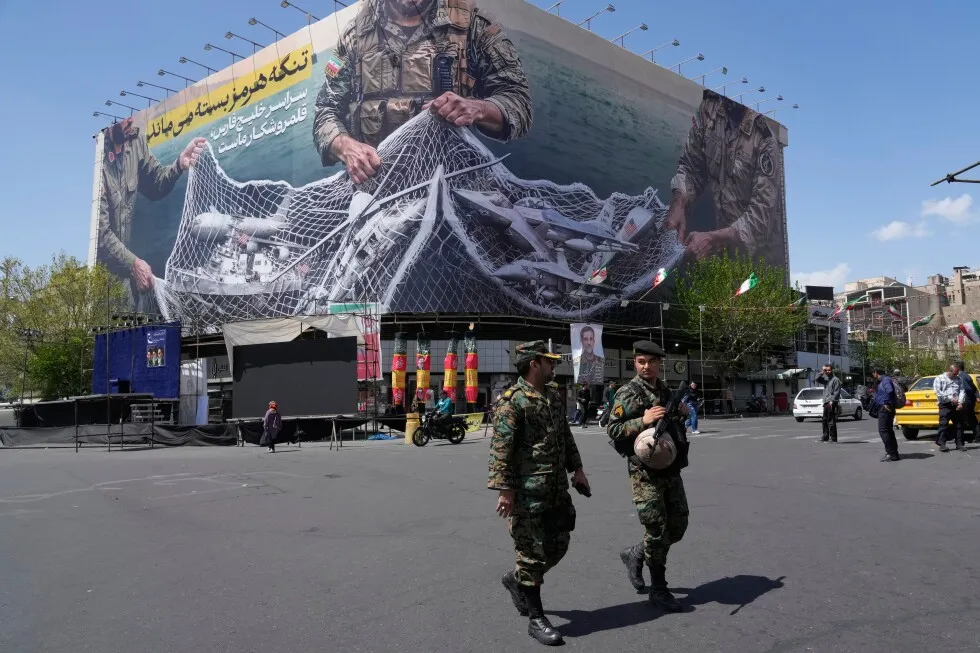
Chart shows Iran may have put sea mines in Strait of Hormuz
Following a ceasefire announcement in the U.S.-Israeli war with Iran, Israeli strikes hit Beirut, Lebanon, on Wednesday. The attacks targeted commercial and residential areas without warning.
By
JON GAMBRELL, ELENA BECATOROS and MIKE CORDERAssociated Press (AP)Filed 2026-04-09 · 04:23 GMTLean · CenterRead · 9 min
Associated Press (AP)FIG 01
Reading time
9min
Word count
2 104words
Sources cited
1cited
Entities identified
8entities
Quality score
100%
§ 01
Briefing Summary
AI-generatedNEWSAR · AI
Following a ceasefire announcement in the U.S.-Israeli war with Iran, Israeli strikes hit Beirut, Lebanon, on Wednesday. The attacks targeted commercial and residential areas without warning. Lebanon reported at least 182 deaths and hundreds of injuries, marking the deadliest day in the recent Israel-Hezbollah conflict. The strikes occurred hours after the ceasefire was declared. The article also mentions that Netanyahu authorized direct talks with Lebanon in potential boost to ceasefire efforts.
Confidence 0.90Sources 1Claims 4Entities 8
§ 02
Article analysis
Model · rule-basedFraming
Conflict
Human Interest
Tone
Mixed Tone
AI-assessed
CalmNeutralAlarmist
Factuality
0.80 / 1.00
Factual
LowHigh
Sources cited
1
Limited
FewMany
§ 03
Key claims
4 extracted01
Lebanon said at least 182 people were killed and hundreds were wounded.
statisticLebanon
Confidence
0.95
02
Iranian Supreme Leader Ayatollah Ali Khamenei was killed in the U.S. and Israel strikes in Tehran, Iran.
factualArticle
Confidence
0.90
03
The attacks in Lebanon came hours after a ceasefire was announced in the U.S.-Israeli war with Iran.
factualArticle
Confidence
0.90
04
Israeli strikes hit Beirut without warning after a ceasefire announcement.
factualArticle
Confidence
0.90
§ 04
Full report
9 min read · 2 104 words§ 05
Entities
8 identifiedKey playerOppositionContextPositiveNeutralNegative
Organizations1
§ 06
Keywords & salience
10 termsisraeli strikes
0.90
lebanon
0.80
ceasefire
0.70
israel-hezbollah war
0.70
u.s.-israeli war with iran
0.60
beirut
0.60
airstrike
0.50
civilian casualties
0.50
netanyahu
0.40
direct talks
0.40
§ 07
Topic connections
Interactive graph Network visualization showing 51 related topics
View Full Graph Person Organization Location Event|Click node to navigate|Edge numbers = shared articles