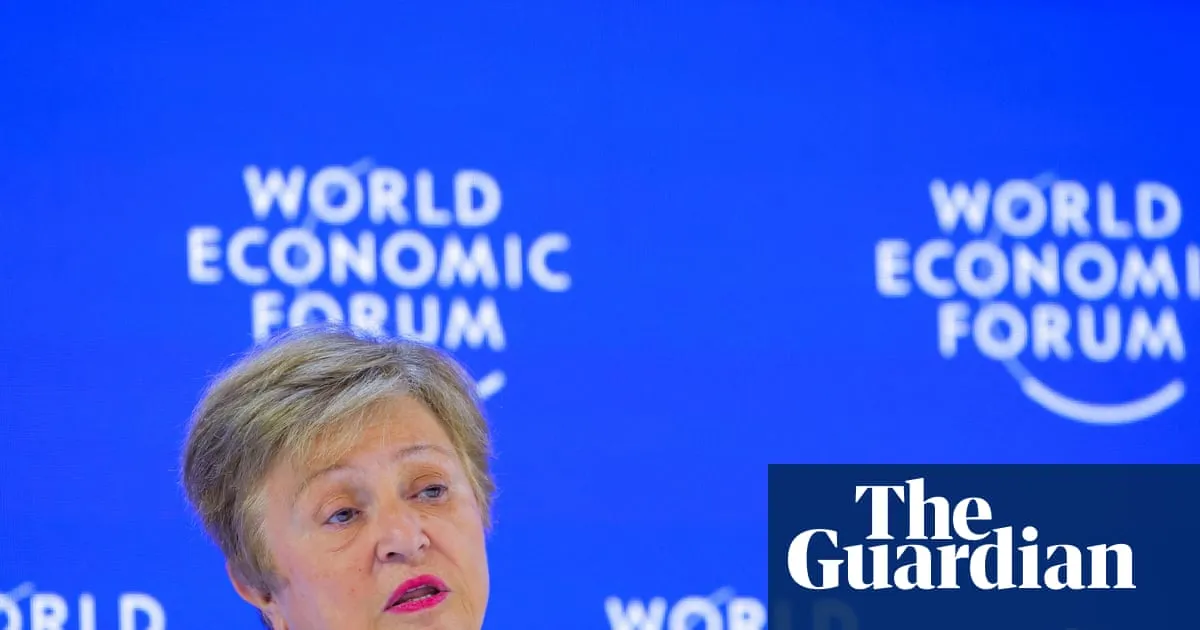
The head of the International Monetary Fund has warned that the Iran war will permanently scar the global economy even if a durable peace deal in the Middle East can be reached.In a speech delivered as the ceasefire in the conflict threatened to unravel, Kristalina Georgieva said the “scarring effects” caused by the war to date would mean slower global growth this year than first anticipated.Had it not been for the outbreak of the conflict six weeks ago, the IMF would have upgraded its global growth outlook for 2026, Georgieva said. “But now, even our most hopeful scenario involves a growth downgrade. Even in a best case, there will be no neat and clean return to the status quo.”Six weeks into the conflict, the fate of the conditional ceasefire announced late on Tuesday appears at risk as Washington and Tehran disagree on what was agreed.The global oil price rose on Thursday amid volatile conditions in global financial markets, underscoring fears over continued disruption to energy supplies through the Strait of Hormuz that are key for fuelling the world economy.In a speech intended as a curtain-raiser for the IMF’s annual spring meetings in Washington next week, Georgieva said there was heightened uncertainty over the depth of the global slowdown triggered by the war.US air force military personnel tend to Jdam precision-guided munition and a Rockwell B-1 Lancer heavy bomber. Photograph: Tolga Akmen/EPAHowever, every scenario the body has produced for its flagship World Economic Outlook report – to be published on Tuesday – shows a permanent hit to living standards.Last autumn the IMF had forecast global growth of 3.1% in 2026, in a modest slowdown from growth of 3.2% in 2025, as an AI-driven investment boom helped to power “unexpected resilience” despite Donald Trump’s tariff wars.Georgieva said the world economy had entered the Iran war with “considerable momentum” fuelled by tech investment and supportive conditions in financial markets.However, she said infrastructure damage, supply disruptions, losses of confidence, and other scarring effects linked to the war would inflict losses for the global economy regardless of whether a peace deal could be reached.Highlighting uncertainty over shipping in and out of the Gulf, and the amount of time it would take to restore production at bombed-out oil and gas facilities across the region, the IMF’s managing director said the world was braced for continuing disruption.“The fact is, we don’t truly know what the future holds for transits through the Strait of Hormuz or, for that matter, for the recovery of regional air traffic.” she said. “What we do know is that growth will be slower – even if the new peace is durable.”In a sign that there would be steeper growth downgrades for some countries than for others, Georgieva said net oil-importing nations, poorer countries and small-island nations would be hit particularly hard. However, she urged governments around the world to “reject go-it-alone actions” such as export and price controls.“That can further upset global conditions: don’t pour gasoline on the fire,” she said.With many countries entering the crisis with elevated levels of debt and higher borrowing costs, the IMF chief urged governments to focus on targeted and temporary support measures for the most vulnerable households.Costly, blanket tax cuts or energy subsidies could risk stoking inflation while threatening to undermine fragile public finances, she said. Central banks should also tread carefully by keeping interest rates on hold, but stand ready to act to curb inflation.“All countries must deploy their limited fiscal resources responsibly, and most must move decisively to rebuild space after this shock. I cannot emphasise this enough,” she said.Her comments came as the Bank of England governor, Andrew Bailey, said the global economy faced a “very big shock” from the war.The governor of the Bank of England, Andrew Bailey. Photograph: Hannah McKay/ReutersBailey, who also chairs the Financial Stability Board, an international body that monitors the financial system, told the EU parliament’s committee on economic and monetary affairs that risks remained while the Middle East situation remained volatile.“We’ve obviously had a very big shock in the last month or so, with the conflict breaking out in the Middle East, that has prompted, obviously, much greater market volatility,” he said.“I mean, we all have to get up in the morning and find out what’s gone on overnight. At least we got up yesterday and found the world was still with us, but it obviously is very volatile. Yesterday was a good day in point to illustrate that.”
SRCThe Guardian - World News
LANGEN
LEANCenter-Left
WORDS741
ENT11
THU · 2026-04-09 · 14:00 GMTBRIEF NSR-2026-0409-60628
NSR-2026-0409-60628News Report·EN·Economic Impact
Head of IMF says Iran war will permanently scar global economy even if peace is reached
IMF head Kristalina Georgieva warned that the Iran war will cause lasting damage to the global economy, even with a peace agreement. Speaking ahead of the IMF's spring meetings, Georgieva stated the conflict's "scarring effects" will lead to slower global growth than previously anticipated, resulting in a downgrade to the 2026 outlook.
Richard Partington and Julia KolleweThe Guardian - World NewsFiled 2026-04-09 · 14:00 GMTLean · Center-LeftRead · 3 min
The Guardian - World NewsFIG 01
Reading time
3min
Word count
741words
Sources cited
1cited
Entities identified
11entities
Quality score
100%
§ 01
Briefing Summary
AI-generatedNEWSAR · AI
IMF head Kristalina Georgieva warned that the Iran war will cause lasting damage to the global economy, even with a peace agreement. Speaking ahead of the IMF's spring meetings, Georgieva stated the conflict's "scarring effects" will lead to slower global growth than previously anticipated, resulting in a downgrade to the 2026 outlook. The war has introduced uncertainty, especially regarding energy supplies through the Strait of Hormuz, impacting global financial markets. Despite prior forecasts of 3.1% growth in 2026, the IMF now projects a permanent hit to living standards due to infrastructure damage, supply disruptions, and loss of confidence stemming from the war. The extent of the slowdown remains uncertain, but the IMF anticipates continued disruption due to the conflict's impact on shipping and oil production.
Confidence 0.90Sources 1Claims 5Entities 11
§ 02
Article analysis
Model · rule-basedFraming
Economic Impact
Conflict
Tone
Mixed Tone
AI-assessed
CalmNeutralAlarmist
Factuality
0.70 / 1.00
Factual
LowHigh
Sources cited
1
Limited
FewMany
§ 03
Key claims
5 extracted01
Last autumn the IMF had forecast global growth of 3.1% in 2026.
statisticnull
Confidence
1.00
02
Net oil-importing nations, poorer countries and small-island nations will be hit particularly hard.
predictionKristalina Georgieva
Confidence
0.90
03
The Iran war will permanently scar the global economy even if a durable peace deal is reached.
predictionKristalina Georgieva
Confidence
0.90
04
Global growth will be slower – even if the new peace is durable.
predictionKristalina Georgieva
Confidence
0.80
05
The IMF would have upgraded its global growth outlook for 2026 had it not been for the conflict.
predictionKristalina Georgieva
Confidence
0.80
§ 04
Full report
3 min read · 741 words§ 05
Entities
11 identifiedKey playerOppositionContextPositiveNeutralNegative
§ 06
Keywords & salience
10 termsiran war
1.00
global economy
0.90
economic growth
0.80
scarring effects
0.70
imf
0.70
supply disruptions
0.60
global slowdown
0.60
middle east
0.50
oil price
0.50
financial markets
0.40
§ 07
Topic connections
Interactive graph Network visualization showing 51 related topics
View Full Graph Person Organization Location Event|Click node to navigate|Edge numbers = shared articles