Israel’s continued attacks on Lebanon “shouldn’t be happening”, Keir Starmer has said on his visit to the Middle East, as he called for the Iran conflict to become a watershed moment for the future security of the UK.In an article for the Guardian, the prime minister said the UK’s response to the crisis must involve a fundamental reset in terms of making the country more resilient, including by boosting defence and having closer links to Europe.His comments on Israel echoed criticisms by Yvette Cooper, the foreign secretary; and John Healey, the defence secretary, emphasising a potentially widening gap between the UK and Donald Trump’s US over the Iran conflict and its aftermath.As well as the condemnation over Lebanon, Starmer and his ministers have been adamant that the Strait of Hormuz must be free of any sort of tolls or levies, after Trump mooted the idea of a “joint venture” between the US and Iran to do this.Speaking in Bahrain on a trip in which he has also held talks in Saudi Arabia and the United Arab Emirates on shoring up the tentative ceasefire between Iran, the US and Israel, and fully reopening the Strait of Hormuz to commercial shipping, Starmer criticised Israel’s intensified bombing in Lebanon, which has killed more than 250 people.“That shouldn’t be happening. That should stop. That’s my strong view,” Starmer told ITV.Deadly Israeli strikes hit Beirut – videoWhile Israel has announced it will begin talks with Lebanon, both Israel and the US had questioned whether ending attacks on Lebanon was part of the ceasefire. JD Vance, Trump’s vice-president, had argued it was not, and that there had been “a legitimate misunderstanding”.Starmer dismissed this argument, saying the issue “isn’t a technical one of whether it’s a breach of the agreement or not”, calling it “a matter of principles as far as I’m concerned”.UK ministers have refused to directly condemn Trump, even after the president shocked the world by saying Iran’s “whole civilisation will die” if Tehran did not meet US demands before the ceasefire.In the ITV interview, Starmer was obliquely critical of the language, saying: “They are not words I would use, ever use, because I come at this with our British values and principles.”In his Guardian article, Starmer set out the separate path the UK has taken over the war, writing: “From the outset, I was clear Britain would not be drawn into offensive military action. And we were not.”The PM presented his choices as being best for the UK’s interests and for creating longer-term resilience.“It is why, alongside staying out of the conflict, we’ve rebuilt our European alliances and boosted our defence capacity with the biggest sustained investment since the cold war,” he wrote.“Those measures aren’t simply about responding to one crisis in isolation. They are about doing things differently. Thinking about the long term.”Successive shocks like Brexit, Covid and Ukraine had prompted “sticking plaster” responses, he argued: “This time, it will be different. The war in Iran must now become a line in the sand. Because how we emerge from this crisis will define all of us for a generation.”In the ITV interview, Starmer was even more explicit about how this would include repairing ties with European neighbours, saying: “I’m clear in my mind that that means we must be closer to the EU and that’s why not just on defence and security but also on trade and energy, I want us to be closer to the EU, to strengthen our economy, to make it more resilient.”Asked about the Strait of Hormuz, Starmer said that in the UK’s view, that meant “toll-free navigation” as well as safe passage.Speaking earlier on Thursday at a press conference in Westminster, Healey also warned against the idea of tolls, saying: “The introduction of any sort of pay-for-passage tolls would create a potential principle that could be used and abused by others elsewhere.”Healey also called for the ceasefire to extend to Lebanon: “We condemn the escalation in Lebanon. We want the Israel-Lebanon conflict to be brought within the terms of the ceasefire, because we want to see greater stability.”Speaking later on Thursday at an event in Mansion House in London, Cooper was to say there “must be no return to conflict” after the ceasefire announced by the Trump late on Tuesday.Her speech said: “There is considerable work to do, and we support the negotiations: they must make progress; there must be no return to conflict; Lebanon must be included in the ceasefire; there must be no further threat from Iran to its neighbours; and crucially, the Strait of Hormuz must be fully reopened.”
SRCThe Guardian - World News
LANGEN
LEANCenter-Left
WORDS764
ENT12
THU · 2026-04-09 · 17:32 GMTBRIEF NSR-2026-0409-60669
NSR-2026-0409-60669News Report·EN·Diplomatic
Israel’s attacks on Lebanon should not be happening, says Keir Starmer
During a Middle East visit, UK Prime Minister Keir Starmer stated that Israel's attacks on Lebanon "shouldn't be happening," echoing concerns from other UK ministers. Starmer emphasized the need for a reset in UK security strategy, including stronger defense and closer ties with Europe, in response to the Iran conflict.
Peter Walker and Jamie GriersonThe Guardian - World NewsFiled 2026-04-09 · 17:32 GMTLean · Center-LeftRead · 4 min
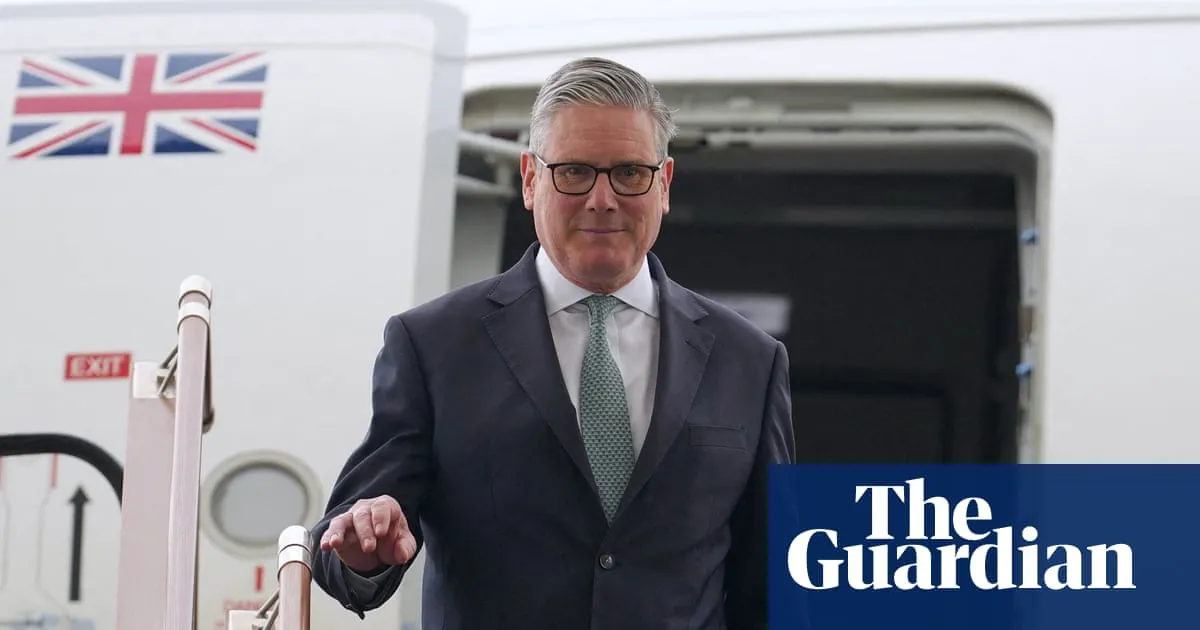
The Guardian - World NewsFIG 01
Reading time
4min
Word count
764words
Sources cited
5cited
Entities identified
12entities
Quality score
100%
§ 01
Briefing Summary
AI-generatedNEWSAR · AI
During a Middle East visit, UK Prime Minister Keir Starmer stated that Israel's attacks on Lebanon "shouldn't be happening," echoing concerns from other UK ministers. Starmer emphasized the need for a reset in UK security strategy, including stronger defense and closer ties with Europe, in response to the Iran conflict. He also insisted that the Strait of Hormuz must remain free of tolls, contrasting with suggestions from the US. Starmer criticized Israel's intensified bombing in Lebanon, which has resulted in over 250 deaths, and dismissed arguments suggesting the attacks were not a breach of the ceasefire agreement. While avoiding direct condemnation of President Trump, Starmer distanced himself from Trump's rhetoric regarding Iran. He affirmed the UK's decision not to engage in offensive military action.
Confidence 0.90Sources 5Claims 5Entities 12
§ 02
Article analysis
Model · rule-basedFraming
Diplomatic
National Security
Tone
Measured
AI-assessed
CalmNeutralAlarmist
Factuality
0.70 / 1.00
Factual
LowHigh
Sources cited
5
Well sourced
FewMany
§ 03
Key claims
5 extracted01
Britain would not be drawn into offensive military action.
quoteKeir Starmer
Confidence
1.00
02
UK ministers have refused to directly condemn Trump.
factualnull
Confidence
1.00
03
Starmer called for the Iran conflict to become a watershed moment for the future security of the UK.
factualnull
Confidence
1.00
04
Israel’s continued attacks on Lebanon “shouldn’t be happening”.
quoteKeir Starmer
Confidence
1.00
05
Starmer criticized Israel’s intensified bombing in Lebanon, which has killed more than 250 people.
factualnull
Confidence
0.90
§ 04
Full report
4 min read · 764 words§ 05
Entities
12 identifiedKey playerOppositionContextPositiveNeutralNegative
People5
§ 06
Keywords & salience
8 termsisrael attacks on lebanon
0.90
keir starmer
0.80
iran conflict
0.70
uk foreign policy
0.60
strait of hormuz
0.50
us-uk relations
0.50
donald trump
0.40
ceasefire
0.40
§ 07
Topic connections
Interactive graph Network visualization showing 51 related topics
View Full Graph Person Organization Location Event|Click node to navigate|Edge numbers = shared articles