Those talks, in endless rounds stretching over nearly 18 months of breakthroughs and breakdowns, were the last high-level meetings between the US's then secretary of state John Kerry and Iran's then foreign minister Mohammad Javad Zarif.Thomas Imo/Photothek via Getty ImagesIn 2015 diplomats including Iran's then FM Javad Zarif (L) and then US Secretary of State John Kerry reached a deal to limit Iranian nuclear activity - which Trump abandoned three years laterEfforts since then, including during President Biden's term, made little headway."The dispatch of more senior officials and high stakes of failure for all sides could open possibilities that weren't there before," assesses Ali Vaez of the International Crisis Group, who has followed all the twists and turns over many years.But, he cautions, this time is still "exponentially harder".The gaps between the two sides remain very wide; the distrust runs very deep.That well is especially vast for Tehran after their last two series of negotiations, in June 2025 and February this year, were suddenly whacked by the opening salvos of an Israeli-American war.Contrasting stylesAnd, when they do talk, their negotiating styles are poles apart.President Trump boasts he has the best dealmakers in his special envoy Steve Witkoff, a former property developer, and his son-in-law Jared Kushner, his go-to person during his first term, when the Abraham Accords normalised relations between Israel and a few Arab states while sidelining the Palestinians.But Iran, which now views these envoys as too close to Israel, insisted on raising the level of engagement, specifically to the Vice President JD Vance. Not only does he hold a formal position within the US administration, rather than being a friend or family member, he is also seen as the strongest sceptic of this military campaign in Trump's team.Iran's approach has also imposed limitations, especially in its insistence that the negotiations mainly be conducted indirectly, through Oman, their trusted mediator.In Geneva in February, behind high walls and away from the world's cameras, some direct conversations did take place in the midst of the indirect exchanges. But Iranian hardliners, deeply distrustful of this track, were said to have tied the hands of negotiators who also wanted to avoid any risk of hostile or humiliating exchanges.Witkoff's signature style had been to usually arrive on his own. Diplomatic sources involved in this process say he often didn't even take notes - which only heightened Iranian suspicion and meant the talks often went in circles. Then Kushner was added to his team.Oman Foreign MinistryUS negotiators Steve Witkoff and Jared Kushner held indirect talks with Iran facilitated by the Omani FM (R) in Geneva in February - then the US and Israel attacked IranThe contrast with the negotiations a decade ago couldn't be starker – the American and Iranian delegations included strong contingents of experienced diplomats and leading physicists. They were also bolstered by senior European diplomats as well as foreign ministers from the other four permanent members of the UN Security Council - the UK, France, China and Russia.Thirteen years ago, Iran's late Supreme Leader Ayatollah Ali Khamenei made a reluctant decision to allow his negotiators to intensify nuclear talks with America to try to reach a deal. It was called "heroic flexibility".Tehran's top cleric didn't trust the country he scorned as "the Great Satan". But Iran's newly elected reformist president, Hassan Rouhani, convinced him that their dire economic straits gave them no other choice but to do everything they could to lift crippling international sanctions.Now, his son Mojtaba Khamenei - who rose to power after his father's assassination in the early hours of this war - has given the go-ahead for his negotiators to meet American envoys in Islamabad.But he was injured in that attack and the extent of his involvement, and authority, is far from clear. The hardliners, most of all the powerful Islamic Revolutionary Guards, are now calling the shots. Iran's economy is mired in a much deeper crisis. And it's facing more significant dissent at home after January's nation-wide protests were crushed with many thousands of casualties.A nation shaken by this grievous war now struggles to hold onto hope for economic and social change, and for some, fundamental change.Trump insists these six weeks of war achieved "regime change" and he describes Iran's new leaders as "less radical, much more reasonable".The moment of truth could be approaching – for all sides. And there's another sobering thought.Thirteen years ago, as talks got under way, their statements spoke of the two sides being "far apart".
SRCBBC News - World
LANGEN
LEANCenter
WORDS743
ENT12
FRI · 2026-04-10 · 23:46 GMTBRIEF NSR-2026-0411-62724
NSR-2026-0411-62724Analysis·EN·Diplomatic
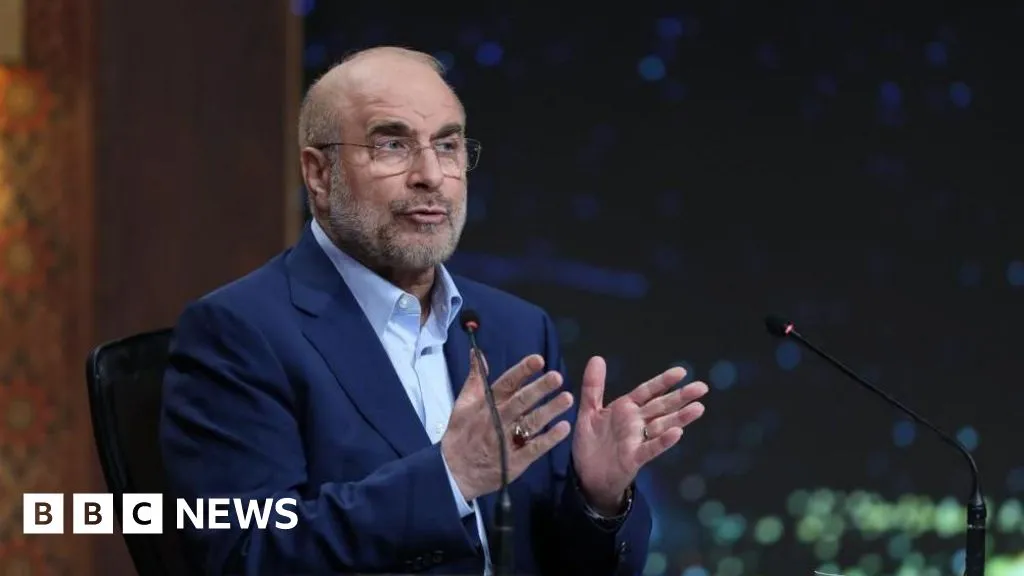
Historic Vance-Ghalibaf talks must bridge deep distrust
High-level talks between the U.S. and Iran, involving Vice President JD Vance and Iranian Parliament Speaker Mohammad Ghalibaf, aim to bridge significant distrust and disagreements.
BBC News - WorldFiled 2026-04-10 · 23:46 GMTLean · CenterRead · 3 min
BBC News - WorldFIG 01
Reading time
3min
Word count
743words
Sources cited
1cited
Entities identified
12entities
Quality score
100%
§ 01
Briefing Summary
AI-generatedNEWSAR · AI
High-level talks between the U.S. and Iran, involving Vice President JD Vance and Iranian Parliament Speaker Mohammad Ghalibaf, aim to bridge significant distrust and disagreements. These indirect negotiations, primarily mediated by Oman, follow previous unsuccessful efforts to revive the 2015 nuclear deal after the U.S. withdrew. Iran prefers Vance due to his formal position and perceived skepticism towards military action, contrasting with previous U.S. envoys seen as too close to Israel. The talks face challenges including deep-seated distrust, especially after recent military escalations, and differing negotiating styles. Direct conversations have occurred, but Iranian hardliners limit negotiators, seeking to avoid hostile exchanges.
Confidence 0.90Sources 1Claims 5Entities 12
§ 02
Article analysis
Model · rule-basedFraming
Diplomatic
Political Strategy
Tone
Measured
AI-assessed
CalmNeutralAlarmist
Factuality
0.70 / 1.00
Factual
LowHigh
Sources cited
1
Limited
FewMany
§ 03
Key claims
5 extracted01
The last high-level meetings between the US and Iran were between John Kerry and Mohammad Javad Zarif.
factualnull
Confidence
1.00
02
Iran insisted on raising the level of engagement, specifically to Vice President JD Vance.
factualnull
Confidence
0.90
03
Efforts since 2015, including during President Biden's term, have made little headway.
factualnull
Confidence
0.80
04
The dispatch of more senior officials and high stakes of failure for all sides could open possibilities that weren't there before.
quoteAli Vaez of the International Crisis Group
Confidence
0.70
05
Iranian hardliners were said to have tied the hands of negotiators.
factualnull
Confidence
0.60
§ 04
Full report
3 min read · 743 words§ 05
Entities
12 identifiedKey playerOppositionContextPositiveNeutralNegative
People6
Organizations1
§ 06
Keywords & salience
9 termsnegotiations
0.90
us-iran relations
0.80
distrust
0.80
diplomacy
0.70
indirect negotiations
0.60
jd vance
0.60
israeli-american war
0.50
oman
0.50
abraham accords
0.40
§ 07
Topic connections
Interactive graph Network visualization showing 51 related topics
View Full Graph Person Organization Location Event|Click node to navigate|Edge numbers = shared articles