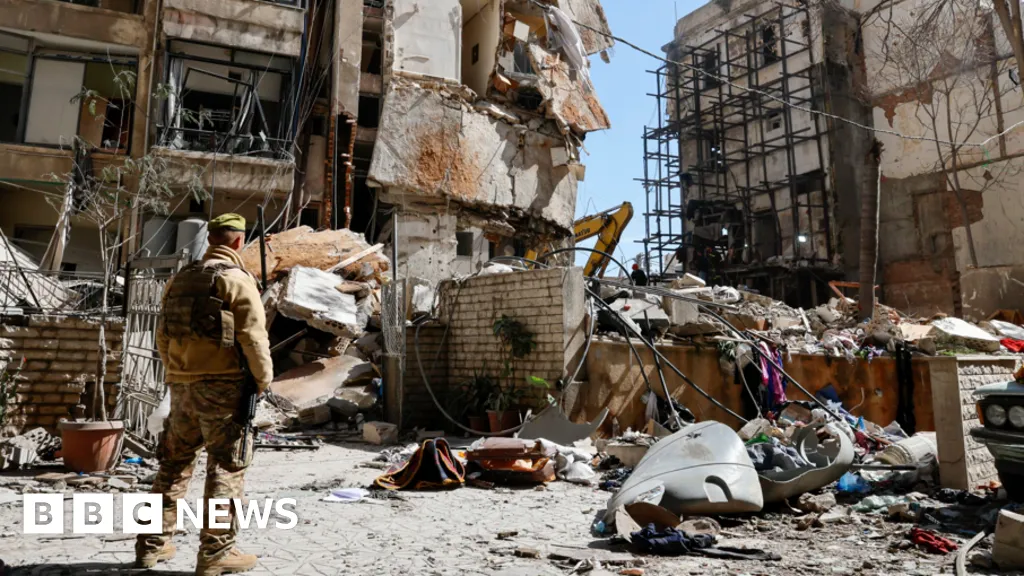
Densely populated parts of central Beirut were hit in strikes described by officials as among the heaviest since Hezbollah joined the conflict in early March.And it was not just the traditional Hezbollah stronghold of Dahieh that was hit in the Lebanese capital - the city centre was also hit. Safa Bleik, a registered nurse and coordinator for international medical charity Médecins Sans Frontières (MSF), happened to be inside the Rafik Hariri Hospital in Beirut as the attacks unfolded."The first patients came in with severe head injuries, with fragments of glass, metal and debris lodged in their bodies. Many were unconscious. Some died shortly after arrival," she said."Soon, the emergency room filled with people searching," Bleik said. "I was trying to stop the bleeding of a man who had arrived with severe head trauma and shrapnel in his abdomen, when a young man came up to me holding a phone, showing me a photo of his brother. He was asking if I had seen him."Casualties were reported in the Bekaa Valley, in the east, and in the southern Nabatieh, Sidon and Tyre regions.Hezbollah may have been taken by surprise - their only response appeared to have been a few rockets fired towards Israel hours later. On Thursday, Israel continued its attacks, saying it had killed "70+ terrorists". It denies targeting civilians. The IDF also said Hezbollah had fired some 30 rockets at northern Israel, with no reports of injuries or damage.The IDF also said it had "ELIMINATED: Ali Yusuf Harshi, the personal secretary to Hezbollah Secretary-General Naim Qassem in Beirut".There has been no confirmation. The BBC is unable to verify the claims.On a crisp and sunny Thursday morning, there was a heaviness in the air in Beirut. Usually the streets are buzzing with traffic but the country has been observing a day of national mourning. President Joseph Aoun described it as a "massacre".At some locations search and recovery operations have been continuing.There is nothing left of the 10-storey residential building that was attacked in Tallet el Khayat, a well-to-do neighbourhood of western Beirut, one of the many locations hit. The air strike happened without warning and would have caught everyone by surprise, as this was not an area that had been targeted in the past.Civil defence teams have been combing through buildings here and across the country, but there is little hope for people who still have loved ones missing.Ziad Samir Itani, who was leading the civil defence team, said rescuers were exhausted after more than six weeks of constant attacks by Israel.
SRCBBC News - World
LANGEN
LEANCenter
WORDS422
ENT11
THU · 2026-04-09 · 17:16 GMTBRIEF NSR-2026-0409-60689
NSR-2026-0409-60689News Report·EN·Conflict
Lebanon thought there was a ceasefire - then Israel unleashed deadly blitz
Following what Lebanon believed was a ceasefire, Israel launched a series of intense strikes on Beirut and other regions, including the Bekaa Valley and southern Lebanon. The attacks, described as some of the heaviest since Hezbollah joined the conflict in March, hit densely populated areas, including the city center, and caught many by surprise.
BBC News - WorldFiled 2026-04-09 · 17:16 GMTLean · CenterRead · 2 min
BBC News - WorldFIG 01
Reading time
2min
Word count
422words
Sources cited
5cited
Entities identified
11entities
Quality score
100%
§ 01
Briefing Summary
AI-generatedNEWSAR · AI
Following what Lebanon believed was a ceasefire, Israel launched a series of intense strikes on Beirut and other regions, including the Bekaa Valley and southern Lebanon. The attacks, described as some of the heaviest since Hezbollah joined the conflict in March, hit densely populated areas, including the city center, and caught many by surprise. Hospitals were overwhelmed with casualties suffering from severe injuries, and search and recovery operations are underway for those missing. Israel claims to have killed over 70 terrorists and targeted a high-ranking Hezbollah official, while Hezbollah responded with rocket fire into northern Israel. The attacks prompted a national day of mourning in Lebanon, with President Aoun describing the events as a massacre.
Confidence 0.90Sources 5Claims 5Entities 11
§ 02
Article analysis
Model · rule-basedFraming
Conflict
Human Interest
Tone
Mixed Tone
AI-assessed
CalmNeutralAlarmist
Factuality
0.70 / 1.00
Factual
LowHigh
Sources cited
5
Well sourced
FewMany
§ 03
Key claims
5 extracted01
The first patients came in with severe head injuries, with fragments of glass, metal and debris lodged in their bodies.
quoteSafa Bleik, MSF
Confidence
1.00
02
Casualties were reported in the Bekaa Valley, in the east, and in the southern Nabatieh, Sidon and Tyre regions.
factual
Confidence
0.90
03
Densely populated parts of central Beirut were hit in strikes described by officials as among the heaviest since March.
factualofficials
Confidence
0.90
04
The IDF also said Hezbollah had fired some 30 rockets at northern Israel, with no reports of injuries or damage.
factualIDF
Confidence
0.80
05
Israel continued its attacks, saying it had killed "70+ terrorists". It denies targeting civilians.
quoteIDF
Confidence
0.80
§ 04
Full report
2 min read · 422 words§ 05
Entities
11 identifiedKey playerOppositionContextPositiveNeutralNegative
People4
Organizations4
§ 06
Keywords & salience
9 termsbeirut strikes
0.90
hezbollah
0.80
israel
0.80
civilian casualties
0.70
air strikes
0.70
conflict
0.60
search and recovery
0.50
national mourning
0.50
rafik hariri hospital
0.40
§ 07
Topic connections
Interactive graph Network visualization showing 51 related topics
View Full Graph Person Organization Location Event|Click node to navigate|Edge numbers = shared articles