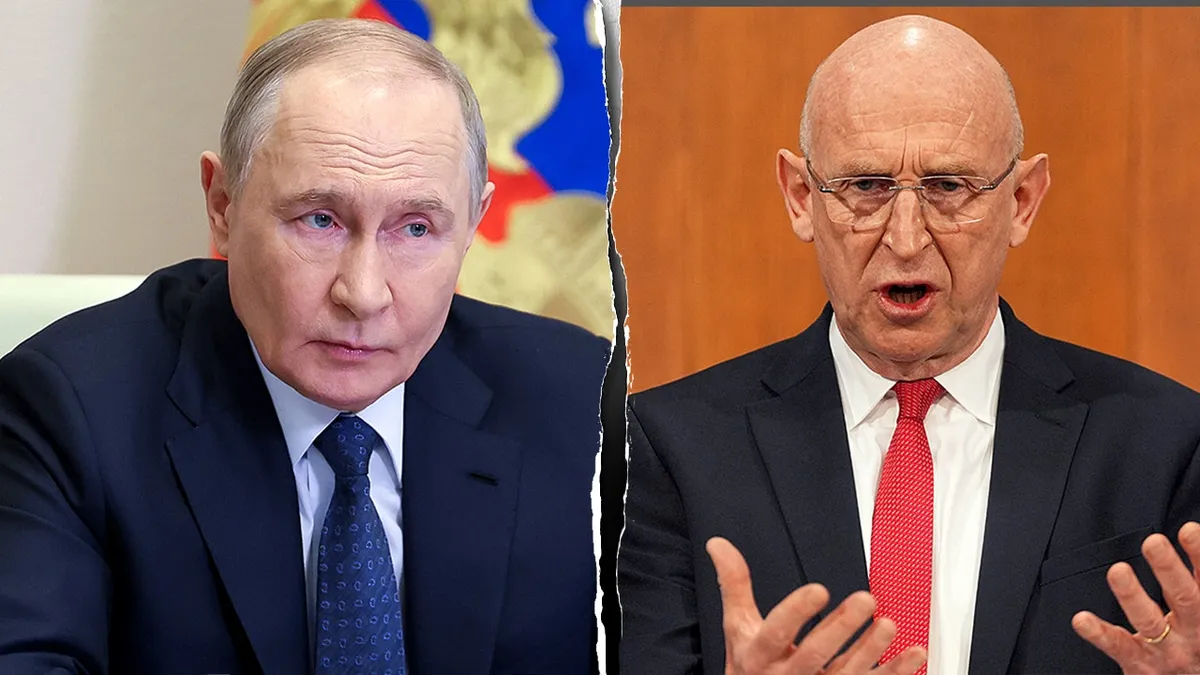
U.K. Defense Minister John Healey warned Russian President Vladimir Putin of "serious consequences" Thursday after revealing a weeks-long military operation to deter Russian meddling in the North Sea. "To President Putin I say we see you, we see your activity over our cables and our pipelines, and you should know that any attempt to damage them will not be tolerated and will have serious consequences," he cautioned. The defense minister detailed an operation involving a Royal Navy frigate, a Royal Air Force patrol plane and hundreds of personnel deployed to deter a trio of Russian submarines that were detected near underwater cables in Britain’s economic exclusionary zone. Russia, CHINA VETO UN RESOLUTION AIMED AT REOPENING Strait of Hormuz, HOURS BEFORE TRUMP DEADLINE One of the submarines, Healey announced, was a nuclear-powered Akula-class submarine, while the other two were spy submarines from Russia’s Main Directorate of Deep Sea Research, also known as GUGI. Subs from this unit were directed specifically by Putin "to conduct hybrid warfare activities against the UK" and its allies, Healey said. At least one of those allies, Norway, was involved in the deterrent operation, Healey revealed. Norway’s Defense Minister Tore O Sandvik confirmed the cooperation in a Thursday statement. "Norway has participated in a coordinated military operation with our allies to send a clear message: covert activities in our waters will not be tolerated," Sandvik wrote . The submarines left U.K. waters after a protracted period of monitoring from the U.K. and Norway, and there is no evidence of damage to any underwater infrastructure, Healey said. Fox News Digital has reached out to the U.K.’s Defense Department for more information. The Russian incursion marked the second time in less than six months that the U.K. detected Russian seacraft near its territorial waters. Healey announced a similar military operation in November after Russia deployed the spy ship Yantar to the North Sea in 2025. TRUMP, STARMER AGREE Strait of Hormuz MUST REOPEN AS MIDDLE EAST CONFLICT ESCALATES Healey also cited this year’s incident as an example of why the U.K. hasn’t sent troops to the Strait of Hormuz, the narrow waterway in the Persian Gulf key to global energy markets that Iran has choked off in recent weeks. "I understand people questioning why all UK military assets and personnel have not been deployed to deal with it. But that is not in Britain’s national interest," he said, later calling Russia "the primary threat to the UK and to NATO." President Donald Trump has criticized NATO allies and the organization itself for not acceding to requests to help open the Strait of Hormuz. "NATO WASN’T THERE WHEN WE NEEDED THEM, AND THEY WON’T BE THERE IF WE NEED THEM AGAIN," he wrote in a Thursday morning Truth Social post. The U.K., while holding a planning meeting on how to reopen the Strait of Hormuz after the Iran War is over, initially refused to let the U.S. use a British air base to launch military strikes against Iran. British Prime Minister Keir Starmer eventually allowed the U.S. to launch "defensive strikes" from Royal Air Force bases after Trump slammed him as "not Winston Churchill."
SRCFox News - World
LANGEN
LEANCenter-Right
WORDS524
ENT11
THU · 2026-04-09 · 19:30 GMTBRIEF NSR-2026-0409-60829
NSR-2026-0409-60829News Report·EN·National Security
UK defense minister warns Putin of 'serious consequences' after covert underwater military operation
U.K. Defense Minister John Healey warned Russia of "serious consequences" after a weeks-long military operation in the North Sea.
By
Robert McGreevy Fox NewsFox News - WorldFiled 2026-04-09 · 19:30 GMTLean · Center-RightRead · 3 min
Fox News - WorldFIG 01
Reading time
3min
Word count
524words
Sources cited
4cited
Entities identified
11entities
Quality score
100%
§ 01
Briefing Summary
AI-generatedNEWSAR · AI
U.K. Defense Minister John Healey warned Russia of "serious consequences" after a weeks-long military operation in the North Sea. The operation, involving the Royal Navy and Royal Air Force, deterred three Russian submarines, including a nuclear-powered Akula-class submarine and two spy submarines, from potentially damaging underwater cables within Britain's economic exclusionary zone. Healey stated the submarines were directed by Putin to conduct hybrid warfare against the U.K. and its allies. Norway participated in the operation, confirming cooperation to deter covert activities in their waters. The submarines left U.K. waters after being monitored, and no damage to infrastructure was reported. This is the second such incident in six months, with a similar operation occurring in November 2025.
Confidence 0.90Sources 4Claims 5Entities 11
§ 02
Article analysis
Model · rule-basedFraming
National Security
Diplomatic
Tone
Mixed Tone
AI-assessed
CalmNeutralAlarmist
Factuality
0.70 / 1.00
Factual
LowHigh
Sources cited
4
Well sourced
FewMany
§ 03
Key claims
5 extracted01
Russia is the primary threat to the UK and to NATO.
quoteJohn Healey
Confidence
1.00
02
The submarines left U.K. waters after monitoring from the U.K. and Norway, and there is no evidence of damage.
factualJohn Healey
Confidence
1.00
03
Norway participated in a coordinated military operation with allies.
quoteTore O Sandvik
Confidence
1.00
04
Subs from Russia’s Main Directorate of Deep Sea Research were directed by Putin to conduct hybrid warfare activities against the UK.
factualJohn Healey
Confidence
1.00
05
U.K. detected Russian submarines near underwater cables in Britain’s economic exclusionary zone.
factualJohn Healey
Confidence
1.00
§ 04
Full report
3 min read · 524 words§ 05
Entities
11 identifiedKey playerOppositionContextPositiveNeutralNegative
People3
Organizations3
§ 06
Keywords & salience
10 termsunderwater military operation
0.90
russian submarines
0.80
north sea
0.70
covert activities
0.70
hybrid warfare
0.60
uk defense
0.60
underwater cables
0.50
vladimir putin
0.50
military deterrence
0.50
strait of hormuz
0.40
§ 07
Topic connections
Interactive graph No topic relationship data available yet. This graph will appear once topic relationships have been computed.