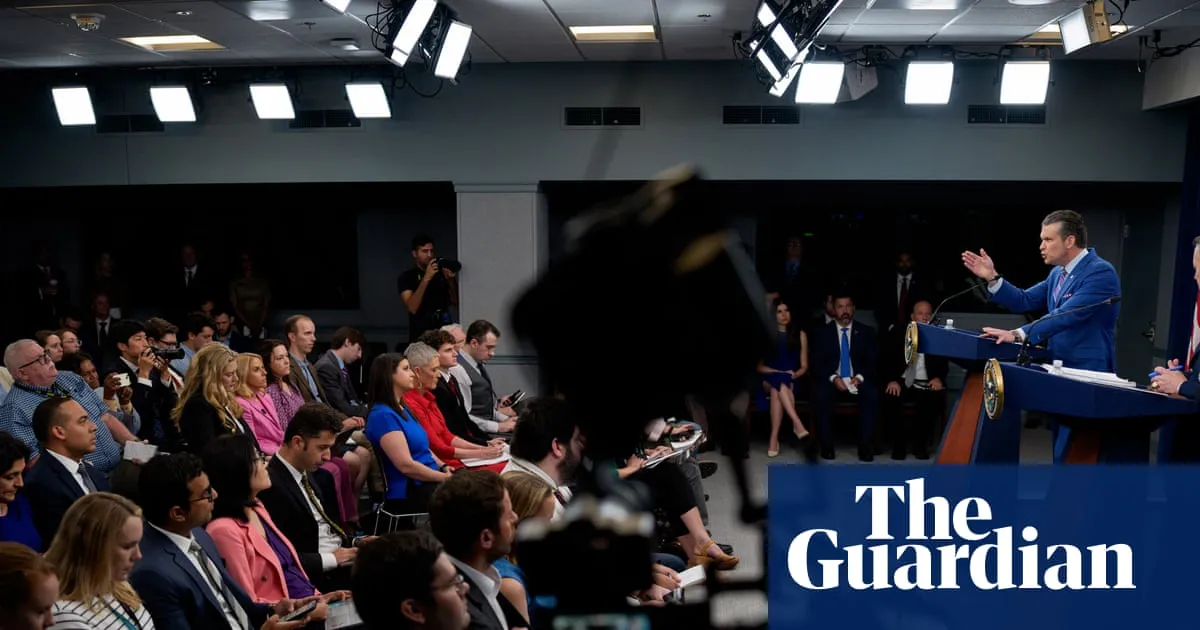
A federal judge on Thursday ruled that the Pentagon has not complied with an order last month that undid much of a restrictive new press pass policy implemented by the Department of Defense, and ordered the return of credentials to seven New York Times reporters.The newspaper, which sued the Trump administration in December, had urged the judge to compel implementation of his 20 March ruling after the Pentagon responded to the judge’s determination by creating a new press access policy, which the newspaper called an “end-run” around the judge’s ruling. The Pentagon had also announced the closure of the work space known as “correspondents’ corridor”.District court judge Paul Friedman specifically threw out a new Pentagon regulation requiring journalists to be escorted into the building, as well as language dealing with what the administration referred to as the “inducement of unauthorized disclosures”.During a 30 March hearing, the judge had seemed skeptical of the Pentagon’s new policies, aspects of which he deemed “weird” and Kafkaesque.“Imposing these standards and restrictions on access to the Pentagon for [press pass] holders constitutes continued implementation and enforcement of those provisions of the department’s prior [press pass] policy that this court vacated and that it enjoined the defendants from enforcing,” the judge wrote on Thursday. While the New York Times journalists had their credentials returned, the judge determined that the Pentagon has failed to truly “reinstate” the privileges that came with receiving the pass because of the added requirement for an escort.Last fall, the vast majority of Pentagon press pass holders walked out of the building instead of signing on to a new policy preventing the “solicitation” of unauthorized information, which many news organizations viewed as impeding journalism. While the language in the new press policy was amended, the judge wrote that “the department cannot simply reinstate an unlawful policy under the guise of taking ‘new’ action and expect the court to look the other way”.While the Trump administration has provided workspace in a library for the Times reporters – and other pass-holders, including a large contingent of Trump-friendly conservative media influencers – to use while a new press work space is established on the Pentagon grounds, the judge determined that the administration had defied him by shutting down the existing space.“The court’s order requires the department to restore the plaintiffs’ access to the Pentagon,” he wrote. “Rather than comply with that order, the department has cut off all [press pass] holders’ meaningful access to the Pentagon.”At the end of his ruling, the judge reaffirmed his belief that the Pentagon is trying to choke off reporting critical of the administration and defense secretary Pete Hegseth: “The court cannot conclude this opinion without noting once again what this case is really about: the attempt by the secretary of defense to dictate the information received by the American people, to control the message so that the public hears and sees only what the secretary and the Trump administration want them to hear and see. The constitution demands better. The American public demands better, too.”The judge ordered the Trump administration to file a status report on or before 16 April “describing the steps taken to ensure compliance with this order”.“This ruling powerfully vindicates both the court’s authority and the first amendment’s protections of independent journalism,” Theodore J Boutrous Jr, who represents the New York Times in the case, said in a statement to the Guardian.It’s not yet clear how the judge’s ruling will affect the other journalists who had opted to return their press badges in lieu of signing on to the Pentagon’s new access policy.
SRCThe Guardian - World News
LANGEN
LEANCenter-Left
WORDS596
ENT6
THU · 2026-04-09 · 22:43 GMTBRIEF NSR-2026-0410-61078
NSR-2026-0410-61078News Report·EN·Legal & Judicial
US judge rules Pentagon has violated his order in press access case
A U.S. federal judge ruled that the Pentagon violated his previous order to reinstate press access for New York Times reporters.
Jeremy Barr in WashingtonThe Guardian - World NewsFiled 2026-04-09 · 22:43 GMTLean · Center-LeftRead · 3 min
The Guardian - World NewsFIG 01
Reading time
3min
Word count
596words
Sources cited
2cited
Entities identified
6entities
Quality score
100%
§ 01
Briefing Summary
AI-generatedNEWSAR · AI
A U.S. federal judge ruled that the Pentagon violated his previous order to reinstate press access for New York Times reporters. The ruling stems from a lawsuit filed by the New York Times in December against the Trump administration over restrictive press pass policies. Judge Paul Friedman found the Pentagon's new policies, including required escorts for journalists and restrictions on "unauthorized disclosures," to be a continuation of the previously vacated policy. While the New York Times journalists had their credentials returned, the judge determined that the Pentagon has failed to truly “reinstate” the privileges that came with receiving the pass because of the added requirement for an escort. The judge also criticized the Pentagon's closure of the "correspondents' corridor" workspace, stating it defied his order to restore press privileges.
Confidence 0.90Sources 2Claims 5Entities 6
§ 02
Article analysis
Model · rule-basedFraming
Legal & Judicial
Political Strategy
Tone
Measured
AI-assessed
CalmNeutralAlarmist
Factuality
0.80 / 1.00
Factual
LowHigh
Sources cited
2
Limited
FewMany
§ 03
Key claims
5 extracted01
The Pentagon announced the closure of the workspace known as 'correspondents' corridor'.
factualArticle
Confidence
1.00
02
The New York Times sued the Trump administration in December over press access policies.
factualArticle
Confidence
1.00
03
The judge ordered the return of credentials to seven New York Times reporters.
factualArticle
Confidence
1.00
04
A federal judge ruled that the Pentagon has not complied with an order regarding press access.
factualArticle
Confidence
1.00
05
The judge reaffirmed his belief that the Pentagon is trying to choke off reporting critical of the administration.
factualArticle
Confidence
0.90
§ 04
Full report
3 min read · 596 words§ 05
Entities
6 identifiedKey playerOppositionContextPositiveNeutralNegative
Organizations4
Locations1
§ 06
Keywords & salience
9 termspress access
1.00
pentagon
0.90
judge ruling
0.80
first amendment
0.70
new york times
0.70
press pass policy
0.60
department of defense
0.50
media access
0.40
unauthorized disclosures
0.40
§ 07
Topic connections
Interactive graph Network visualization showing 51 related topics
View Full Graph Person Organization Location Event|Click node to navigate|Edge numbers = shared articles